“Put your pen down, Dad!” I shouted across the windswept dock in Puget Sound, stepping out of my truck just as my father, Frank, was about to sign the legal transfer title of the Sea Sentinel over to a high-risk loan officer.
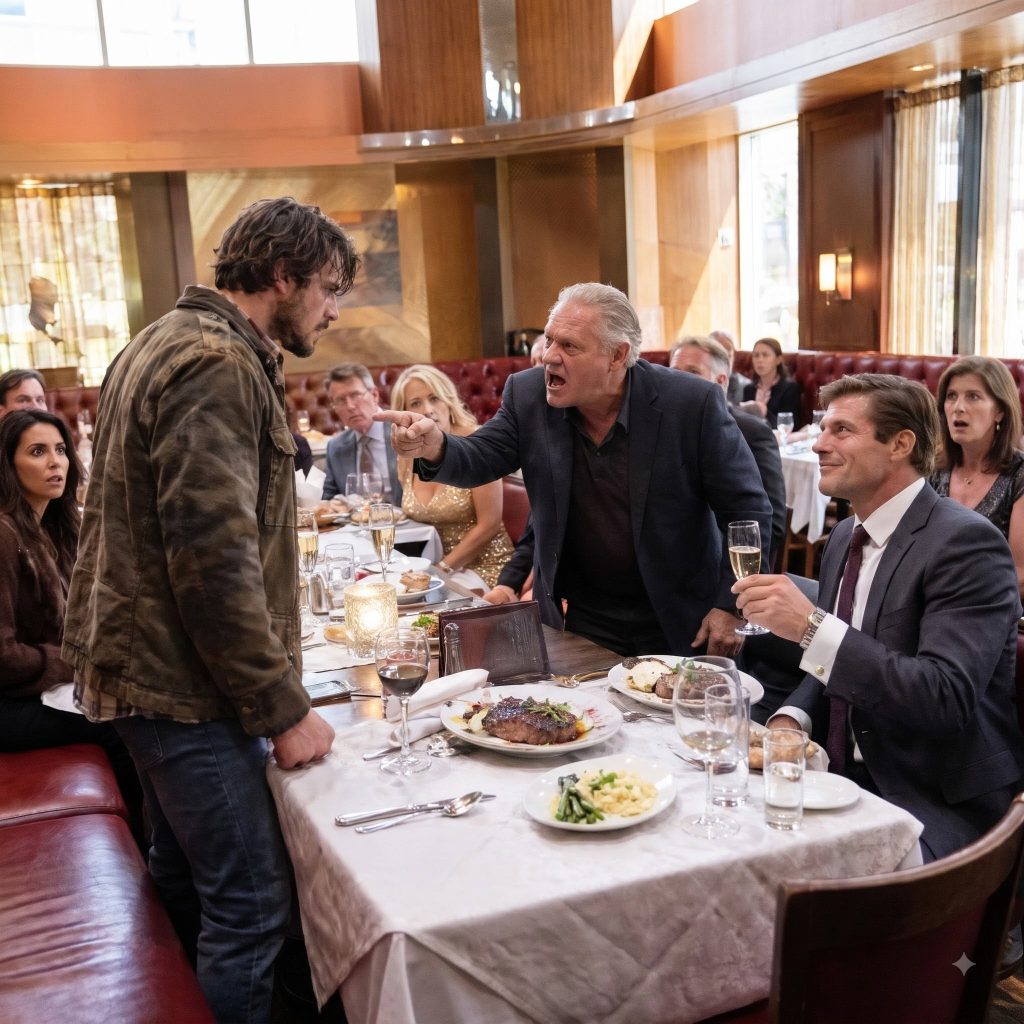
Six months ago, at Frank’s 60th birthday dinner, he humiliated me in front of thirty dinner guests. For two agonizing years, I had poured $31,400 of my own savings into buying T1 structural steel plates, custom keel coolers, and hand-welding the entire hull of his rusting fishing tug. He had sworn on his mother’s memory that the boat would be mine when he retired.
Instead, over vintage champagne, he proudly announced he was mortgaging the tug to back a reckless loan for my older brother Julian’s failing downtown seafood bistro.
When I stood up to object, Frank slammed his glass down and sneered in front of the entire family: “A welder doesn’t get a say in what happens to my boat. A welder gets paid and goes home.”
I looked him in the eye and said: “Then pay me, Dad.”
He laughed, tossed a crumpled hundred-dollar bill onto my steak plate, and told me to leave his house. Frank thought I was just an angry kid making empty threats. He completely forgot that I held a master certification in marine fabrication and knew every inch of federal admiralty law.
During those six silent months, Julian’s bistro went completely bankrupt, racking up half a million dollars in predatory debt. Frank was now desperately trying to sign over the Sea Sentinel to keep loan sharks from taking Julian’s suburban house.
“Get off my pier, Ethan!” Frank barked, his hand hovering over the clipboard. “This boat is saving your brother!”
“She isn’t yours to sell, Frank,” I replied, holding up a certified federal warrant as two armed US Coast Guard officers stepped onto the dock behind me. “You ignored my thirty-day demand letter. A federal magistrate just executed a Maritime Lien against the vessel. The Sea Sentinel is under arrest.”
The silver pen slipped from my father’s trembling fingers as flashing blue Coast Guard lights reflected off the reinforced steel hull he claimed I had no right to touch. But what he didn’t know was that the boat was holding a secret far bigger than his debt.
Julian scrambled forward, grabbing the federal seizure notice out of the Coast Guard officer’s hand. “This is insane!” he shrieked, his face pale and sweating. “Dad owns this boat! You can’t put a lien on a vessel over a stupid welding bill!”
“It’s not just a bill, Julian,” the lead federal agent replied coldly, gesturing for his team to secure the vessel’s mooring lines with heavy steel chains. “Under Title 46 of the United States Code, a marine mechanic’s lien for structural repairs creates an automatic maritime security interest that supersedes any private sale or personal debt agreement.”
Frank’s face turned from bright red to a sickening shade of ash. He lunged toward me, his hands shaking in uncontrolled fury. “You traitor!” he roared, pointing a finger at my chest. “I raised you! I gave you a job at my dock! You’re sabotaging your own brother over thirty thousand dollars because your pride was hurt?!”
The loan officer standing beside Frank immediately backed away, tucking his leather briefcase under his arm. “Frank, if this vessel has an active federal lien attached to her hull, she cannot be used as collateral for Julian’s loan repayment. Deal’s off.”
“No! Wait!” Julian pleaded, grabbing the loan officer’s coat lapels. “We can fix this! Dad, tell him!”
“He can’t fix it, Julian,” I said, stepping between Frank and the agent. “Because when I filed the maritime lien three weeks ago, federal marine surveyors had to inspect every single inch of the welds I installed. And when they ran the ultrasonic density scans on the lower hull plates, they stumbled across something interesting.”
Frank froze completely. The wild anger in his eyes vanished, replaced by sheer, suffocating terror.
“What are you talking about, Ethan?” Julian asked, looking back and forth between us in total confusion.
“Two years ago, when Dad asked me to weld new steel plates over the engine compartment, he told me it was just rust damage,” I said, my voice cutting through the ocean breeze like a blade. “I didn’t ask questions back then. But the federal surveyors checked the hull identification numbers stamped into the keel frame underneath my steel plates. Those numbers don’t belong to the Sea Sentinel.”
Julian blinked. “What?”
“The hull numbers belong to the Ocean Maid—the commercial trawler Dad claimed sank in a storm off Cape Flattery four years ago,” I revealed, looking directly at Frank. “The same boat Dad collected a four-hundred-thousand-dollar federal insurance payout on.”



