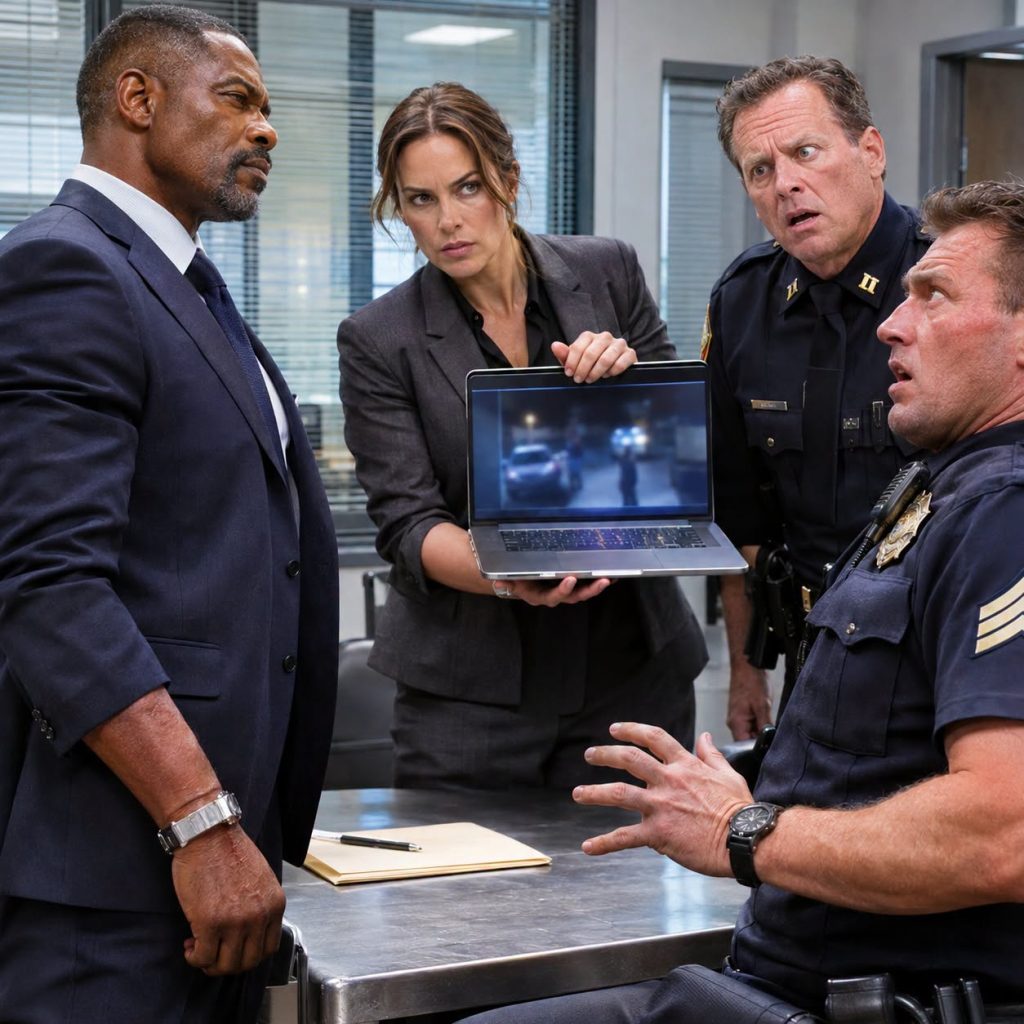
Cody made it three steps into the hallway before two FBI agents intercepted him. He twisted toward the stairwell, but they pinned his arms and moved him against the wall. No one drew a weapon. No one needed to. “Let me go,” he shouted. “There’s a fire.” Ivon walked out behind me. “Then why were you running toward the evidence room instead of the exit?” Cody stopped struggling. A patrol officer yelled from downstairs that there was no visible fire. Seconds later, another agent reported that a trash bin inside the evidence-processing area had been set alight, small enough to contain, large enough to trigger the alarm. Then came the detail that ended Cody’s story.
His access code had opened the evidence-room door less than a minute before he ran. He looked at Reeves. Reeves looked away. I stood there rubbing the red marks around my wrists, watching two men realize that loyalty built on fear disappears the moment consequences arrive. “I want a lawyer,” Cody said. “That’s your right,” the FBI supervisor replied. Reeves finally broke. “He told me to do it.” Cody snapped around. “Shut your mouth.” “You said the arrests had to stay up,” Reeves shouted. “You said if people fought the charges, we’d make the reports stronger.” “Officer,” the supervisor warned, “stop talking until counsel is present.” But panic had taken over.
Reeves pointed at Cody. “He kept extra narcotics from old cases. He told us which cars to target. People with records, people driving rentals, people he thought no jury would believe.” I felt anger rise in me then, not because they had chosen me, but because I suddenly understood how many people before me had stood alone in this building with no secure camera system, no federal team tracking them, and no title powerful enough to make a room stop. Ivon handed the folder to the FBI supervisor. Inside were audit logs from the precinct’s records system, evidence-room access reports, and comparisons between original arrest drafts and later versions. The same phrases appeared again and again: furtive movement, nervous behavior, suspected contraband in plain view.
The language was almost identical. Cody had not merely trusted Reeves. He had helped build the script. By dawn, both men were in federal custody. Reeves was arrested on federal allegations including deprivation of rights under color of law, obstruction, false statements, and offenses connected to the planted narcotics. Cody was detained while investigators reviewed evidence tying him to report manipulation, evidence access, and attempted destruction of records. Accusations are not convictions, but the video left little room to dispute what happened in my car. The larger investigation moved faster after that night.
The Justice Department opened a civil-rights review into the precinct’s past arrests. Cases involving Reeves and Cody were flagged for reexamination. Defense attorneys were notified. Evidence logs were preserved. Officers who had kept quiet were interviewed separately. Some of them talked. One patrol officer admitted seeing Reeves remove a bag from an evidence drawer weeks earlier. A booking clerk said Cody ordered her to change timestamps after arrests. Another officer produced messages telling him to leave body cameras “unavailable” during certain stops. The mystery wasn’t whether my arrest had been a mistake. It had been a test of a machine that had operated because its victims rarely had proof.
Three weeks later, I returned to Phoenix to meet one of the men whose case had been reopened. His name was Anthony Bell, a warehouse supervisor and father of two. He had lost his job after an arrest built on the same language Reeves used against me. He shook my hand and said, “They believed you because of who you are.” I had no good answer. Finally I said, “Then the system failed you before it ever met me.” That sentence stayed with me. People later asked why I had let Reeves keep lying in the interview room instead of revealing the cameras immediately. The answer is simple.
A lie exposed too early becomes an excuse. A lie repeated, signed, defended, and preserved becomes evidence of intent. That night, Reeves had every opportunity to stop. Cody had every opportunity to question him. Instead, each man chose the version of reality he believed he could force everyone else to accept. The cameras did not create the truth. They only prevented two powerful men from burying it. And when I finally watched the full recording again in Washington, the moment that stayed with me wasn’t Reeves planting the bag.
It was his face when he realized someone had been watching. For once, the person in handcuffs was not the only one who had to answer for what happened.
What do you think of this story? Please leave a like and share your thoughts in the comments. Your support means a lot to us and inspires us to keep writing more meaningful and powerful stories. Thank you! 👍❤️



