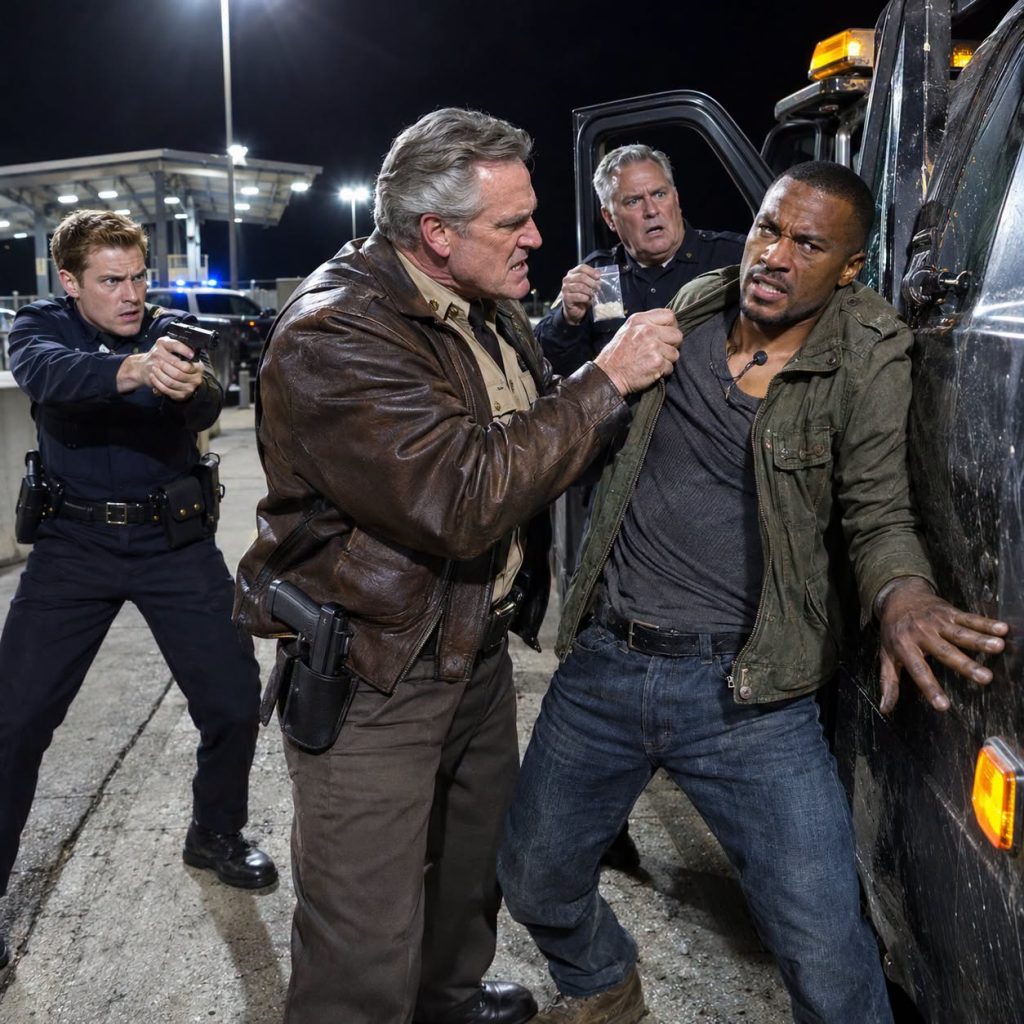
I drove my shoulder into his chest and trapped his drawing arm against his body. We slammed against the truck door. Pain tore through my bruised ribs. “FBI! Drop your weapons!” Floodlights swept the lot. Voss tried to wrench free. I hooked his ankle and dragged us both down. His pistol slid across the pavement as agents rushed past my head. Dwyer dropped flat. Harlan stood frozen until Ortiz knocked his weapon aside and forced him to his knees. An agent pulled Voss off me. Another helped me sit against a tire. Ortiz crouched in front of me. “Nathan. Stay with me.” “I’m here.”
“How many fingers?” “Too many.” She exhaled sharply, then called for the medic. Voss lay facedown a few feet away, his wrists cuffed behind him. “You have no recording,” he said. “Your wire is broken.” Ortiz lifted the transmitter’s crushed casing. “This was transmitting before you broke it.” I watched his expression change.
The camera installed inside my truck had recorded the planted packet, the assault, and Voss’s instructions. A separate microphone had captured everything until our collision against the door. Destroying the transmitter had stopped a signal. It hadn’t erased what our team had already received. Dwyer began asking for an attorney. Harlan stared at the sheriff. “You told me it was just money,” he said. Voss turned his face away. Before dawn, agents arrested the deputy watching Ruth’s diner. He had been reporting her movements to Voss. Searches of the sheriff’s office and a rented storage unit uncovered cash, duplicate seizure forms, and personal property taken from drivers. The mystery of my credential took longer.
Voss had received it legitimately as the county liaison. He had printed the authorization packet before federal investigators restricted access. When Dwyer described a tow driver asking about impound records, Voss recognized my cover name. They hadn’t uncovered me through brilliant police work. We had trusted the wrong man with the truth. I gave my statement from a hospital bed with cracked ribs and a shoulder that refused to move properly. Ruth arrived carrying soup. Aaron followed, clutching the sweatshirt sleeves over his hands. “I thought you were dead,” he said. “So did I, for a second.” He stood beside the bed. “I shouldn’t have yelled at you.”
“Yes, you should have.” His eyes filled. “I promised to help you,” I said. “You were allowed to ask what that promise meant.” Months passed before the case reached court. Aaron testified. So did drivers who had once refused to put their names on a complaint. Defense attorneys questioned their memories, their records, their reasons for carrying cash. Then the recordings played. Dwyer and Harlan eventually pleaded guilty. Voss went to trial and was convicted. Other cases were reviewed, and charges built on fabricated evidence began to fall apart. The money wasn’t returned overnight. Some had already been spent. Recovering it took forfeiture proceedings and restitution orders. Ruth kept every letter in a kitchen drawer until the first payment arrived.
The morning Aaron’s own false possession charge was dismissed, we met at her diner. He laid the court order beside my coffee. “They gave me my name back.” I looked at Ruth. She was crying without hiding it. “You kept it,” I told him. “They just finally had to say it correctly.”
What do you think of this story? Please leave a like and share your thoughts in the comments. Your support means a lot to us and inspires us to keep writing more meaningful and powerful stories. Thank you! 👍❤️



