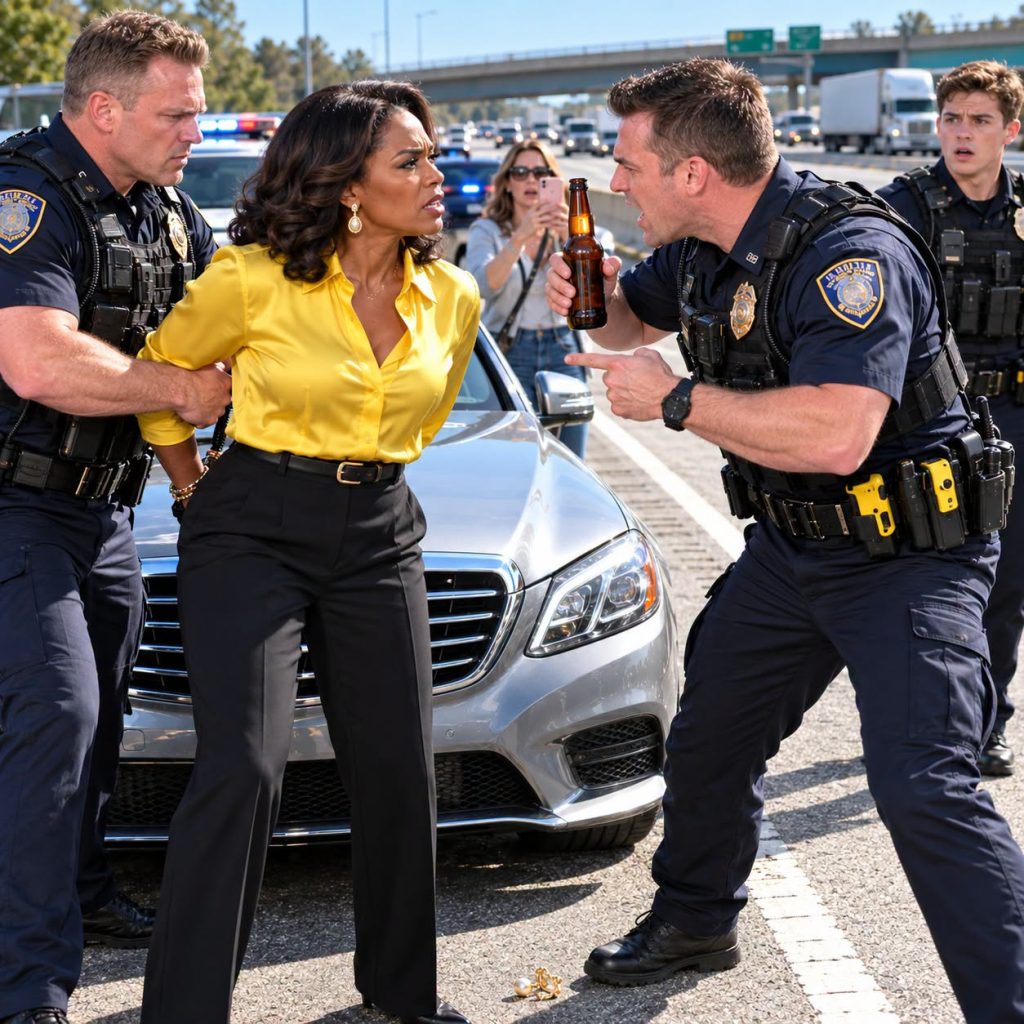
At 7:42 a.m., I drove into the courthouse garage wearing a concealed wire. Federal agents were positioned behind maintenance doors, inside unmarked vehicles, and above the entrance ramp. I parked in my usual space. For thirty seconds, nothing happened. Then Caleb Maddox stepped from behind a concrete pillar. No uniform. No cruiser. “Judge Carter.” I faced him. “You took my money. You threatened my son. Now you’re stalking me at work.” His jaw twitched. “You should’ve taken the hint.” “Was Hargrove’s idea better?” Maddox froze. That was all I needed. “We have the Top Gun files.” He rushed me.
He caught my arm and tried to drag me between two parked vehicles. I slammed my palm against the horn of the nearest car. The garage erupted. “Federal agents! Let her go!” Maddox shoved me aside and ran. Agent Briggs tackled him near the elevator bank. He fought hard, swinging an elbow and trying to reach inside his jacket, but three agents pinned him down. “Hands!” Briggs shouted. “Show me your hands!” A phone skidded across the concrete. Its screen displayed an active call. Briggs picked it up. “Who were you talking to?” Maddox stared at the floor. I did. “Hargrove.”
At the same moment, DOJ teams entered the Tyler regional headquarters with federal warrants. Hargrove tried to wipe a server array, but Ray had already given investigators the mirrored backups and administrator logs. Alicia Peña, an internal investigator who had spent months quietly documenting falsified reports, signed a cooperation agreement and provided the final piece: direct orders from Hargrove instructing troopers to fabricate probable cause, pressure motorists into abandoning seized cash, and retaliate against anyone who challenged the program. She also identified the man who rammed Marcus’s car—a former trooper working private security for a contractor tied to Hargrove.
I immediately recused myself from the civil case that had started all of this. Months later, I entered another courtroom for a very different reason: as a witness. Maddox sat at the defense table without his badge. He refused to look at me until the prosecutor played his own recorded voice saying, “She’s a judge. She’ll make noise.” Hargrove’s reply came next: “Then make the noise expensive.” Maddox finally looked up. I didn’t smile. I didn’t need revenge. I needed the record to tell the truth.
Faced with recordings, financial records, seizure logs, cooperating witnesses, and the attempted intimidation, Maddox pleaded guilty to federal charges and received fifty-one months in prison. Hargrove received thirty-eight months. Multiple officers resigned or were disciplined, and the state entered a sweeping federal consent decree requiring independent oversight, cloud-backed body-camera storage, stricter seizure rules, and restitution for victims. My $9,800 came back in a plain government envelope. I handed it to Marcus myself. “You still owe me tuition paperwork,” I told him. He laughed and hugged me. “Yes, Your Honor.”
Months later I drove Interstate 20 again. A trooper pulled me over for a broken taillight. He introduced himself, explained the stop, checked my license, gave me a warning, and said, “Have a safe afternoon, ma’am.” That was it. No fabricated smell. No search. No humiliation. As I pulled back onto the highway, I realized peace didn’t come from destroying Caleb Maddox’s career. It came from knowing the badge he abused no longer belonged to him—and that hundreds of drivers would never have to meet the version of the law he had tried to become.
What do you think of this story? Please leave a like and share your thoughts in the comments. Your support means a lot to us and inspires us to keep writing more meaningful and powerful stories. Thank you! 👍❤️



