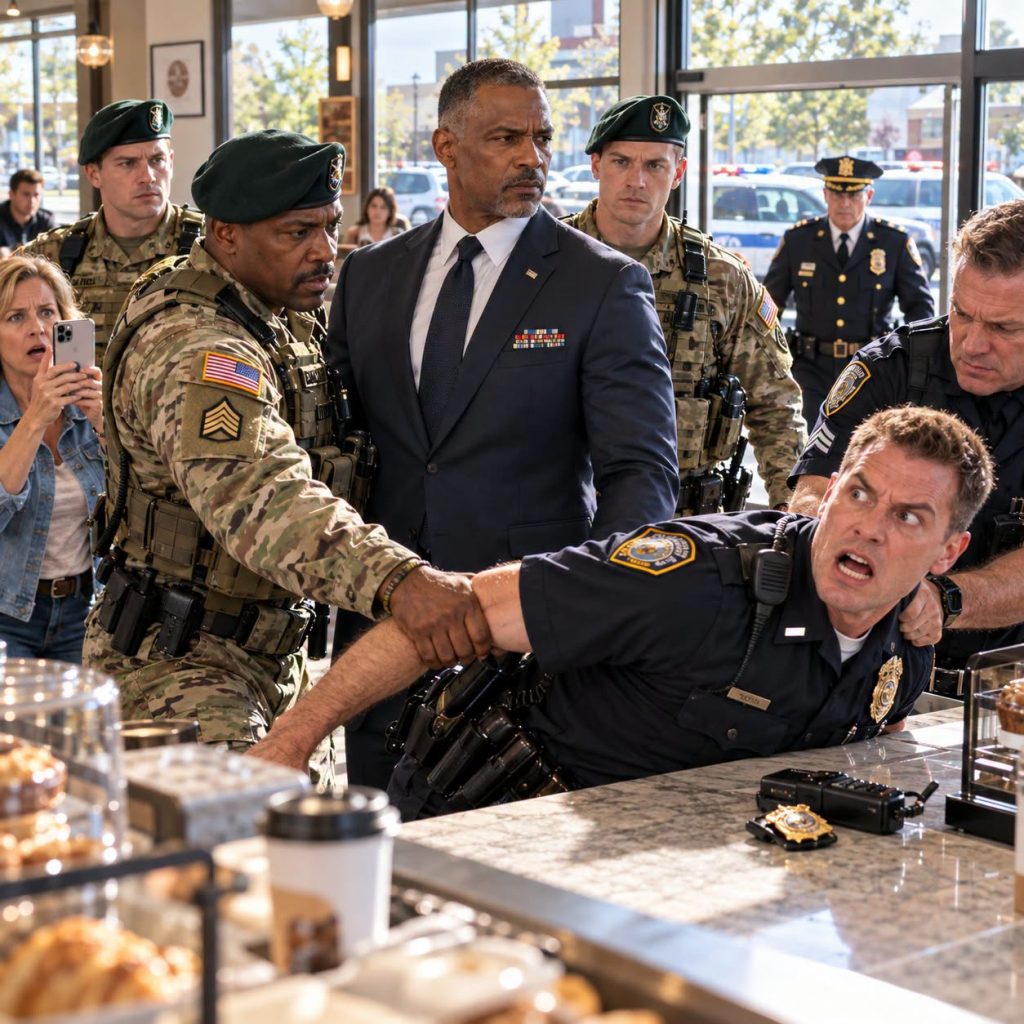
He grabbed the tablet. Craig caught his wrist. Reeves slammed Craig into a table, sending plates and silverware flying. Ferguson moved forward, but one of the officers outside shouted, “Back up!” and raised his weapon. I stepped directly into Reeves’s line of sight. “Captain, tell your officers to lower their weapons.” “Stay out of this.” “You’ve already lost control of this scene.” Reeves reached for his pistol. Craig trapped his hand against the holster. Patterson suddenly kicked Holmes in the knee and rolled toward the door. Mitchell tackled him before he made three feet. Donna kept filming everything.
Then sirens erupted from both directions. Reeves looked toward the windows and went white. Unmarked vehicles flooded the parking lot. Men and women wearing FBI and Department of Justice jackets emerged with weapons secured but ready. Reeves stopped struggling. I had made one call before the situation escalated—quietly sending my location and the first video clip through a secure Army channel after Donna handed me her phone. The message had reached federal authorities faster than Reeves expected. A DOJ agent entered and announced, “Nobody leaves.”
The investigation blew open within days. Donna’s recordings matched dozens of traffic-stop records whose official reports had been altered. Patterson’s dashcam contained conversations in which Reeves instructed officers to target travelers he believed were unlikely to challenge them. Department logs showed complaints had been deliberately buried. Craig had tried repeatedly to escalate the issue, unaware that Reeves was intercepting his reports before they reached the chief. Patterson finally understood what Reeves had done to him too: used him as the visible weapon while keeping his own hands clean.
Three weeks later, Patterson asked to speak with investigators. He handed over archived messages, deleted reports, and audio recordings he had secretly saved as insurance against Reeves. It did not excuse what he had done. It did, however, expose the full operation. Reeves was removed, prosecuted, and ultimately convicted on federal civil-rights and obstruction charges. Other cases were reopened. Victims who had spent years being dismissed finally had evidence supporting their accounts.
Patterson eventually stood in federal court and pleaded guilty to deprivation of rights under color of law. I attended the sentencing, not because I wanted revenge but because I wanted to hear whether he finally understood what authority actually meant. He received thirty months in federal prison, followed by three years of supervised release. His law-enforcement certification was permanently revoked. Before deputies led him away, Patterson looked toward me. “General,” he said quietly, “I should’ve stopped.” I answered, “You should never have started.”
Months later, I returned to the Juniper Bean Café. The damaged table had been replaced. Donna was sitting near the window. Craig joined us during his lunch break. Ferguson, Mitchell, and Holmes had driven over from Fort Anderson. Nobody saluted this time. We simply shook hands. Donna raised her coffee cup. “Funny thing,” she said. “Bryce flipped that sign because he wanted nobody coming inside.” Ferguson smiled. “Turned out to be the worst decision he could’ve made.” I looked toward the front door. The little sign was hanging there again, facing the street. OPEN.
Power doesn’t reveal character because someone possesses it. It reveals character when they believe nobody can stop them from abusing it. Patterson thought a locked door, a badge, and a frightened room would protect him. Instead, one teenager kept filming, one woman refused to stay silent, three soldiers walked through that door, and the truth became impossible to contain.
What do you think of this story? Please leave a like and share your thoughts in the comments. Your support means a lot to us and inspires us to keep writing more meaningful and powerful stories. Thank you! 👍❤️



