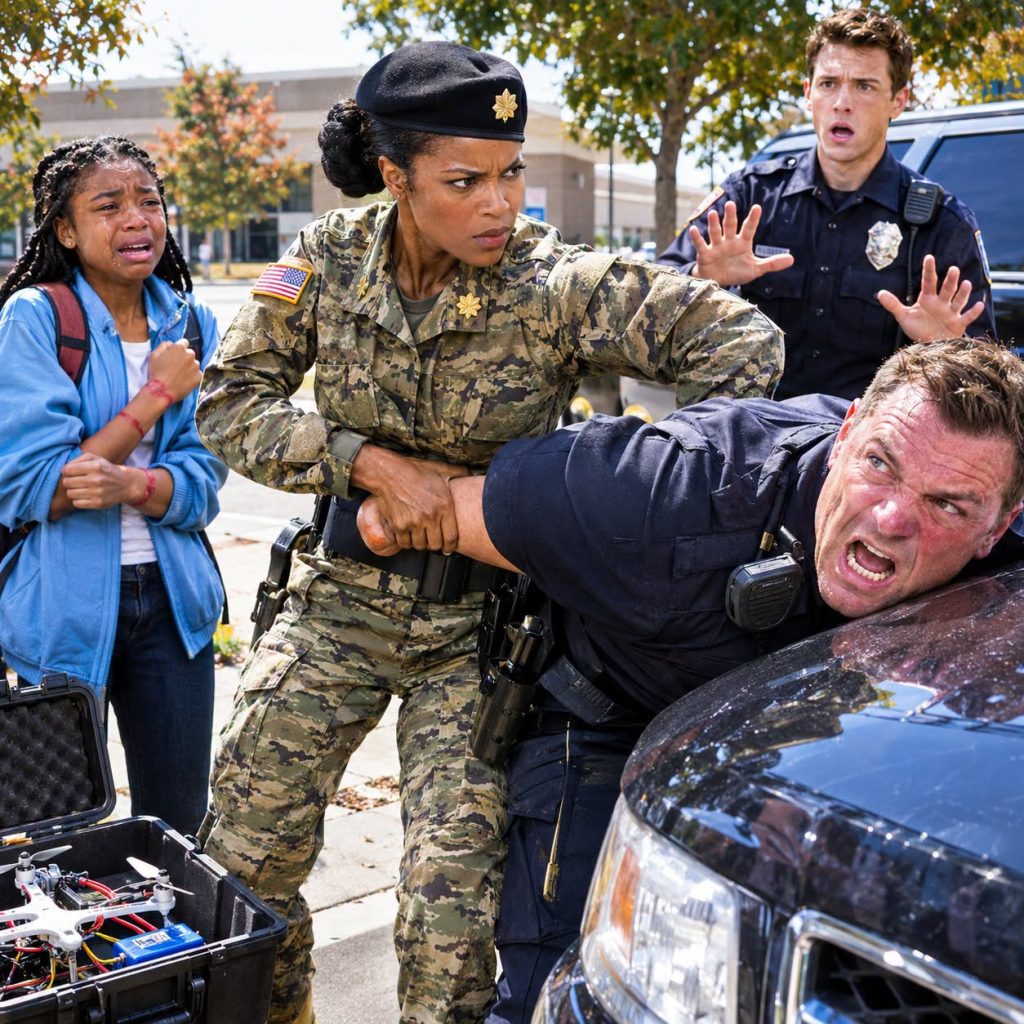
Part 3: The Evidence They Could Not Ignore
The next morning, Mom spread evidence across our kitchen table: the clinic’s photographs, the school’s signed equipment form, my science-fair entry, and the names of everyone who had seen the stop. “We’re not posting arguments online,” she said. “We’re giving investigators a record they can verify.” I pointed to the parent-group accusation. “Everybody at school will think I tried to hurt him.” Mom slid her chair beside mine. “Some people might. But their guesses are not your identity, Zoe.”
Mr. Dalton and Principal Archer gave formal statements. Finch supplied his body-camera account, and the chief preserved recordings from other officers along with the dispatch log. Witness recordings showed that I had obeyed commands, asked for my mother, and never struck Boone. Finch’s camera confirmed the later confrontation. Other footage captured Boone dismissing Mr. Dalton’s explanation and making insulting assumptions about me. The school’s advance notice was attached to the patrol briefing. Boone’s later written allegation was contradicted at every crucial point. Hearing that was a relief; hearing my own frightened voice on the recording was harder.
Outside investigators took over, including FBI civil-rights agent Paul Sterling, who interviewed us separately. He didn’t salute Mom or ask about classified assignments. He asked me where Boone’s fingers had held my wrist, what I’d said before the cuffs went on, and whether anyone had promised me anything in exchange for a statement. “No,” I replied. “I just wanted him to call my mom.” Sterling closed his notebook. “You deserved to have that request taken seriously.” When he left, I felt less like a headline and more like a person someone had finally listened to.
Boone didn’t disappear overnight. His lawyer disputed the allegations, and investigators checked the evidence before prosecutors made decisions. In the following weeks, however, the department found other complaints describing similar conduct. Investigators interviewed those people rather than treating old accusations as proof. Federal prosecutors eventually charged Boone over the unlawful detention and excessive force, while local authorities reviewed the falsified report. He was removed from active police duties. Mom said accountability would be determined in court, where he had the right to contest the evidence, not in our driveway.
Meanwhile, my science project sat on the kitchen counter. Every time I looked at its black propellers, I heard the cuffs clicking shut. “Maybe I should throw it away,” I told Mom one night. She placed an undamaged rotor beside me. “You built this because you wanted a drone to help rescuers find people. Boone doesn’t get to choose what you love.” We worked through the wiring together, with the repaired battery secured safely in its approved transport sleeve. I practiced my presentation until I could explain every circuit without my voice shaking.
The school arranged a makeup demonstration before the STEM judging panel, including visiting engineer Dr. Ethan Brooks from Massachusetts. When I explained my low-cost search-and-rescue design, he asked how I would prevent an aerial search from compromising the privacy of people below. I told him about geofencing, permission, and limits on storing images. He smiled. “Good engineers think about the people affected by their tools.” Later, he offered me a place in a university-supported summer engineering program. Mr. Dalton cheered louder than anyone. Mom just held both hands over her mouth.
Three months after the sidewalk incident, Mom and I attended a federal hearing. Judge Elena Whitmore reviewed arguments about release conditions. Prosecutors presented evidence that Boone had tried to contact a witness despite instructions not to; the defense disputed his intent. The judge ordered him held pending further proceedings after making findings about interference risk. That wasn’t a final verdict, and Mom reminded me of the distinction. Still, walking out without seeing Boone standing over me felt like reclaiming a piece of the sidewalk.
Birwood Heights announced outside reviews of youth-stop procedures, officer training, and how complaints were handled. Finch remained with the department and continued cooperating. I still had questions about why nobody had stopped Boone sooner. But I also had my drone, my summer program, and my mother’s hand in mine as we left the courthouse.
“You came,” I said.
She squeezed my fingers.
“Always.”
The day Boone called my science project a threat, he tried to make me afraid of my own future.
I was fourteen. My future was only beginning.
What do you think of this story? Please leave a like and share your thoughts in the comments. Your support means a lot to us and inspires us to keep writing more meaningful and powerful stories. Thank you! 👍❤️




