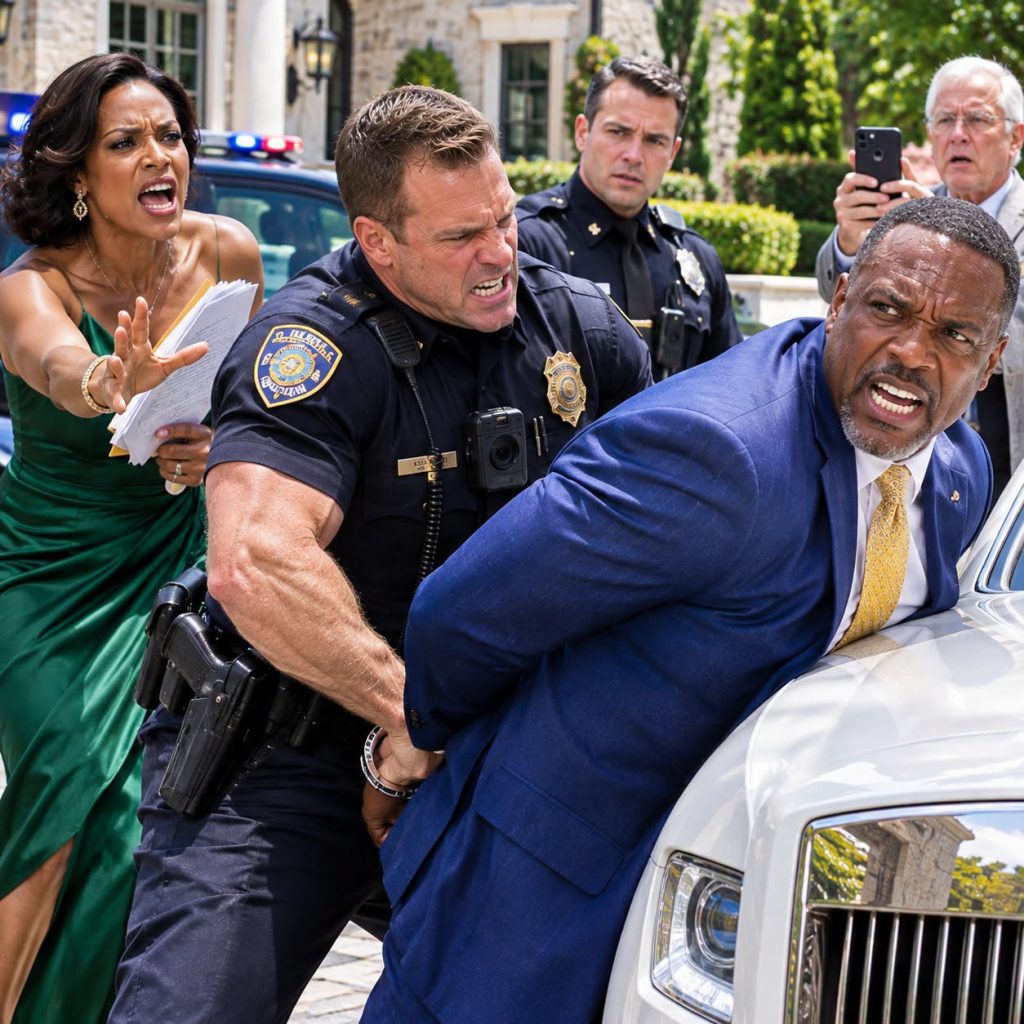
“Trace that number,” Rebecca urged. “Not yet,” I said. “If that caller is telling the truth, someone inside the department is risking everything.” My attorney immediately contacted the U.S. Attorney’s Office, which had already received evidence of possible civil rights violations connected to the Booker lawsuit. By evening, federal prosecutor Andrea Hayes arranged an emergency meeting with U.S. Marshal Ellis Nelson and a federal investigator. The anonymous caller turned out to be Officer Daniel Price, a young patrol officer who had witnessed Derver manipulating arrest reports. He arrived shaking, carrying a sealed flash drive. “Captain Derver ordered me to destroy this,” he said. “I couldn’t.” Ellis placed it inside an evidence bag. “What is it?” I asked. Daniel swallowed. “Internal dispatch recordings, emails, and a backup log. Snow wasn’t supposed to arrest you that morning. But once Derver learned who you were, he realized he could use the arrest to force you off the Booker case.”
Andrea examined the materials. “Why was Booker so important?” Daniel pulled out a photograph showing Snow, Derver, and several officers standing beside an impounded vehicle. “Because the department has been targeting drivers, creating false charges, and collecting illegal impound fees for years. Booker discovered it. Derver buried the evidence.” Rebecca covered her mouth. Daniel continued, “The department’s private towing contractor paid kickbacks to certain officers. Snow was involved. Derver approved the reports.” I stared at the photograph. “So my arrest gave them a way to discredit the judge assigned to examine those records.” Daniel nodded. “And those men who broke into your house? One is a former officer now working for the towing company. Derver sent him to find the documents Pamela had discovered.”
The federal investigators moved quickly. A magistrate judge authorized warrants, and the government obtained a court order preserving the department’s cloud recordings. Ellis personally supervised the collection of the files. The original video was devastating. It showed Snow questioning my right to own the car, ignoring my identification, throwing Rebecca’s documents aside, and forcing me into handcuffs without a lawful basis. But the most shocking evidence came from the police station’s automatically saved audio. Derver’s voice was unmistakable. “Keep the resisting charge. If we can make Whitfield look unstable, he’ll never hear Booker.” Snow asked, “What if the original footage gets out?” Derver answered, “Then make sure it doesn’t.” A separate recording captured his instructions to create a misleading incident report. Andrea looked toward me. “Judge, this is no longer just about your arrest.”
Three weeks later, I walked into a courthouse—not to preside, but to watch the truth finally surface. At a hearing in the criminal case against me, my attorney played the complete body-camera footage. Snow sat rigidly beside his lawyer. When the recording reached the moment he twisted my arm, Rebecca gripped my hand. The prosecutor stood. “Your Honor, in light of the newly discovered evidence, the state moves to dismiss all charges.” The judge reviewed the submission. “Motion granted.” Snow lowered his head. Across the courtroom, Derver tried to leave. Two federal agents stepped into his path. “Roy Derver, you’re under arrest on federal charges involving deprivation of rights and conspiracy.” Another agent approached Snow and informed him of his arrest under a separate warrant. Cameras flashed as both men were escorted away. Derver turned toward me. “You think you’ve won?” I met his stare. “No, Captain. I think the people you silenced finally have a chance to be heard.”
The judicial conduct complaint against me was dismissed after the full evidence was reviewed. The chief judge restored my assignments, but another judge took over Booker to avoid any appearance that my personal experience could influence its outcome. In the months that followed, federal investigators uncovered fabricated arrests, falsified records, and the towing kickback scheme. The former officer involved in the break-in was charged, along with his accomplice. Federal prosecutors pursued the criminal cases, while the Justice Department negotiated a court-approved consent decree requiring independent oversight, stronger recording safeguards, and meaningful reforms to the department.
When my Rolls-Royce was finally returned, Rebecca stood beside me in our driveway. Our neighbors had gathered across the street, including the man whose phone recording had helped expose the truth. He extended his hand. “Welcome home, Judge.” I shook it and smiled. Rebecca squeezed my arm. “Ready for your first real day back?” I looked at the house, then at the car that had started everything. “Almost.” I turned toward the neighbors. “Thank you for refusing to look away.”
I had spent my life studying justice. That experience taught me something no law book ever could: a badge must never place someone above the law, and a judicial robe must never be required for someone to receive its protection.



