Within hours, Crestline’s investigators found the pattern. Raymond Voss had repeatedly authorized seat overrides benefiting a small circle of influential passengers, including Preston Whitlock. Dana had processed many of those changes, often targeting travelers she assumed would be less likely to challenge her. Complaints had been dismissed as booking errors. Tomas had questioned the practice before and been warned to remain silent. “Why didn’t you report it?” I asked him later. His eyes filled. “I did, sir. Twice. Both reports went to Raymond.” That was the final piece. Raymond hadn’t simply protected the misconduct. He had controlled the system designed to expose it.
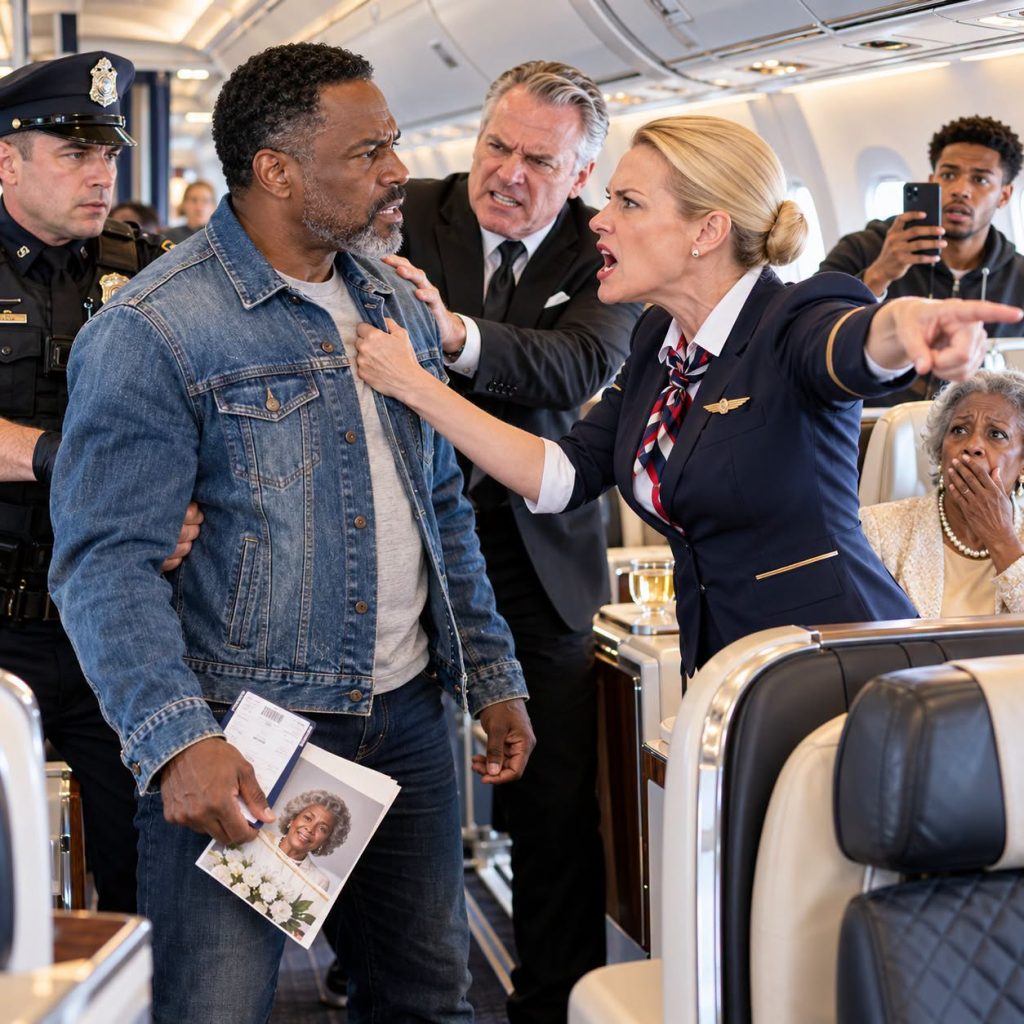
Naomi personally met me in the terminal. “Calvin, I’m sorry,” she said, extending her hand. I didn’t take it immediately. “You built a company where a passenger needed to know you personally to be treated fairly.” Her eyes lowered. “You’re right.” “My father carried bags through this airport for thirty-two years,” I continued. “My mother cleaned offices so I could build a business. I wore his jacket today because I buried her yesterday. And your employee decided I didn’t belong because I looked like him.” Naomi’s eyes glistened. “What do you want me to do?” “Don’t fix this for me,” I said. “Fix it for everyone who doesn’t have your number.”
The fallout came quickly. Dana was terminated following the investigation. Raymond lost his position and became the subject of further scrutiny. Preston’s employer, Halbert Capital, dismissed him after recordings of his behavior circulated publicly. Federal transportation regulators opened an inquiry, and additional passengers came forward with remarkably similar experiences. Over the following months, Crestline’s reputation suffered, its market valuation fell sharply, and litigation resulted in a thirty-eight-million-dollar class-action settlement. The airline also introduced independent oversight of seat reassignments, mandatory reporting protections, and a transparent passenger appeals process. Tomas was promoted to lead in-flight standards reforms. Odessa finally received an apology and compensation for her earlier experience.
I suspended our contract renewal until independent auditors verified meaningful changes. Then I made another decision. At a public event in Atlanta, I stood beside a photograph of my father in his baggage-handler uniform and announced the Walter Reeves Ground to Sky Fund, a twenty-million-dollar scholarship program for the children of airport workers. Odessa attended. Tomas stood beside her. Jalen recorded the announcement, this time smiling. “Why name it after your father?” a reporter asked. I touched the worn denim jacket on my shoulders. “Because he spent his life helping other people reach the sky. He deserved to know his own son belonged there too.”
Months later, I boarded another Crestline flight. A young attendant checked my pass and smiled. “Welcome aboard, Mr. Reeves. Your seat is ready.” I thanked her and walked toward the cabin. This time, I didn’t feel victorious because someone recognized my name. I felt hopeful because she had checked the ticket before she checked the jacket. I sat down, opened my mother’s funeral program, and looked at her photograph one more time. “We did it, Mom,” I whispered. “And this time, it wasn’t just for me.”
What do you think of this story? Please leave a like and share your thoughts in the comments. Your support means a lot to us and inspires us to keep writing more meaningful and powerful stories. Thank you! 👍❤️



