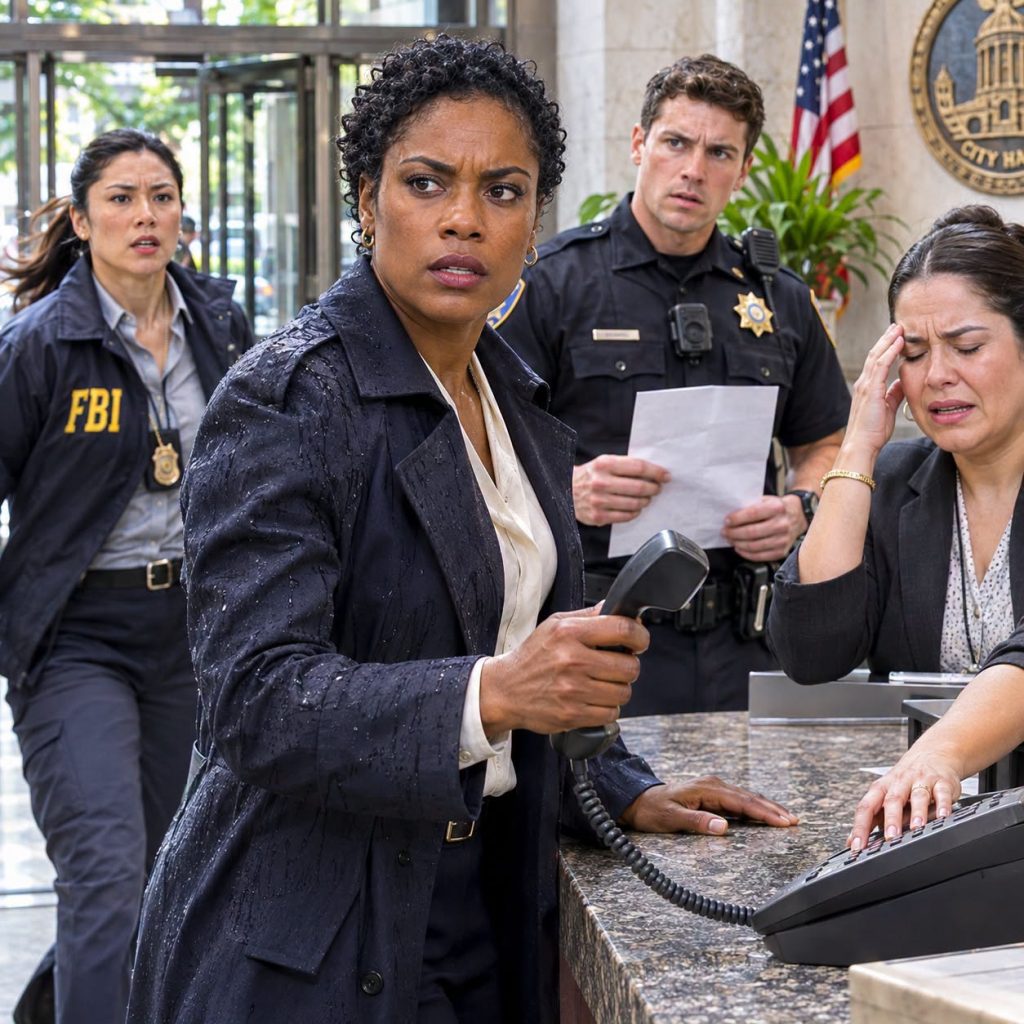
Frank Dwyer was sitting on a folding chair by the basement door. “He hung up on you,” he told me. “Then he told me to finish the job. I asked him to sign his name on the paper copy.” Frank rubbed a thumb along the edge of his clipboard. “My boss says if somebody’s in too much of a hurry to sign, you’ve got time to wait.” Behind him, an FBI evidence technician photographed the recorder where it sat, still running. Voss watched from the other side of the room with his arms folded.
Upstairs, reporters had been waiting nearly forty minutes. The mayor asked if I wanted to postpone. Through the double doors, I could hear someone asking why there were police vehicles at the east entrance. I asked Leah what I could confirm publicly, borrowed an ice pack from the security desk, and went in.
The first question came from a reporter in the front row. She held up her phone. “Is this you in the lobby?”
“Yes,” I said. I set the ice pack on the lectern because I needed both hands to open my folder. “I had an appointment in this building. The receptionist told the sergeant that. A second officer told him where I’d been standing. You’ll see their accounts in the recordings. Today we’re also asking to hear from people who went home from encounters like mine and had only their own word to give us.”
By lunch, the lobby footage was everywhere. The clip people kept sending me ended with Maurice saying my name. The one I saved ran longer. It caught Gloria saying, clearly enough for everybody in that lobby to hear, that I’d been standing right in front of her desk. When we interviewed her that afternoon, she told us she’d been moved off dispatch two days after asking why her call for medical assistance was missing from Eli’s file. She had two kids on her health insurance. For months she’d gone to work and sat under a framed photograph of the man who had signed her transfer.
The recorder filled in those eleven minutes. Gloria had called for an ambulance twice. Puit had radioed that Eli was already in custody when he was injured. The incident report he filed later put the injury before the arrest and blamed it on a fall. In other cases, the original traffic told a similar story. We found messages directing staff to leave certain calls out of the copies sent to investigators. The same deputy chief who approved those copies had sworn that the machine holding the originals was gone.
Eight months later, Voss pleaded guilty to obstruction. Puit was fired after a disciplinary hearing, and the state court threw out Eli’s conviction after the county prosecutor reviewed the original recording. City Hall eventually agreed to independent oversight of police complaints, with public reporting on how long they took to resolve. Gloria read the first report at her desk. She called me because one of the complaints in it was hers, and she’d spent so long watching it disappear into somebody else’s paperwork that seeing the date beside her case number made her cry.
I went back to City Hall on the day Eli picked up the certified copy of the court order clearing his record. He was twenty-three. He wore a shirt with his plumbing company’s name stitched over the pocket, and Denise was waiting outside to drive him back to a job. Before he left, he asked Gloria if he could hear her voice again. I thought he wanted us to play the recording. Gloria understood before I did. She came around the desk, and he asked her what she’d said the first time she called for an ambulance.
“I said, ‘Stay where you are, Eli. I’m still here.’”
He nodded and looked down at the folder in his hands. “That’s what I remembered,” he said. “I just wanted to hear you say it.”
Gloria stayed beside him until he was ready to go. When he finally walked out, he left the folder tucked under his arm and held the door open for his mother.
What do you think of this story? Please leave a like and share your thoughts in the comments. Your support means a lot to us and inspires us to keep writing more meaningful and powerful stories. Thank you! 👍❤️



