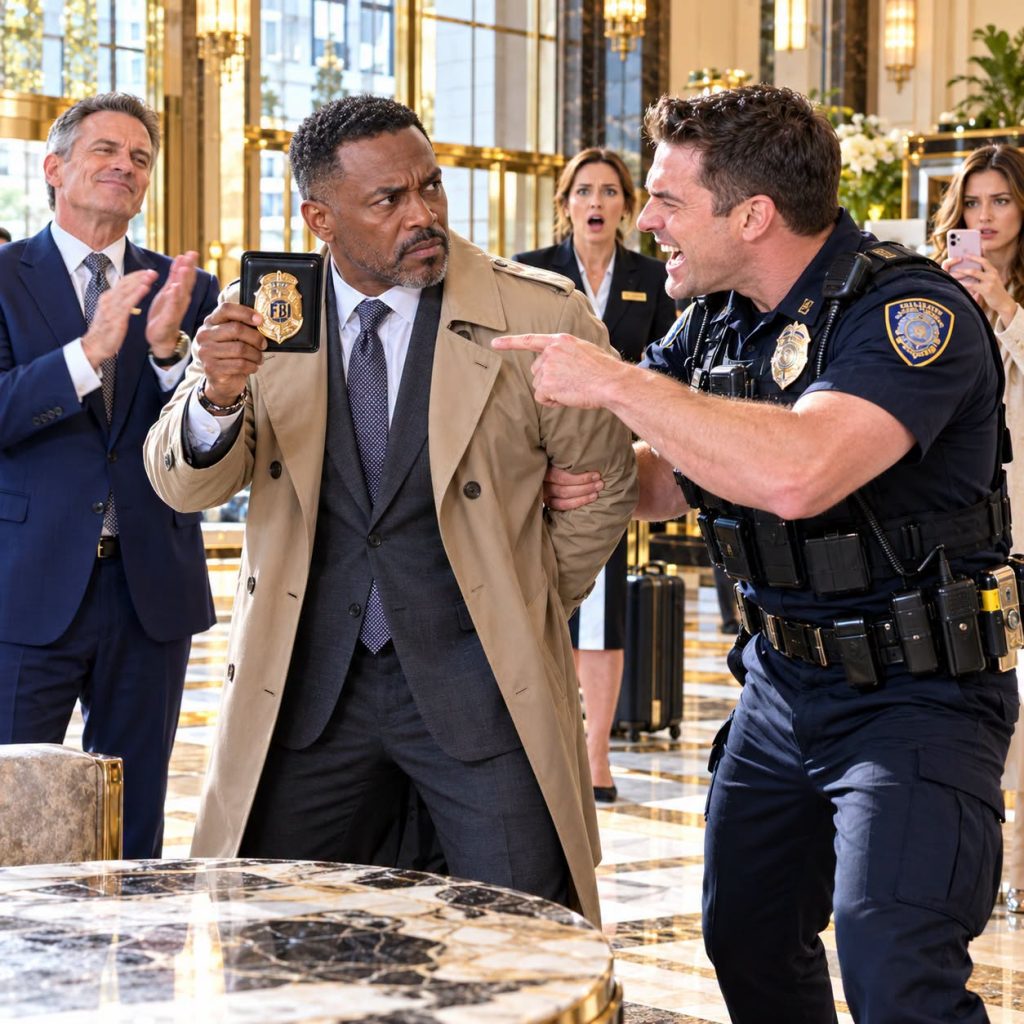
A noise came from the adjoining storage room. I opened the door and found Caldwell crouched behind stacked boxes, clutching a phone. “Put it down,” I ordered. He raised his hands. “I want an attorney.” “You’ll have that opportunity. But first, you’re being detained.” Agents secured him while Sarah collected the phone under the applicable warrant. Its screen showed a recently received message: Transfer confirmed. Destroy the backup. The sender was listed only as MR. Caldwell looked at me with genuine terror. “You don’t understand. He said he’d destroy my family if I refused.” “Who?” I asked. Caldwell’s voice cracked. “Michael Reeves.”
Within the hour, our internal-security partners and federal prosecutors had been notified. Reeves was removed from access to the operation and detained for questioning after investigators secured additional evidence connecting him to the offshore accounts. The case against him didn’t rest on Caldwell’s frightened accusation. Financial records showed unexplained payments. Recovered communications documented instructions to warn Moretti. Access logs placed Reeves’s credentials at the center of repeated unauthorized searches of our case files. And a recorded conversation recovered from Caldwell’s office captured Reeves discussing the planned diversion in the lobby.
When I finally faced Reeves in a secure interview room, he looked more offended than frightened. “Arthur, you can’t seriously believe this.” I placed a photograph of the hidden communications room on the table. “You gave them our surveillance positions.” His jaw tightened. “You don’t understand how much money was involved.” I stared at him. “Then explain it.” For several seconds, he said nothing. Finally, he lowered his eyes. “It started with one favor. Then they had enough on me that I couldn’t walk away.” I thought of the agents he had endangered and the years of public trust he had traded away. “You had a choice every single time,” I said.
The criminal proceedings took months, not minutes. Moretti pleaded guilty to federal financial crimes and agreed to cooperate. Caldwell admitted helping conceal the operation and facilitating unlawful transfers; his cooperation reduced, but did not erase, his sentence. Reeves ultimately pleaded guilty to corruption-related offenses and obstruction. Channing’s case was handled separately. Investigators established that he had accepted payments to remove selected individuals from the hotel, although he maintained that he hadn’t known my identity. He was fired, prosecuted for his own misconduct, and barred from returning to police service.
I returned to the Grand Waverly one afternoon after the cases concluded. The lobby had new management, new security procedures, and the same marble tables. Sarah joined me near the place where Channing had thrown my credentials. “You know,” she said, “you could’ve told everyone who you were the moment he approached.” I looked at her. “I did.” She nodded slowly. “And he laughed.” I picked up my coffee. “That’s the part I hope people remember. A badge should never give someone permission to mistreat another person. And nobody should have to carry one to deserve respect.”
Sarah smiled. “Ready to go, Director?” I looked once more at the entrance where federal agents had arrived that morning. I had entered the hotel expecting to uncover a criminal network. Instead, I had exposed corruption inside my own agency and learned how quickly authority could become dangerous when people stopped questioning their own assumptions. “Ready,” I said. We walked out together. This time, nobody tried to stop me. And for the first time in months, I felt the weight of the investigation finally lift from my shoulders.
What do you think of this story? Please leave a like and share your thoughts in the comments. Your support means a lot to us and inspires us to keep writing more meaningful and powerful stories. Thank you! 👍❤️