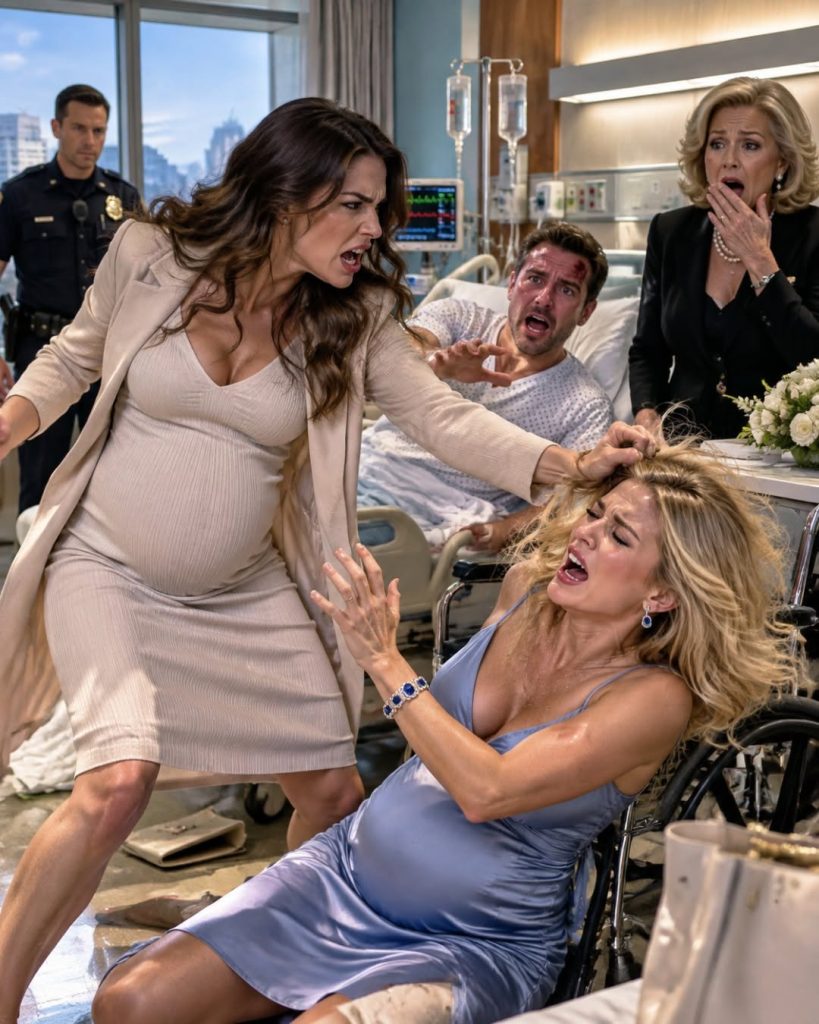
Meanwhile, he had been standing outside a courthouse with Vanessa.
The next morning, Margaret received a response from the county clerk’s office.
A marriage record had been located under Daniel’s legal name.
The date was two years earlier.
The record listed Vanessa Cole as the spouse.
But there was a complication.
A separate document suggested the marriage might never have been legally dissolved.
Margaret read the preliminary notice, then looked at me.
“If the record is valid, Daniel may have entered your marriage while still legally married to Vanessa.”
I pressed my hand against my stomach.
The betrayal was no longer only emotional.
It might have legal consequences for both women, for both babies, and for the company Daniel had spent years using as cover.
But the photograph raised another question.
Who had sent it?
And why did they want me to discover the truth one piece at a time?
Before I could answer, another message appeared on my phone.
STOP LOOKING INTO YOUR FATHER’S DEATH, CLAIRE. THE NEXT PERSON WHO GETS HURT MAY NOT SURVIVE.
I read it, then handed the phone to Margaret.
My father had died after a sudden medical emergency.
For three years, I had accepted the explanation that his heart had simply failed.
Now, for the first time, I wondered whether the man who had married me for my inheritance had also known something about how my father died.
And I knew exactly where I needed to look next.
Chapter 4 – The Secret Behind My Father’s Death
My father’s death certificate listed cardiac arrest as the immediate cause of death.
For three years, I had accepted that explanation without question. He was sixty-two, worked too much, and often complained that the pressure of running a company was exhausting him. His doctor had warned him to rest.
But cardiac arrest explained how he died, not why.
Margaret contacted the hospital that had treated him and requested the records through the appropriate legal channels. Because the records were old and contained confidential medical information, the process took time. In the meantime, she asked a former investigator who specialized in financial misconduct to examine the timeline surrounding his final months.
His name was Samuel Brooks.
Samuel was a retired detective with gray hair, a quiet voice, and an unnerving ability to notice details other people ignored.
He arrived at my temporary apartment carrying a thin folder.
“I don’t want you jumping to conclusions,” he said. “Your father’s death may have been entirely natural. But the financial records around that period deserve a closer look.”
He laid out several documents.
Six weeks before my father’s death, a large transfer had been initiated from an investment account connected to his estate. The transaction was canceled, but someone had attempted to change the account’s beneficiary.
The authorization bore the name Patricia Weller.
Three weeks later, my father had written an email to his attorney requesting an urgent review of his estate plan.
Two days after that, Daniel had visited my father at his office.
I stared at the date.
Daniel had told me he was out of state that entire week.
“Can you prove he was there?” I asked.
Samuel tapped the page.
“Building access records confirm his visit. But we need to understand what happened during it.”
Margaret leaned forward.
“Do we have anything showing that Daniel had access to the estate accounts?”
“Not yet. We do have evidence that he was communicating with Patricia Weller.”
Samuel showed us a list of recovered business emails. Several messages referred to a proposed restructuring that would consolidate assets under a new holding company.
One message, sent from an account associated with Daniel, contained a sentence that made my skin crawl.
Once the marriage is finalized, Claire won’t question the structure.
I read it again.
The marriage.
Not our future.
Not our family.
The marriage was a transaction to him.
I wanted to call Daniel and scream until he admitted everything. Instead, I took a slow breath and reminded myself that anger was exactly what he expected from me.
That afternoon, Samuel located Patricia Weller at a financial consulting office outside the city.
She initially refused to meet us.
Then Margaret sent a formal request for records concerning the suspicious transactions.
Patricia called within an hour.
“I’ll speak to you,” she said. “But not at my office.”
We met in a busy restaurant with Samuel present.
Patricia looked older than in the photograph, her face drawn and her hands restless.
“I made serious mistakes,” she began. “But I did not cause your father’s death.”
“Did Daniel?”
She shook her head quickly.
“I don’t know. I never saw anything suggesting that. Thomas was already ill, and he refused to slow down.”
“Then why did you help them?”
Patricia looked down at the table.




