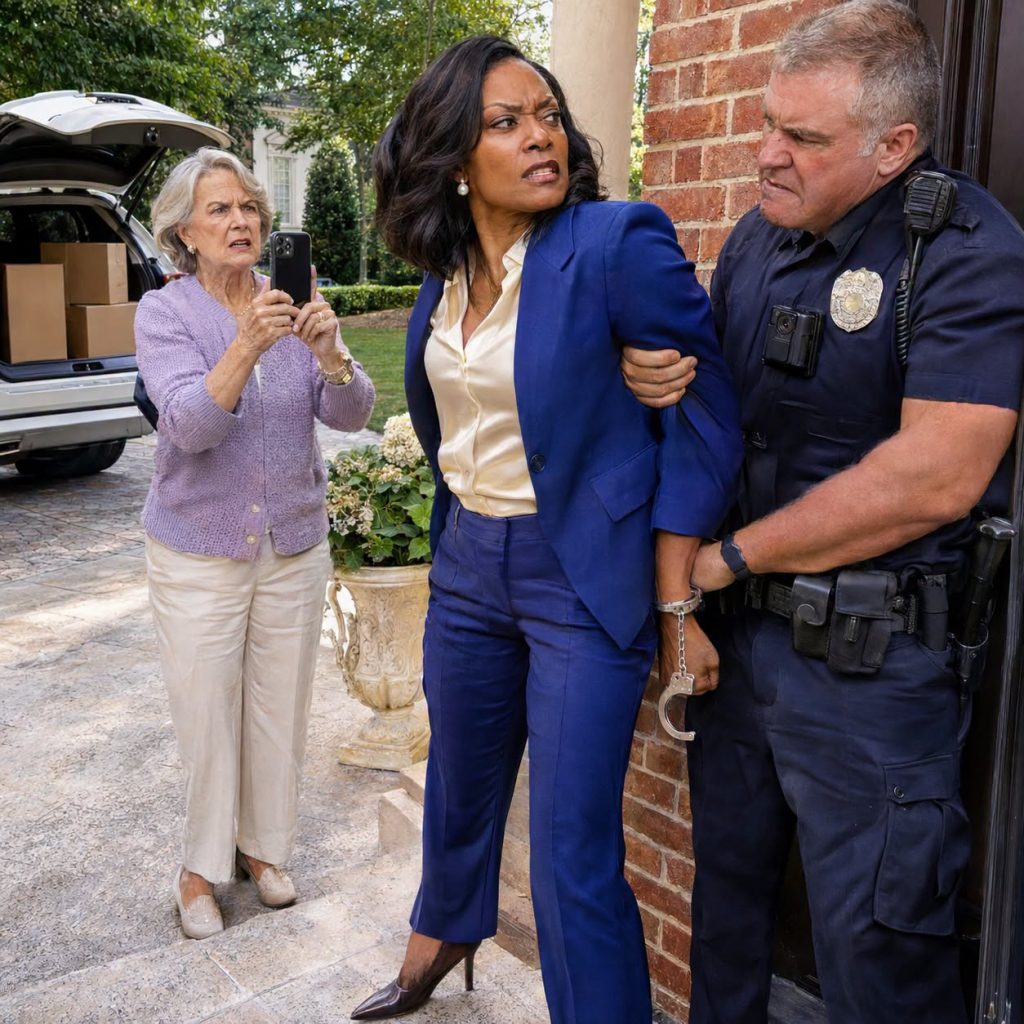
I turned toward Voss. “Where would they hold a child at that yard?” He stared at the chief. “Daniel,” I said, “look at my wrist. You helped him do this. You can decide whether you help him do worse.” For a moment, only the idling engines answered. “Paint building,” he said. “Rear entrance. The front office has cameras, but nobody checks the back.” “How many men?” “Usually two.” Harlan lifted his head. “Shut your mouth.” Voss flinched, then kept talking. “There’s a service road behind the fence.”
Lauren was already relaying the information. Local support would come through state investigators, outside Harlan’s department. “I’m coming,” I said. “You’re injured.” “I can stay in the command vehicle.” She studied me, then nodded. “And you stay there.” The yard was eleven minutes away. During the drive, Marcus’s daughter’s name came back to me: Sophie. Nineteen, studying dental hygiene. He had shown me her graduation picture while handing over the envelope.
At the staging point, I watched a live camera feed while agents moved along the service road. A white van stood outside the paint building. One man paced beside it, speaking into a phone. Nobody sent me toward the door. Nobody traded the evidence. The team entered from two directions. Through the microphone came a shout, a metallic crash, then a command to get down. I gripped the edge of the console until my swollen wrist throbbed. “Two secured,” someone reported. A pause. “Both hostages located. Medical needed. Both conscious.” I bent forward and finally let myself breathe.
Marcus had a broken nose and a badly swollen eye. Sophie had bruised wrists, but she walked out holding an agent’s sleeve. When they brought them to the ambulance, Marcus tried to apologize. “I should’ve gone straight to the FBI.” “You came to me,” I said. “You did enough.” Sophie caught his hand. “Dad. Stop apologizing.”
The second recording was stored in an account Marcus had arranged for investigators to access if he disappeared. It showed Harlan supervising the removal of seized narcotics, then ordering an officer to change the inventory. That officer, Thomas Hale, had later died in what the department called an accidental overdose. Marcus had saved the footage before the property room system was wiped.
The warehouse voice was Harlan’s. His security liaison had passed him my relocation form. Voss admitted Harlan had ordered him to recover the drive, but the body of complaints investigators reopened made something else clear: nobody had needed to teach Daniel Voss whom to stop, whom to doubt, or whom to hurt.
Months later, a jury convicted him of violating my civil rights. Harlan and the two men from the yard were convicted in the corruption and kidnapping case. Hale’s death remained under investigation; his family finally received the evidence the department had hidden. At sentencing, Voss looked at me. “I was following orders.” “You also made choices,” I said.
The first evening I returned home alone, Mrs. Bell met me beside the porch. “Need company?” I looked at the repaired doorframe, then at her. “Yes.” We carried two chairs outside. This time, I sat in my own driveway until I was ready to go in.
What do you think of this story? Please leave a like and share your thoughts in the comments. Your support means a lot to us and inspires us to keep writing more meaningful and powerful stories. Thank you! 👍❤️




