My mother’s.
Daniel explained that Vanessa had shown him the paperwork weeks earlier, claiming I’d agreed to sell after my accident. As a commercial property consultant, he’d reviewed the developer’s plans as a favor. He’d never seen me sign anything.
“Why didn’t you ask me?” I whispered.
He lowered his eyes. “Because I trusted the woman I was going to marry.”
I called my attorney, Melissa Grant, who’d already been investigating the suspicious documents I’d photographed at the recorder’s office. She instructed me not to confront the developer. She would notify its title company, dispute the forged authority, and seek an emergency court order if necessary.
Then Daniel showed me another message: Vanessa telling him that once I was hospitalized, he should inform the buyer I was unavailable for verification.
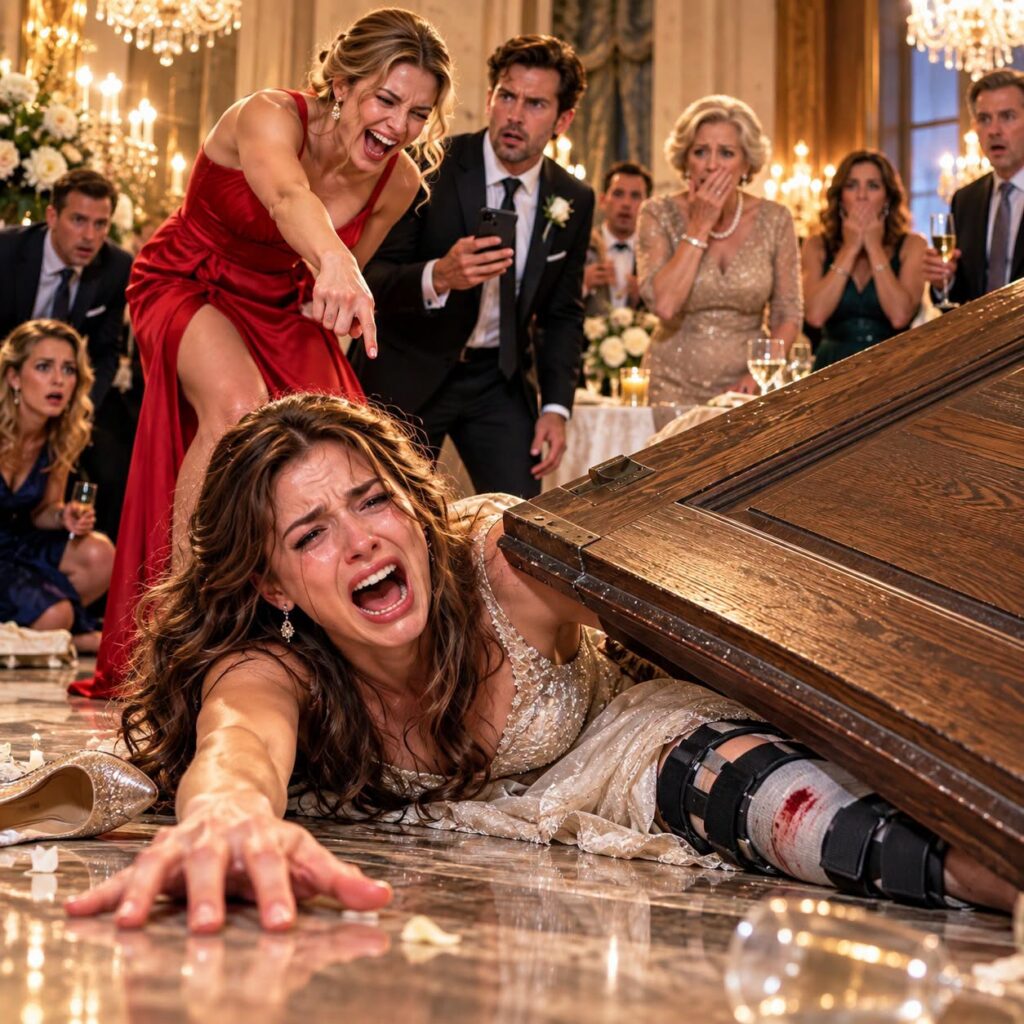
That was the twist I couldn’t escape. The door hadn’t fallen because Vanessa lost her temper. She needed me out of the way before anyone asked for my signature in person.
A detective arrived that night with photographs of the door hardware. Two retaining brackets had been removed before the party. Security footage from the service hallway showed who’d been there.
Vanessa wasn’t alone.
My mother was holding the ladder.
I watched the footage twice before I could speak.
Mom steadied the ladder while Vanessa reached toward the door’s upper track. When Vanessa climbed down, Mom took the removed hardware and slipped it into her purse.
The detective paused the video. “Do you recognize that bag?”
I did. Mom had carried it to church every Sunday since Dad’s funeral.
I wanted to believe it was a repair. Daniel’s recording proved otherwise.
“Please preserve everything,” I told the detective. “And speak to Peter before she pressures him.”
Then I called Melissa.
By nine the next morning, Melissa had sent formal fraud notices to the developer, its lender, and the title company, together with proof that I’d never authorized the sale. She also requested preservation of their emails and closing records. The developer postponed Tuesday’s closing while its lawyers reviewed the dispute.
From my hospital bed, I signed a sworn statement before a visiting notary. I attached copies of my deed, the disputed documents, and medical records showing that the supposed signing date fell during a post-surgical appointment across town.
My second operation lasted four hours. When I woke up, Melissa was waiting with news.
The notary whose seal appeared on the power of attorney had denied witnessing my signature. She’d reported that her stamp was missing weeks earlier. The police were examining how Vanessa obtained it.
And Mom had asked for a lawyer.
Two days later, Mom called from her attorney’s office. I let her speak.
“Vanessa said the house belonged to both of you,” she whispered. “She said she’d lose the catering company if the sale fell through. I told myself she only wanted to scare you.”
“You heard her say to hit my bad leg,” I said. “And you helped.”
Silence.
“Mom, you didn’t even ask if I would walk again.”
She began crying. I ended the call.
Over the following months, investigators reconstructed the scheme. Vanessa had used the false authorization to collect the developer’s advance, then tried to keep me from challenging it. Mom had helped prepare the dangerous door and falsely supported the paperwork. Peter cooperated and provided messages showing he’d been misled about the door’s condition.
Daniel ended the engagement and testified. I thanked him for saving the recording, but told him trust wouldn’t be rebuilt overnight. He understood.
Vanessa eventually pleaded guilty to aggravated assault and forgery. She received a prison sentence and restitution obligations. Mom accepted a plea agreement on lesser charges and was sentenced to probation with community service. The fraudulent property documents were declared invalid; the developer pursued Vanessa for its lost money, not me.
My recovery took almost a year. Some mornings my leg still ached before rain. But I learned to walk without the cane again.
On the anniversary of the attack, I reopened Willowbrook House for a charity dinner. We installed a safer door and an accessible entrance. I kept Dad’s portrait by the fireplace, where he’d always wanted it.
I stood beneath it, surrounded by people who had helped me heal, and finally understood what he had left me.
Not just a house.
The right to decide who would ever be welcome inside it again.



