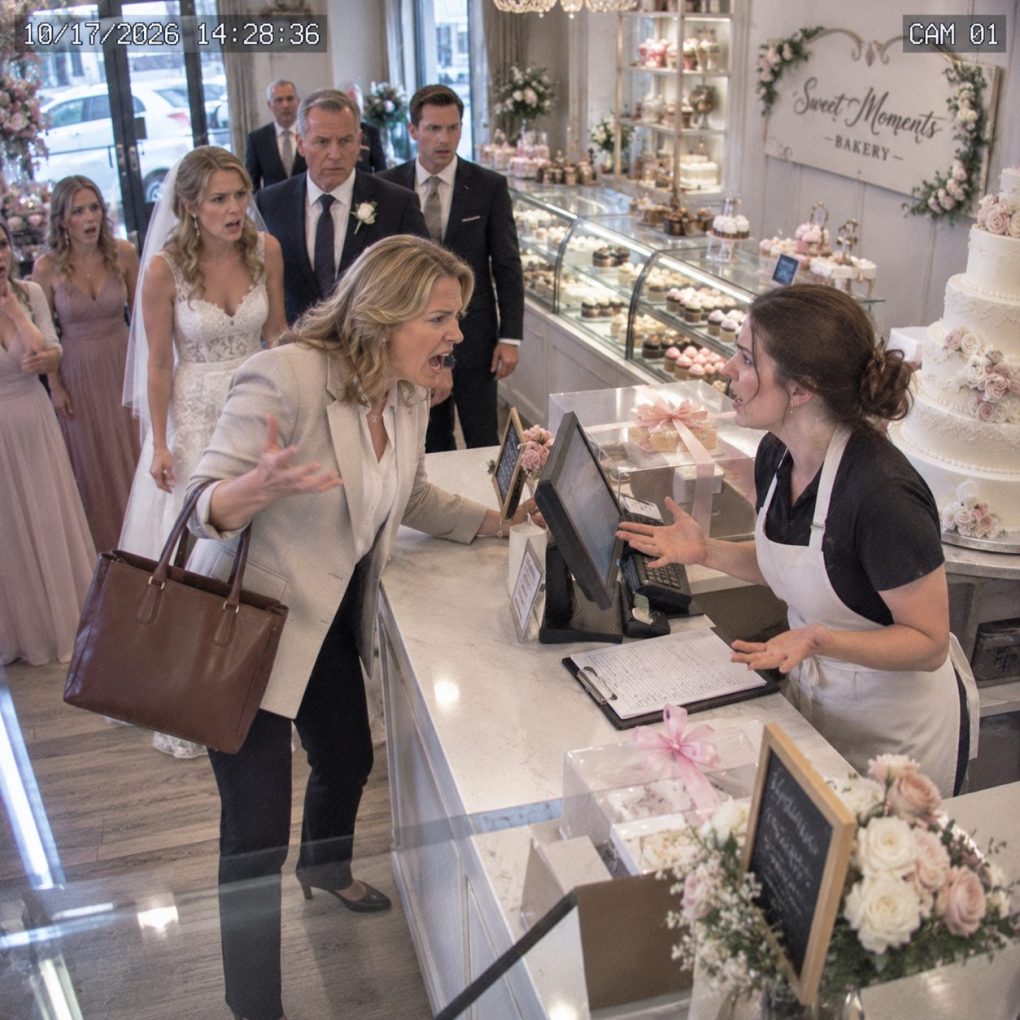
“Laura Mitchell,” I said, expecting the baker to smile, check a clipboard, and bring out the three-tier lemon cake my daughter Emma had already paid for. Instead, the woman behind the counter went completely still. Her name tag read Megan Shaw — Owner. She glanced toward the two customers waiting behind me, then lowered her voice. “Mrs. Mitchell, could you step over here for a second?” My stomach tightened before I even knew why. Emma had texted me that morning: Mom, please pick up the cake at eleven. I’m drowning over here. Love you. Nothing about that message suggested disaster.
Megan led me behind a display case and asked, “Were you supposed to attend the wedding today?” I stared at her. “Of course. I’m the bride’s mother.” She slowly turned a printed email toward me. It had been sent from the wedding coordination account three days earlier. Do not release the cake to Laura Mitchell. She is no longer attending. Do not disclose the updated ceremony location. Underneath was another instruction: if I appeared, staff were to say the cake had already been delivered. I read it twice. “Emma didn’t send this.” Megan hesitated. “It came from the account we’ve used for all wedding changes.”
The ceremony was supposed to be at six that evening at the Fairmont ballroom in Philadelphia. I had paid the original $18,000 venue deposit as Emma’s wedding gift, but the rest of the planning had been handled by Emma, her fiancé Daniel, and his mother, Patricia. For months, Patricia complained that I was “too involved,” even when I was doing exactly what Emma asked. Then, two weeks earlier, Emma stopped sharing schedules. She said Daniel’s family was handling the final details and told me to relax. I thought she was protecting me from wedding stress. Standing in that bakery, I realized someone had been protecting the wedding from me.
I called Emma. Straight to voicemail. Daniel’s phone did the same. Then Megan showed me something worse: the delivery address had been changed yesterday from the Fairmont to Ashford Manor, a private estate forty minutes outside the city. The ceremony time had moved from six to three. I had not merely been removed from cake pickup. If I had followed the schedule I was given, I would have arrived at an empty ballroom three hours after my daughter got married somewhere else.
My hands started shaking, but I did not call Patricia. Instead, I forwarded every email to my attorney, Rebecca Sloan, because six months earlier she had reviewed a wedding-fund agreement I created after contributing $42,000 toward Emma’s expenses. The agreement did not give me control over the wedding, nor did I want it to. It simply required that money from my contribution be used for listed wedding costs and that major vendor changes be documented.
Megan checked the metadata attached to the coordination email and frowned. “This wasn’t sent from Emma’s phone.” The login came from an IP address tied to Daniel’s parents’ home. Then she pulled up the account recovery contact. The phone number ended in 8841.
I knew that number.
Patricia’s.
My phone rang.
Emma.
I answered immediately.
She was crying so hard I could barely understand her.
“Mom, where are you?”
“At the bakery.”
A pause.
Then she whispered, “Why aren’t you here?”
My heart stopped.
“Emma, where is ‘here’?”
“Ashford Manor. Patricia said you refused to come.”
Before I could answer, Emma said something that changed the entire day.
“She showed me your email, Mom.”
“What email?”
“The one where you said you’d rather lose the money than watch me marry Daniel.”
I closed my eyes.
I had never written it.
And suddenly I knew the cake was only one piece of a much larger lie.
I told Emma not to argue with anyone until I arrived. Megan agreed to deliver the cake directly to Ashford Manor after verifying with Emma personally. I drove there with Rebecca on speakerphone, forwarding screenshots, timestamps, and the wedding-account records as we went.
Emma met me in a side room wearing her wedding dress, mascara streaked beneath both eyes. She handed me a printed email supposedly sent from my address four days earlier. It said I was “done financing a marriage built on manipulation” and would not attend the wedding under any circumstances.
The message looked convincing until Rebecca compared the header information with real emails from my account. The display name was mine, but the sending domain contained one extra letter. Someone had created a nearly identical address and used it to imitate me.



