For one second, I heard nothing. Then Voss groaned. “Fire,” Owen said over the radio. “Ground crew reports smoke near your right side. Get out.” I shut down the remaining systems and released my harness. The canopy opened, admitting cold air and the sharp stink of fuel. Voss’s head hung forward. “Garrett!” He stirred but couldn’t lift his right arm. I climbed onto the cockpit edge, reached back, and released his restraints. He was heavier than I expected. My burned fingers slipped against his flight suit. “Push with your legs,” I told him. “You’re coming with me.”
A firefighter reached us on a ladder and took his upper body while I freed his boot from beneath the seat. Together we dragged him over the rim. On the ground, he buckled against me. I hooked his arm over my shoulder until two firefighters carried him clear. Foam hissed behind us. Only when a medic touched my face did I realize I was crying. “How many on the ground?” I asked. “Nobody hurt,” she said. I made her say it again.
Colonel Hayes met me at the hospital that evening. My shoulder was strapped, my fingers dressed, and dried blood still marked my sleeve. She pulled up a chair. “Your flight recorder has been secured. So have the weather advisory, the dispatch records, and both versions of the release.” I looked at her. “Both?” She nodded. “The operations supervisor approved a different route with a serviceable alternate. Major Voss substituted the route card and altered the release before handing it to you.” The county closure notice had been logged correctly. He had bypassed that information along with Owen’s warning.
The inspection he feared concerned instructor conduct. Two junior pilots had already reported that Voss used dangerous evaluations to punish people who challenged him. My arrival gave him another target: a Black woman whose high scores he could dismiss as someone else’s favoritism. “He wanted a refusal on paper,” Hayes said. “Something he could call a lack of confidence.” I looked at the bandages on my hands. “And he believed he could control the risk.” “He had been getting away with that belief for years.” She waited before adding, “Your failure to verify the changed clearance will be reviewed too.” “It should be,” I said.
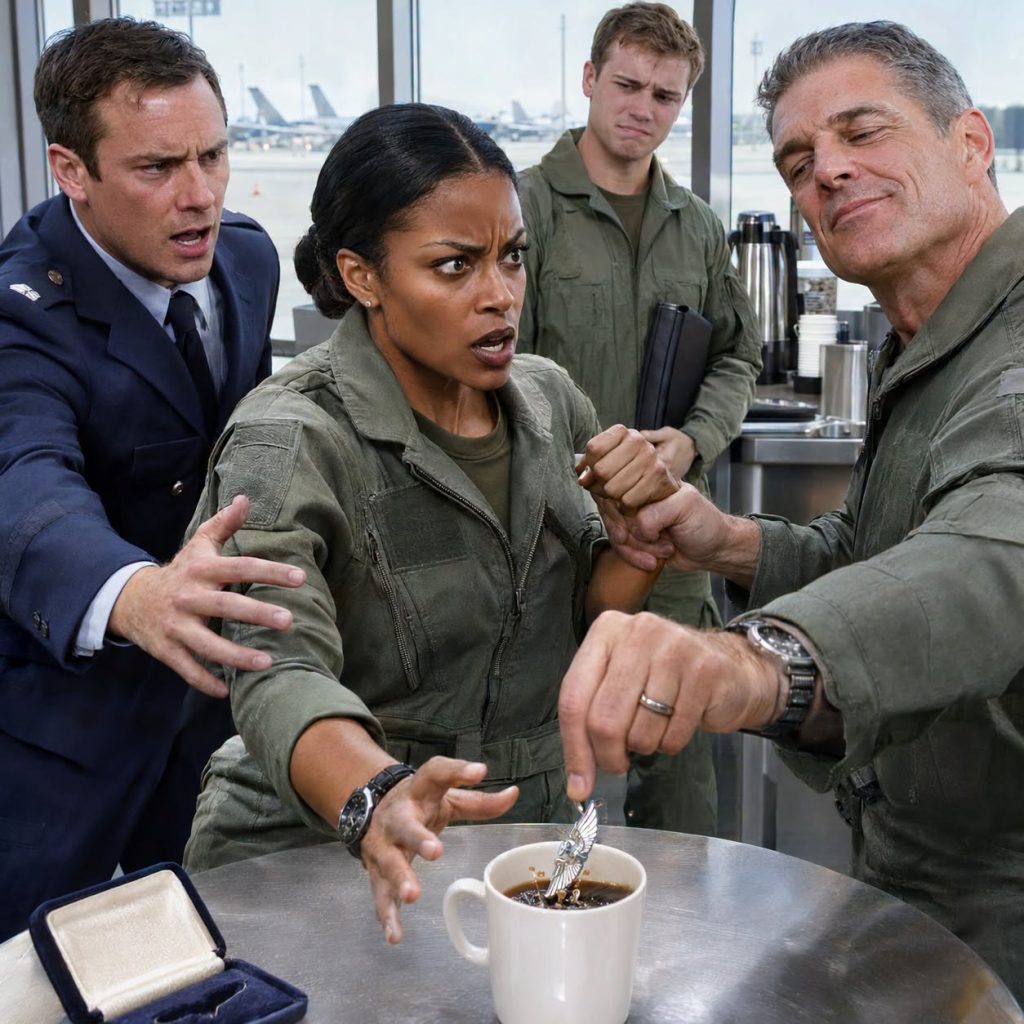
The investigation took weeks. Voss was removed from command and grounded pending further proceedings. Other pilots finally spoke. The lieutenant who had laughed at breakfast submitted a statement describing the coffee incident. Owen’s advisory and the recorded emergency calls supported what we told investigators. My review identified the clearance check I had missed; the board also found that I had handled the emergency appropriately. Nobody erased my mistake to make the ending easier. Nobody was allowed to use it to erase his choices, either.
Voss asked to speak at the squadron gathering after the findings were announced. Hayes let me decide whether I would attend. I stood beside Owen near the back. Voss faced me without a microphone. “I called you a quota because I wanted everyone to question what you had earned,” he said. “Then I put you in danger trying to prove myself right. You saved my life anyway.” He swallowed. “I’m sorry.” I let the silence stand. “Your apology belongs in how you testify,” I said. “Especially for the pilots who reported you before I arrived.” He nodded.
Afterward, my father opened the repaired case holding his silver wings. “You kept them,” he said. “Of course.” He hugged me carefully around my injured shoulder. At my next briefing, I wore my own wings on my uniform. Owen handed me the weather report before anyone discussed the mission. The new commander waited while I read it. My call sign, chosen by the pilots who had heard the rescue recording, appeared beside my name: Spiral. This time, when I said the route needed changing, everyone listened.
What do you think of this story? Please leave a like and share your thoughts in the comments. Your support means a lot to us and inspires us to keep writing more meaningful and powerful stories. Thank you! 👍❤️



