But they no longer treated my retirement accounts as the solution.
David did well at the hardware store.
He learned the inventory system.
Helped train newer employees.
And eventually became an assistant department manager.
He called me the day he received the promotion.
“Mom, guess what?”
I smiled.
“What?”
“I got it.”
I knew immediately what he meant.
“Congratulations, sweetheart.”
His voice sounded different.
Proud.
Not the pride of pretending to be successful.
The pride of somebody who’d worked for something and earned it.
“Thanks, Mom.”
Then he said quietly, “Dad would’ve liked this.”
I looked toward Robert’s photograph.
“Yes, David. He would have.”
The estate matter in Portland eventually reached a resolution too.
It took months of document reviews, court proceedings, title work, and tax advice.
There was no magical check handed to me at the first meeting.
The ownership records had to be resolved.
The retained funds accounted for.
And the property sale negotiated properly.
But the conclusion was significant.
I received the estate distributions to which I was entitled, after the required expenses and adjustments.
The commercial property was ultimately sold through a completed transaction.
For the first time in my life, I had more financial security than Robert and I had ever imagined.
I thought about buying a luxury car.
For approximately three days.
Then I decided I liked my old sedan.
I did make improvements to the house.
I replaced the aging roof.
Updated the heating system.
And hired someone to repair the loose stair tread Robert had promised to fix.
When the carpenter removed the old piece of wood, I unexpectedly began crying.
He looked alarmed.
“Ma’am, is something wrong?”
I laughed through my tears.
“No.”
I touched the new railing.
“Somebody I loved was always going to fix that.”
The carpenter nodded gently.
Then went back to work.
I also met with Thomas and an independent financial adviser.
We updated my estate plan, arranged appropriate protections for future healthcare and long-term needs, and established a charitable education fund in Robert’s memory.
It would support students at a local community college who needed help paying for professional training.
Robert believed education was one of the few investments that could keep helping a person long after the original money was spent.
I wanted part of my inheritance to do that.
But I didn’t use my will to control David and Jessica.
I no longer wanted to dangle future money in front of them as a reward for behaving.
I wanted our relationship to exist because we cared about one another, not because they were waiting for an inheritance.
So I kept the details of my estate plan private.
They didn’t ask.
That, in itself, told me something had changed.
Three years after the breakfast with Thomas, I needed surgery.
Nothing dramatic happened in the way David found out.
I called him from my doctor’s office.
He listened.
Asked what time the procedure was scheduled.
Then said, “I’ll take you.”
“You have work.”
“I’ll arrange it.”
“David—”
“Mom, you took me to every doctor’s appointment when I was little. I can drive you to one now.”
I smiled.
“All right.”
He picked me up at six in the morning.
Jessica arrived at the hospital later with a bag containing a book, my reading glasses, and the sweater I always wore when I was cold.
When I returned home to recover, they checked on me without trying to take over.
David filled the refrigerator with groceries.
Jessica brought soup.
She asked before moving anything in the kitchen.
Every single time.
One afternoon, while I was sitting in my favorite chair, she came in carrying clean dishes.
“Margaret, where do you want the mixing bowls?”
I looked at her.
Then smiled.
“Lower cabinet. To the left.”
She nodded.
“Got it.”
It was such a small exchange.
Nobody else would have noticed anything special about it.
But I remembered the woman who once screamed at me because I wanted my measuring cups where I could reach them.
Now she was asking.
And listening.
I didn’t need to call it redemption.
I only needed to recognize that she was making different choices.
A month after I’d recovered, I invited David and Jessica for Sunday breakfast.
This time, I didn’t invite an attorney.
There were no folders.
No financial statements.
No envelopes containing photographs of comic books.
Just the three of us.
I made pancakes with cinnamon and blueberries.
David arrived carrying flowers.
Jessica brought a homemade peach cobbler.
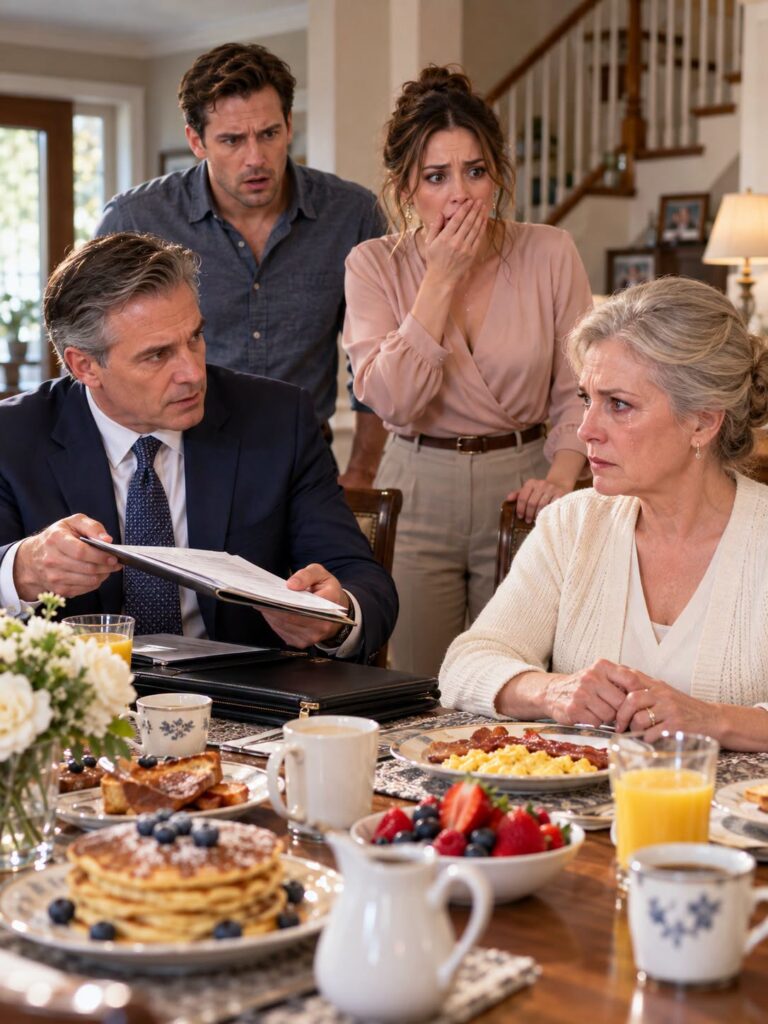
We sat at the dining room table where everything had changed.
For a while, we talked about ordinary things.
David’s work.
Jessica’s new supervisor.
A neighbor’s noisy dog.
The tomatoes I’d planted in the backyard.
Then David looked around the room.
“Mom?”
“Yes?”
“I think this is the first time we’ve had breakfast here without somebody being upset in years.”



