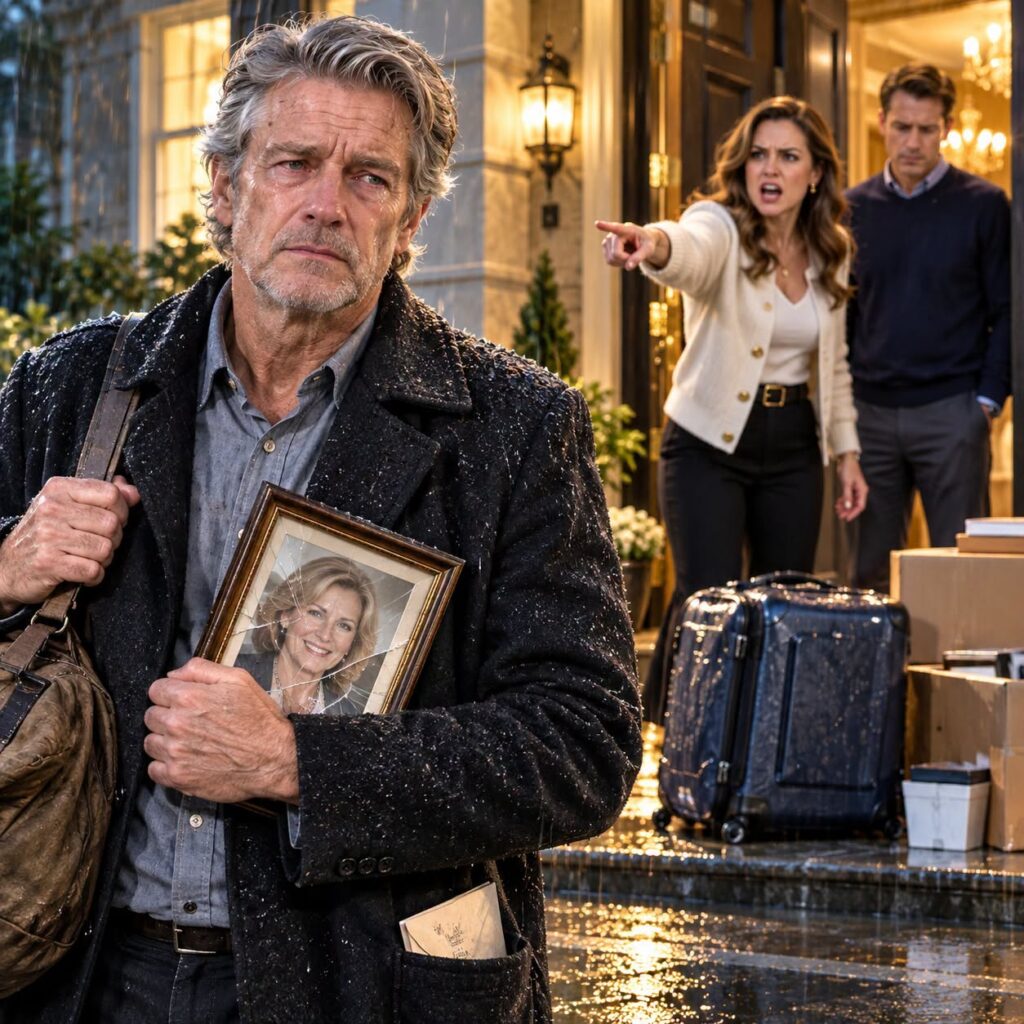
I opened Allison’s envelope. It contained an attorney’s intake form dated three weeks before my eviction. Under “proposed conservator,” Daniel had written his own name. He had been planning this while we still ate breakfast together.
I remembered Daniel organizing my mail, asking where I banked, and discouraging me from hiring an attorney. I’d called it love.
Nora arranged an independent medical assessment for that afternoon. I wanted the judge to see evidence, not just my outrage.
I called Daniel on speakerphone.
“Dad,” he said immediately, “we can straighten this out privately.”
“Did you know Allison was throwing me out?”
Silence.
“Did you tell a court I couldn’t manage my money?”
“I was trying to protect what Mom and you built.”
“From whom?”
He exhaled sharply. “My mortgage is in trouble. Allison’s business lost money. If you help us now, I can withdraw the filing.”
“How much?”
“Four hundred thousand. It doesn’t have to be a gift.”
I closed my eyes. My own son had put a price on my dignity.
When I refused, his voice changed.
“Then we’ll let the judge decide. The emergency hearing is tomorrow morning.”
Nora reached for the phone. “Daniel, this is Frank’s attorney. Do not contact him again about this without going through me.”
He hung up.
Nora looked at the forged medical letter and said, “Tomorrow, he won’t just have to explain why he wants your money. He’ll have to explain who made this.”
At nine the next morning, I entered the Madison County courthouse in the navy suit June bought for our fortieth anniversary. My hands were steady. Nora carried a folder that wiped Daniel’s smile away.
Allison whispered to Daniel, then glanced around as though expecting someone to escort me away.
Daniel’s attorney called my farm sale and hotel stay evidence of poor judgment. Nora rose.
“My client completed a documented arm’s-length sale through licensed professionals,” she said. “He stayed in a hotel because the petitioner’s household ordered him out.”
She presented the closing documents, Allison’s messages, and proof of my contributions toward their bills. She also offered the independent physician’s assessment Nora had arranged the previous afternoon.
She showed six months of emails negotiating the sale, tax projections, and my written instructions to the closing company. I had made careful decisions every step of the way. Nothing about that sale was impulsive.
Then she handed the judge Dr. Price’s signed declaration.
The courtroom fell quiet.
In his declaration, Dr. Price confirmed he had not written the letter, never diagnosed me with cognitive impairment, and had not authorized his signature.
The judge turned toward Daniel’s attorney. “Were you aware this document was disputed?”
He shook his head, looking as blindsided as I’d been on the porch.
Daniel started talking over him. Allison grabbed his sleeve, but he pulled away.
“Dad was supposed to help us,” he blurted. “He has millions. We’re about to lose our house!”
“And that,” the judge said sharply, “is not evidence that your father lacks capacity.”
The judge denied the emergency request and directed that the disputed letter be preserved and forwarded to the county attorney. Any forgery investigation would take time. Nobody was handcuffed. I didn’t need a spectacle.
I needed my name back.
Outside the courtroom, Daniel followed me into the hall.
“Dad, please. The mortgage company won’t wait.”
I remembered a little boy asleep on my shoulders at the county fair, his hands gripping my collar.
“You could have asked me for help,” I said. “Instead, you tried to prove I wasn’t fit to say no.”
Allison stepped forward. “We were desperate.”
“So was I, the night you left me in the rain.”
Neither of them answered.
Over the following weeks, investigators reviewed the letter. Daniel withdrew his petition. Nora helped me secure my accounts, revoke old authorizations, and revise my estate plan. Nobody else controlled the proceeds.
Daniel and Allison sold their house and rented a smaller place. I didn’t rescue them or celebrate.
I bought a modest home with a porch overlooking prairie grass. June’s cracked wedding photograph sits on my mantel. I love the life behind that glass, flaws and all.
I created a small fund for older neighbors facing eviction. Its first grant helped a widow afford a rental deposit.
One evening, Daniel left a voicemail. “Dad, I know I can’t ask for your trust. I hope someday I can earn it.”
I saved it without calling back. Forgiveness was mine to choose. Trust would take work.
At seventy, I understood what my son had forgotten: a home isn’t where people allow you to stay. It’s where nobody makes you beg to belong.



