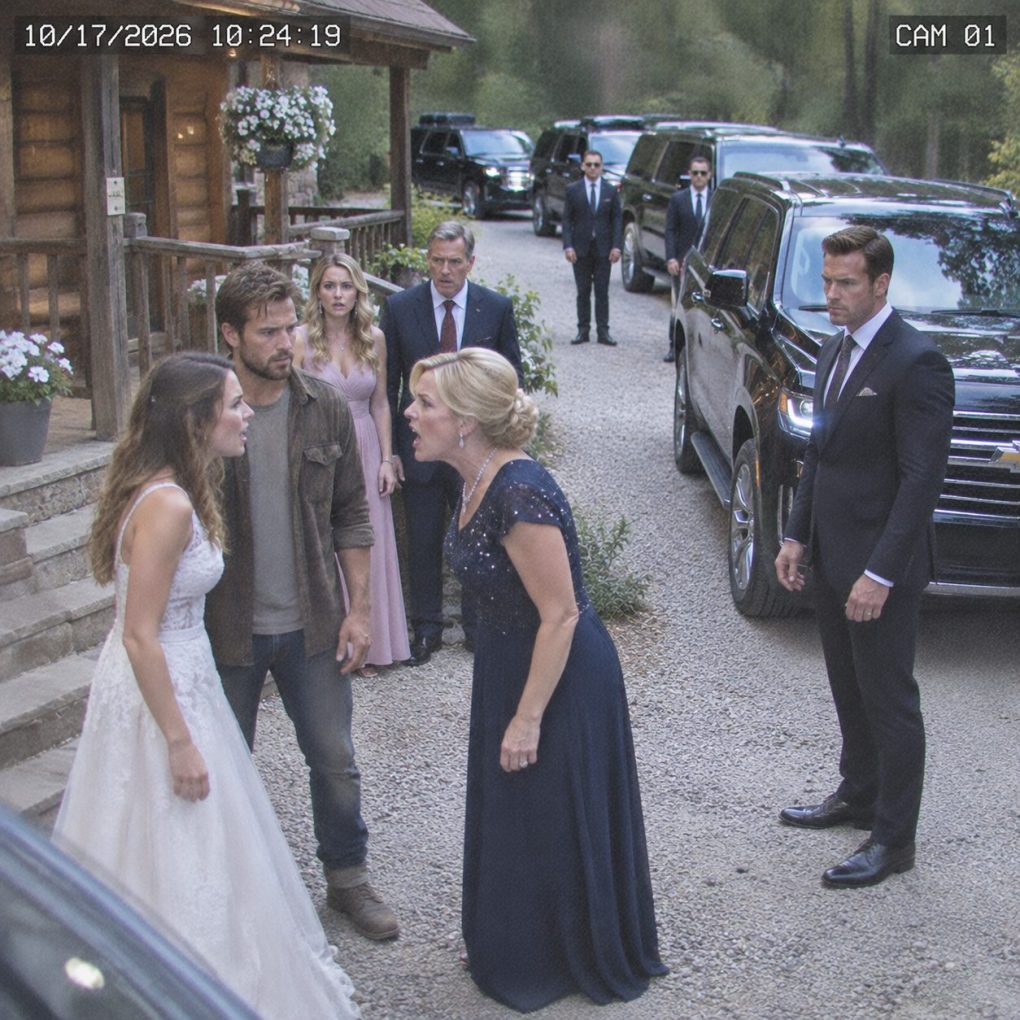
“Now you’ll learn what you’re really worth,” Victoria said as I stood beside Noah Reed outside the county courthouse in Asheville, North Carolina. My father stared at the pavement. My stepsister Madison smiled behind her sunglasses. To them, Noah was the poorest man Victoria could possibly have chosen for me: a quiet thirty-eight-year-old who repaired roofs, drove an old Ford pickup, and lived in a one-bedroom cabin at the edge of the Blue Ridge Mountains.
The marriage had not been legally forced. I could have refused. But after Dad suffered a stroke, Victoria controlled access to the family home and had spent months making it clear that if I continued fighting her over my late mother’s belongings, I would be cut off from him completely. Noah had done occasional maintenance work on the property and once helped Dad after a fall. Victoria suggested the marriage as a cruel joke after hearing Noah needed health insurance and I needed somewhere to live. She expected both of us to be humiliated.
What she did not understand was that Noah treated me with more dignity in one week than my family had in years.
He never asked about my inheritance. Never laughed when I admitted I had only $8,000 left after legal fees. He gave me the bedroom and slept on the couch for the first month. We agreed the marriage would remain practical until Dad recovered enough for me to make decisions freely.
Three weeks later, I was making coffee when Noah’s phone lit up beside the sink.
I did not mean to read it.
The message preview was impossible to miss.
BOARD APPROVAL COMPLETE. MERCER AEROSPACE BUYOUT VALUES YOUR POSITION AT $2.4 BILLION. CALL BEFORE MARKET OPEN.
I stared at the screen.
Noah entered the kitchen carrying firewood and stopped when he saw my face.
“What is Mercer Aerospace?”
He set the wood down very slowly.
“That’s complicated.”
“Apparently worth two-point-four-billion dollars.”
For the first time since I met him, Noah looked cornered.
He finally told me the truth.
His legal name was Noah Mercer Reed. Twelve years earlier, he had co-founded Mercer Aerospace Systems with his older brother and two engineers. After a brutal board fight and his wife’s death, he stepped away from daily operations, retained a large ownership stake, and disappeared from the public side of the company. The cabin belonged to him. So did several hundred acres around it.
“Why live like this?”
“Because I can breathe here.”
Before I could ask anything else, tires crunched over gravel outside.
Four black SUVs rolled toward the cabin.
Victoria, Dad, and Madison happened to be arriving behind them. Victoria had come to “check whether married life had humbled me yet.”
The first SUV stopped.
A silver-haired man stepped out.
He looked at Noah.
Then smiled with visible relief.
“Mr. Reed,” he said, “the board accepted your terms.”
Victoria stopped walking.
Madison’s mouth fell open.
The man extended his hand.
“Your $2.4 billion transaction is ready for signature.”
Noah did not look at them.
He looked at me.
And quietly said, “This time, nobody signs anything unless Claire understands every page first.”
The silver-haired man was Thomas Grant, general counsel for Mercer Aerospace Systems. The other vehicles carried two board representatives, a tax attorney, and Noah’s private financial adviser. Nobody had arrived to hand him a giant check. They came because a private-equity consortium had offered to purchase part of his remaining stake, and Noah’s approval was required before the transaction could proceed.
The $2.4 billion figure was not cash sitting in a checking account. It was the estimated value of Noah’s equity position under the proposed deal. Taxes, restrictions, voting rights, and transaction terms still mattered. That explanation somehow made Victoria’s expression even more fascinating.
She immediately changed personalities. Five minutes earlier, Noah had been “that handyman.” Now she called him “Mr. Reed” and asked whether Mercer Aerospace worked with her brother’s investment firm. Noah answered politely but gave her nothing.
Dad looked more ashamed than surprised. He admitted later that he had known Noah was educated and financially independent, though not about the aerospace company. He had allowed Victoria to ridicule him because challenging her had become easier to avoid after his stroke.
That hurt me more than her cruelty.
Noah asked everyone to leave except me and the legal team. Victoria refused at first, insisting that because I was his wife, “our family” should understand the deal. Thomas corrected her calmly: the transaction involved Noah’s separate premarital business interests, and attendance was Noah’s decision.
The door closed on her face.



