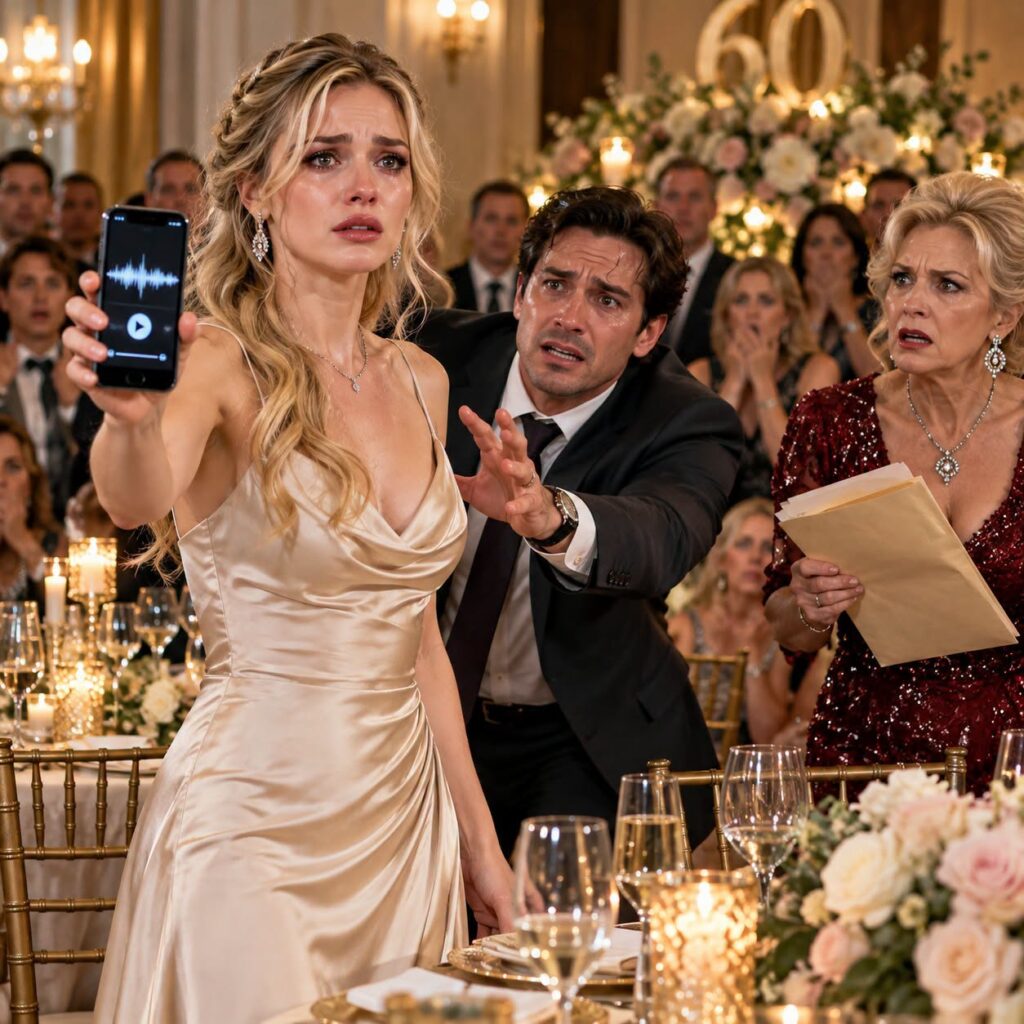
“Tell them that’s not true,” I said.
Daniel stared at his shoes.
Vivian slapped the table. “That woman wanted money! We did what we had to do!”
I opened a second folder on my phone.
For eighteen months, Vivian had told me her insurance wouldn’t cover expensive treatments for a nerve condition. I’d wired her money from my freelance design income. Sometimes I skipped paying extra on our mortgage so she wouldn’t miss a supposed appointment.
After Nora and I compared dates, the numbers lined up. My transfers to Vivian were followed by payments toward Daniel’s child-support arrears and legal fees. Vivian had even reused a hospital bill with the date altered.
“Twenty-eight thousand, six hundred dollars,” I said. “That’s what you took from me with fake medical emergencies.”
Daniel whipped around. “Mom? You said you were paying those bills from Dad’s insurance money.”
For the first time, Vivian looked genuinely cornered.
Then she smiled.
“Lauren,” she said, loud enough for everyone, “should we discuss the things you’ve done since the baby was born?”
She pulled a manila envelope from her purse.
Inside were printed photographs of me crying after surgery, notes about two sleepless nights, and a draft statement claiming I was too unstable to care for my son.
Across the top, in Daniel’s handwriting, were two words:
SOLE CUSTODY.
I didn’t touch the envelope. I looked at Daniel.
“Did you help her put that together?”
He didn’t answer, which was answer enough.
Vivian tapped the photographs triumphantly. “A judge will see how fragile you’ve been.”
A week earlier, those words would have terrified me. But I’d spoken with a family-law attorney. Recovering from surgery, crying, and asking for help do not make someone an unfit parent.
“I know,” I told Vivian. “And I know you can’t take my baby because you don’t like me.”
I turned my phone toward the microphone again and played the final thirty seconds of Friday’s conversation.
Vivian’s voice rang out: “If Lauren makes trouble, we say she’s overwhelmed. Daniel, save every picture where she looks exhausted. People will believe us.”
Daniel had said, “Mom, that’s cruel.”
And Vivian had answered, “Then make sure she never finds out.”
Chairs scraped. Vivian’s closest friend walked out without saying goodbye.
My sister texted from the lounge: We’re ready whenever you are.
I gathered my purse. Daniel followed me to the door.
“Lauren, I was going to tell you.”
“You had four years to tell me about your son. You had ten weeks to stop using our baby as a replacement.”
He reached for my hand. I moved it away.
“And you had all of Friday to tell your mother to destroy that folder. You chose not to.”
I left with my sister and my baby. I stayed at her house while my attorney arranged temporary parenting terms. I didn’t post the recording online. The older Eli deserved privacy.
Instead, I gave my attorney the original audio file, bank statements, Vivian’s messages requesting money, and the altered bill. Nora supplied the child-support payment records she was legally entitled to share. We pursued a civil claim and reported the suspected fraudulent bills to police.
The investigation took time. So did the divorce.
Vivian eventually agreed, through counsel, to repay the $28,600 rather than defend a civil fraud suit. The prosecutor did not promise charges, and I didn’t need a courtroom spectacle to know what she’d done. Her own relatives stopped lending her money on a sad story.
Daniel tried to make the photos proof that I was unstable. My medical records showed routine postoperative recovery, and my attorney submitted the recording of Vivian planning the accusation. The court made parenting decisions based on our son’s needs, not Vivian’s birthday performance.
Daniel was given scheduled parenting time. He was also ordered to pay child support after our divorce. I didn’t try to keep a father from his child to punish him. I insisted that he parent honestly, without his mother managing the story.
Months later, with Daniel’s written consent and the court’s approval, I changed my son’s name to Miles.
Nora sent one message after everything settled: Thank you for never blaming my Eli.
I wrote back: He never owed any of us an apology.
My son was asleep against my chest when I read it. I kissed his forehead and whispered his real name—the one I’d loved before tears and lies made me doubt myself.
I hadn’t stolen anyone’s memory. I had refused to let two innocent boys inherit the shame of adults who knew better.



