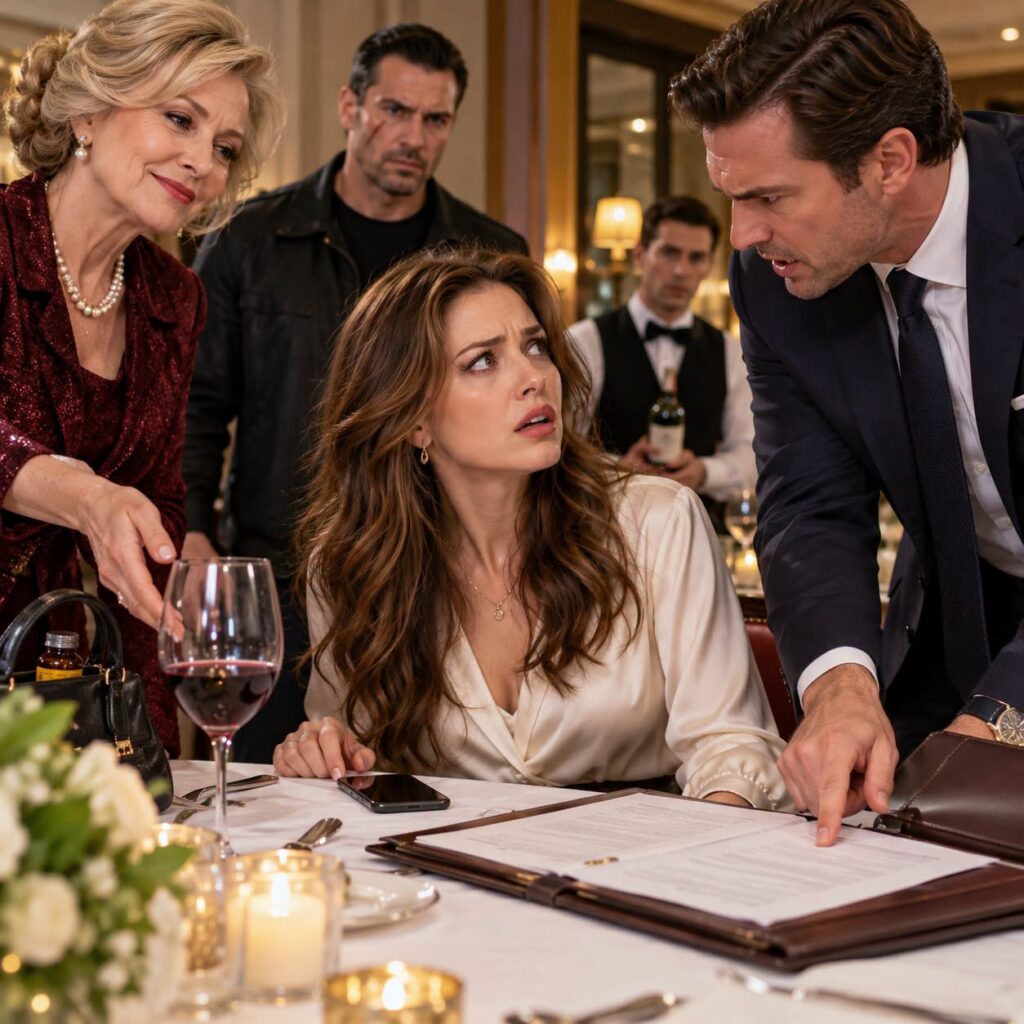
I’d accepted his explanation. That memory would haunt me longer than any insult Beverly ever threw at me.
Ryan lunged for Caleb, knocking a chair over. I backed toward the kitchen as the manager called out that police were coming.
Beverly tried to take the wineglass. I caught her wrist.
“Leave it.”
“It’s just wine!”
“Then you won’t mind if the officers examine it.”
She dropped the glass. Red wine spread across the white tablecloth. The stem shattered against the floor. I told the manager not to clear anything away.
I had already photographed the amber bottle in her open purse. So had Ava.
Two officers entered minutes later. I showed them the court order saved on my phone, Ava’s photograph, and the still-connected emergency call. Caleb admitted his identity. The officers separated everyone and kept him away from the kitchen.
A detective later took my statement and requested the restaurant’s surveillance footage. Our company attorney supplied the suspicious payment records to investigators after I called her that night.
The next afternoon, she phoned me with a discovery that made my skin go cold.
The receiving company wasn’t owned by Caleb.
It was registered to Beverly under her maiden name.
And the bank’s supporting paperwork included a notarized authorization bearing my signature—dated the day I’d been unconscious in a hospital after emergency surgery.
I stared at the date until the numbers blurred.
Three months earlier, my appendix had ruptured. I’d spent two days sedated after surgery. Ryan stayed at my bedside and told everyone what a devoted husband he was.
While I was unconscious, someone had forged my signature.
I sent my attorney every hospital record I had. The time-stamped medication chart and operative notes established where I was when the document supposedly had been signed. The notary’s seal was real, but our attorney discovered that the notarization had been performed at Beverly’s office, not at the hospital.
The detective warned me not to confront anyone. I didn’t. I changed my passwords, revoked Ryan’s company access through our board, and filed for divorce. Ava and I stayed with my sister while my attorney sought temporary protective orders.
Then the evidence began fitting together.
The restaurant’s cameras showed Beverly removing a small bottle from her purse and tipping something into my empty glass before the waiter approached with the wine bottle. Testing later found a prescription sedative in the preserved wine residue. The waiter had noticed her touching my glass, which explained his frightened glance.
Investigators also recovered messages, under warrants, between Ryan, Beverly, and Caleb. One message instructed Caleb to photograph Ava outside school. Another demanded that he make sure I signed the bank release before I left dinner.
The worst message was two years old.
Ryan had written: “She saw the invoices. Just scare her enough to keep her quiet.”
Caleb had replied: “I won’t touch the kid.”
But he’d grabbed her anyway. And for two years, she’d slept with her bedroom light on.
I cried when I read those words. Then I asked the detective for a copy through the proper process, because I never wanted anyone to dismiss my daughter’s fear again.
The bank froze the disputed transaction. A forensic review identified earlier payments to Beverly’s shell company, hidden among legitimate roofing invoices. Our insurer and attorneys pursued recovery while prosecutors investigated the forged authorization and threats.
Beverly insisted she was protecting the family business. Ryan claimed he’d only wanted to avoid bankruptcy. Neither explanation changed what they’d done to Ava.
Caleb eventually pleaded guilty to offenses tied to the threats and violating the no-contact order. His cooperation supported the case against Ryan and Beverly. Months later, both accepted plea agreements involving conspiracy and fraud-related charges. Their sentences included prison time and restitution obligations. No courtroom speech brought my daughter’s lost peace back, but the judge’s orders put distance between us and the people who had used her as leverage.
My divorce was finalized the following spring. I kept control of the business my father built, and I hired a new financial director whose signature I didn’t have to fear.
Ava started counseling. Some nights were still difficult. Other nights, she laughed at dinner without checking the doorway.
One evening, she asked whether I regretted going to that restaurant.
“I regret not believing you sooner,” I told her. “But I will never regret listening when it mattered.”
She reached across the table and took my hand. This time, neither of us was afraid.
My husband thought silence was the price of keeping our family together; my daughter taught me that telling the truth was how we finally became free.



