The porch was empty. The lock was untouched. But a flowerpot had been turned to expose a spare-key compartment we’d never used.
“Someone wanted us to think they could get in,” I said.
Nick checked the doorbell camera. The recording skipped thirteen minutes.
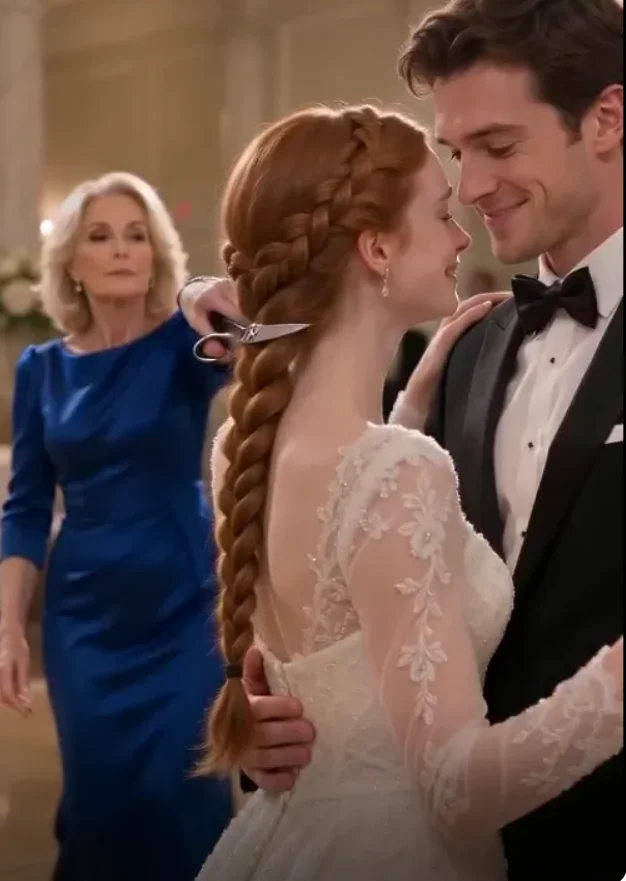
Inside, my phone kept buzzing. A video of the wedding had gone viral, edited to show me shouting after Martha raised the braid. The part where she cut it was missing. The caption read: UNGRATEFUL BRIDE ATTACKS MOTHER-IN-LAW OVER INNOCENT WEDDING CUSTOM.
My stomach twisted as strangers typed that I was dramatic, greedy, unstable. One said I should apologize for embarrassing a respected businesswoman.
Nick read the comments over my shoulder. “Give me the phone.”
“No.” I closed the app. “I want to know what they’re saying. I just don’t want to live inside it.”
He opened his own account, posted the unedited image of Martha holding the scissors, and wrote one sentence: My mother harmed my wife. There is no family tradition that excuses it.
The replies changed almost at once. Not all of them. Enough.
At dawn Mara Bennett arrived carrying a legal pad and an empty evidence bag. She watched the original footage, looked at my uneven hair, and asked permission before touching a single loose strand.
“You can file a police report for the unwanted cutting,” she said. “More important, the property records suggest a serious financial case. But we’ll need authenticated documents, not just photographs.”
Nick handed her the sale notice. Mara scanned the signature page, then stopped breathing for a second.
“This document,” she said, “was notarized by a woman who died three months before it was supposedly signed.”
Chapter 9 – The Notary’s Name
Mara put the deed on the kitchen table between our cold cups of coffee. She started with dates, not promises of revenge.
“Patricia Owens was a licensed Texas notary,” she explained. “Her commission was active in the records, but the death certificate is public. Either somebody used her seal after she died, or the date has been altered.”
“Does that stop the sale?” Nick asked.
“Not automatically. We can seek emergency relief, but we need a judge to see a real threat of transfer. The buyer will claim it acted in good faith.”
Elliot called from a motel near the airport. He’d been awake all night gathering bank statements from an old storage unit. Martha had once controlled his access to the family company while he recovered from a serious injury. That legal authority had ended thirteen years earlier. Documents signed in his name had continued appearing anyway.
“Why didn’t you fight before?” Nick asked, his voice raw.
“I did,” Elliot said. “I lost my lawyer, my savings, and eventually you. I told myself staying away would keep you safe.”
Nick closed his eyes. “It didn’t.”
Mara asked us to bring the Riverbend residents into the case, if they wanted to be involved. “They aren’t props,” she warned. “They decide whether to tell their stories.”
I thought of my mother carrying canned soup up three flights of stairs. “I know.”
At eleven, a woman named Marisol Vega agreed to meet us outside Riverbend House. She managed the building and had known my mother. We parked across from the cracked brick entrance. Children played beside a small garden. A paper notice was taped to the lobby window.
NOTICE OF VACANCY. PROPERTY TRANSFER PENDING. RESIDENTS MUST DEPART WITHIN THIRTY DAYS.
Marisol met us in the doorway, clutching a binder. “I called the trust office every week,” she said. “They told me repairs couldn’t be funded because the donations were gone.”
She opened the binder to a photograph of a bank check made out to Riverbend House. On the back was a deposit stamp for an account I’d never seen.
The account holder was Anna Reed Hale.
Chapter 10 – The Account in My Name
“That’s impossible,” I said. “I didn’t take anyone’s money.”
Marisol didn’t accuse me. She looked exhausted. “June told me you were the most honest person she’d ever raised. That’s why I called instead of going to the news.”
Mara photographed the check without taking Marisol’s binder. “We need the bank to verify what actually cleared. The stamp could be counterfeit.”
Nick stared at the name. “You’ve only been a Hale for one day.”
“And that check is dated six months ago,” I said.
Mara nodded. “Someone planned to blame Anna before the wedding.”
We drove to the branch where my mother had once kept a savings account. The manager could disclose nothing without proper authorization, but agreed to record my report of suspected identity theft and flag the concern for the bank’s fraud team. I placed a freeze on my credit with the major bureaus and changed every password I could think of.



