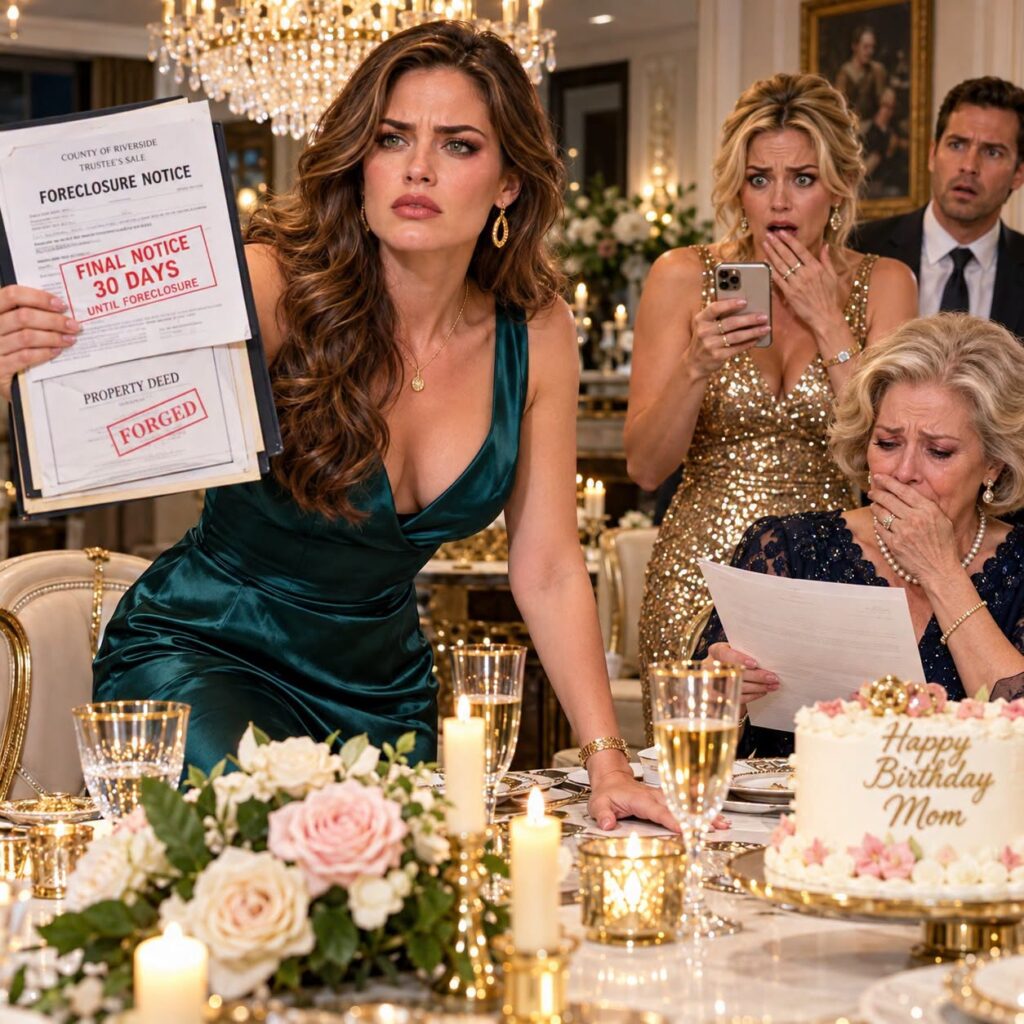
I understood the shape of it suddenly: two children’s savings had become a private bailout fund.
Only then did I remember Evelyn’s photos of quartz countertops and new patio furniture, posted all summer under captions about their brilliant investment. Richard had arrived that night in a newer SUV. They’d displayed their prosperity while secretly emptying children’s accounts.
Andrea began crying. “You told me Lily got more from Grace than Tyler did. You said asking for her laptop would even things out.”
I stared at Evelyn. That was the twist beneath the cruelty. She hadn’t simply wanted a gift. She’d invented a story to turn one cheated grandchild against another, hoping nobody would compare accounts.
Evelyn’s voice rose. “We were going to make everyone whole!”
“Then why lie?” I asked.
Richard finally looked at me. “Because I signed off on the withdrawals. I knew.”
His admission chilled me more than Evelyn’s shouting. He’d sat quietly while his wife threatened to disown our daughter, knowing they had already spent her inheritance.
Daniel turned the spreadsheet around. “There’s another problem.”
The bottom row carried a date: Monday.
Next to Lily’s name was an instruction for the remaining $6,400 to be transferred to the same property account.
Evelyn lunged for the paper.
Daniel pulled it away.
I looked at my trembling daughter, then at the adults who had promised to protect her.
They weren’t finished taking from her.
And Monday was less than twenty-four hours away.
“Nobody touches those accounts again,” I said.
Evelyn laughed, but her voice cracked. “You can’t tell me how to handle family money.”
“It’s not family money,” I answered. “It’s children’s money.”
I photographed every statement while Daniel gathered the originals. Andrea did the same. Richard tried to take back his laptop, but Daniel had already copied the spreadsheet from the tax folder he’d been authorized to organize. We left without dessert.
At home, Lily sat on the rug with her MacBook closed beside her.
“Will Grandma hate me now?” she asked.
I knelt until we were eye to eye. “You didn’t make her angry, sweetheart. She made choices that hurt you. None of this was your job to fix.”
Daniel sat beside us. “And I should have spoken sooner. I’m sorry.”
That night, after Lily fell asleep, I emailed our attorney the records. Early Monday, we contacted the bank’s fraud department and gave our attorney the transfer details. I knew the bank might not take instructions from us; Evelyn was still the named custodian.
Our attorney sought an emergency court order to protect what remained and require an accounting. Andrea filed alongside us for Tyler.
The bank’s risk team placed a temporary hold while reviewing our report. Days later, the court restricted further withdrawals while the case proceeded. The scheduled transfer did not go through.
Evelyn sent twenty-three messages calling us ungrateful. Richard left one voicemail begging us to “keep this private.”
I saved everything.
During mediation weeks later, the numbers became impossible to explain away. The property invoices matched the withdrawals. Their own spreadsheet listed the children’s accounts as funding sources. Richard and Evelyn had known exactly whose money they were spending.
Evelyn tried one final defense.
“We only borrowed it.”
I slid Grace’s will across the table. “Where does it say you were allowed to borrow from nine-year-olds?”
She had no answer.
Our attorney negotiated a settlement that became a court-approved order. Evelyn was removed as custodian. Richard and Evelyn agreed to restore the missing funds, plus interest and documented costs, secured by a lien on their home. They sold the lake property and Richard’s prized convertible to make the first payments. The balance was paid months later after they refinanced their house.
The bank and authorities received the records. Whether criminal charges were appropriate was their decision, not mine. I wanted the children protected and their money returned.
Andrea apologized to Lily without demanding forgiveness. Tyler told her he hadn’t wanted the laptop; he’d only wanted the adults to stop fighting.
For the first time, I believed him.
Evelyn asked to visit on Christmas Eve. I replied that contact would require genuine accountability, respect for our boundaries, and Lily’s comfort—not another performance around a holiday table.
We spent Christmas morning at home.
Lily opened her MacBook and showed Daniel an animation she’d finished: a tiny fox crossing a dark forest toward a house with warm windows.
“That’s where he feels safe,” she said.
I kissed the top of her head.
I couldn’t return the innocence her grandparents had stolen. But I could make sure she never confused surrender with love again.
My daughter’s future was never theirs to spend, and her love was never theirs to demand.



