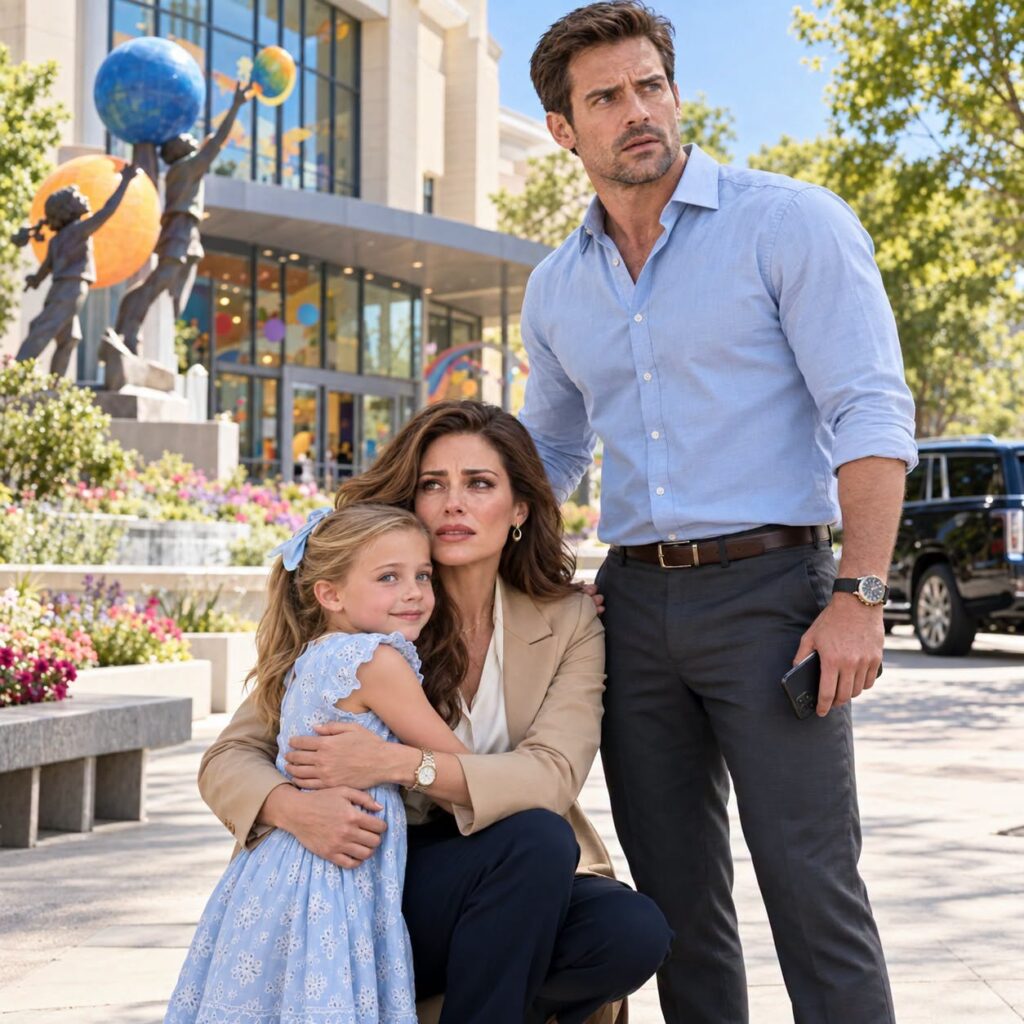
Dana grabbed her keys. “That girl isn’t even your blood.”
Ben stood so quickly his chair struck the wall.
“I adopted her. I am her father. Don’t ever say that again.”
I thought the evening couldn’t get uglier.
Then Dana’s sixteen-year-old son, Mason, spoke from the doorway. He’d been quiet through the whole argument.
“Mom,” he said, “tell them about the house.”
Dana froze.
Mason looked at us. “Grandma told Mom the money was meant for the real grandkids. Mom used it for the down payment.”
My stomach dropped.
“That’s a lie,” Dana snapped.
Mason held out his phone. It showed messages he’d photographed from a tablet Dana routinely left unlocked on the kitchen counter. In one exchange, Dana had written, Take it from Sophie’s account. Ben will never ask. Evelyn had responded with a thumbs-up.
The down payment was twenty-six thousand dollars.
Ben copied the images with Mason’s permission and told him he didn’t have to take sides in an adult argument.
We left before Evelyn could invent another excuse.
In the car, Sophie finally told us what had happened before the museum.
“Grandma said if I told you about the money, Daddy might send me away,” she whispered.
Ben pulled over, tears running down his face.
And I realized the theft had never been their cruelest plan.
Ben climbed into the back seat and held Sophie until her breathing steadied.
“You’re my daughter,” he told her. “There is nothing you could say or do that would change that.”
I watched her press her face into his shoulder. For the first time since the museum, her hands stopped shaking.
The next morning, I contacted a family attorney. Ben called the lawyer who had handled his father’s estate. We gave both of them the estate documents, Mason’s screenshots, and a timeline of the museum incident.
We didn’t post accusations online. We didn’t threaten Evelyn or Dana. We preserved what we had and let the investigations begin.
The estate lawyer confirmed that Ben’s father had placed thirty-eight thousand dollars in a custodial account for Sophie. Evelyn controlled it as custodian, but the money belonged to Sophie. She couldn’t spend it on Dana’s house simply because she thought Sophie didn’t deserve it.
Our attorney petitioned the court for an accounting and for Evelyn to be removed as custodian.
Meanwhile, detectives obtained the security footage. The bookstore employee gave a statement. So did the museum worker who remembered Sophie waiting outside, asking whether her grandmother was coming back.
Evelyn sent Ben twelve messages in two days.
You’re destroying this family.
I only wanted to teach her manners.
Your father would be ashamed.
Ben answered once: You endangered my child. Speak to our attorney.
Weeks later, the accounting exposed transfers from Sophie’s account into Evelyn’s personal checking account, followed by a twenty-six-thousand-dollar payment toward Dana’s house. Another eight thousand had gone toward travel and shopping. The remaining balance made the truth impossible to explain away.
At the courthouse, Dana tried to corner me.
“You’re taking a home away from my children,” she hissed.
“No,” I said. “You used my daughter’s money to buy it.”
Her eyes flicked toward the hallway, where Ben stood holding Sophie’s stuffed rabbit. She had stayed home with my sister. I was grateful she wouldn’t hear this.
The civil case ended with a court-approved repayment agreement secured against Dana’s property, and Evelyn was removed as custodian. A new custodian took control of Sophie’s remaining funds. If Dana sold or refinanced the house, the repayment claim would have to be addressed.
In the separate child-endangerment case, Evelyn pleaded guilty to a misdemeanor. The judge imposed probation, community service, and a requirement that she have no contact with Sophie. Dana was not charged over the museum incident, but she lost the financial safety net Ben had always provided.
None of that erased the sidewalk.
Sophie wanted someone to walk beside her whenever we crossed a parking lot. We found a counselor she liked. We let her decide when she felt ready for outings again.
One afternoon, she asked Ben if Grandpa had really left her something.
“He did,” Ben said. “Because he loved you.”
She thought about that, then slipped her hand into his.
“And you chose me?”
Ben smiled through tears. “Every single day.”
I used to believe keeping a family together meant forgiving everything. Now I know protecting a child sometimes means closing a door and refusing to open it again.
My daughter was never the one who didn’t belong; the people who abandoned her had forfeited the right to call themselves family.



