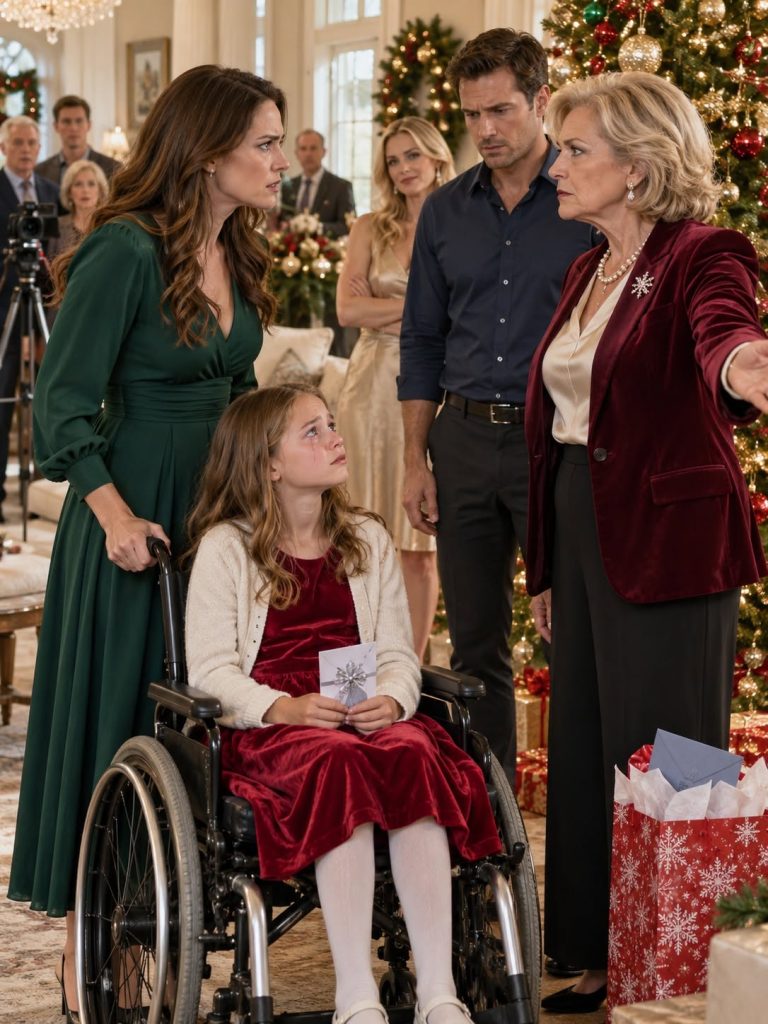
Less than ten minutes later, as I navigated the winding suburban streets away from the estate, my phone started vibrating furiously in the cup holder.
Call from Judith.
Call from Brooke.
Call from Judith again.
I ignored every single one of them. Then, a text message popped up on the dashboard screen from Brooke.
Check Riley’s gift bag. There’s an envelope in there that doesn’t belong to her.
Another text message arrived immediately afterward, its tone frantic and uncharacteristically panicked.
Do not open it. Turn around and bring it back immediately.
I pulled my car into the brightly lit, deserted parking lot of a 24-hour pharmacy, cutting the engine. The interior was dead silent except for Riley’s steady, quiet breathing as she stared out the passenger window at the falling snow.
“Are we going home, Mom?” she asked, her voice small and exhausted.
“Yes, baby,” I whispered, reaching over to squeeze her hand. “We’re going home.”
I turned on the overhead dome light and reached into the back seat, pulling out the festive red gift bag Riley had brought inside Judith’s house earlier that evening. Beneath layers of crimson tissue paper, resting next to a small snowglobe, was a thick, heavy envelope.
It was gray-blue linen cardstock—expensive, official-looking stationery.
My name was printed neatly on the front in crisp, black laser-jet typography: Danielle Campbell.
Underneath my name were the words: Parent and guardian for Riley Campbell.
And below that, typed in bold block letters, was the official title of the multi-million-dollar irrevocable trust fund that Eric’s late grandfather had established specifically for Riley’s long-term medical care, education, and accessibility needs when she was an infant.
Judith’s phone call started vibrating again, lighting up the console. A text flashed across the screen:
DANNI, DO NOT OPEN THAT ENVELOPE. BRING IT BACK TO ME TONIGHT OR THERE WILL BE CONSEQUENCES.
I didn’t answer. I didn’t open it in front of Riley, wanting to protect her from whatever adult chaos was brewing. I drove home, made her a cup of hot cocoa, tucked her into bed, and waited patiently until her breathing deepened into the steady rhythm of sleep.
Then, at midnight, I sat alone at our kitchen table, pulled the heavy gray-blue envelope toward me, and broke the wax-free adhesive seal.
Inside was a comprehensive, highly detailed forensic accounting report for my daughter’s trust fund.
At first glance, the line items looked mundane: legal fees, quarterly management stipends, standard administrative upkeep. But as I flipped to the ledger pages detailing capital disbursements over the past twenty-four months, my blood ran cold.
I noticed a massive, unauthorized expense listed under capital improvements: $45,000 for a wheelchair-accessible vehicle modification (Conversion Van).
We had never owned a conversion van. We drove a standard sedan.
I flipped to the next page. Another massive payment: $28,000 for an adaptive bathroom remodeling project.
We hadn’t renovated our bathroom. Our downstairs guest bath was still narrow, hostile, and inaccessible.
Then my eyes locked onto a third transaction. A different contractor. Another staggering sum supposedly spent on Riley’s daily living adaptations.
I scrambled to my feet, pulled our household financial records, bank statements, and tax files from the office desk, and cross-referenced every single entry.
Nothing matched. Not a single dollar of those six-figure disbursements had ever touched Riley’s life, her medical equipment, or our household.
But as I scanned down the itemized vendor invoice for the bathroom project, one specific detail made my stomach drop into a bottomless abyss.
The invoice listed the physical property address where the adaptive bathroom construction had taken place.
It wasn’t our address.
It was Judith’s sprawling estate address.
The exact same house where, just hours earlier, my ten-year-old daughter had been banished to the kitchen because her wheelchair supposedly ruined the aesthetic of the family Christmas portrait.
My hands trembled as I pulled out my phone and reread the text message Eric had sent me earlier that afternoon when I complained about Judith’s narrow guest bathroom:
I know. We’ll deal with it after Christmas.
Suddenly, those words didn’t sound like laziness. They sounded like a chilling confession.
I kept digging through the thick packet of financial documents, my heart hammering against my ribs like a trapped bird. And when I finally turned to the back page and found the official beneficiary certification and authorization signatures attached to the fraudulent bathroom payout, the air rushed out of my lungs, and I stopped breathing entirely.
There was a signature line under the primary beneficiary authorization. Someone with legal power of attorney over the trust had personally signed off, certifying that these luxury home modifications directly benefited Riley Campbell.
Someone who knew full well that Riley couldn’t even fit through the doorway of that bathroom.
I stared in absolute horror at the signature scrawled across the bottom line.



