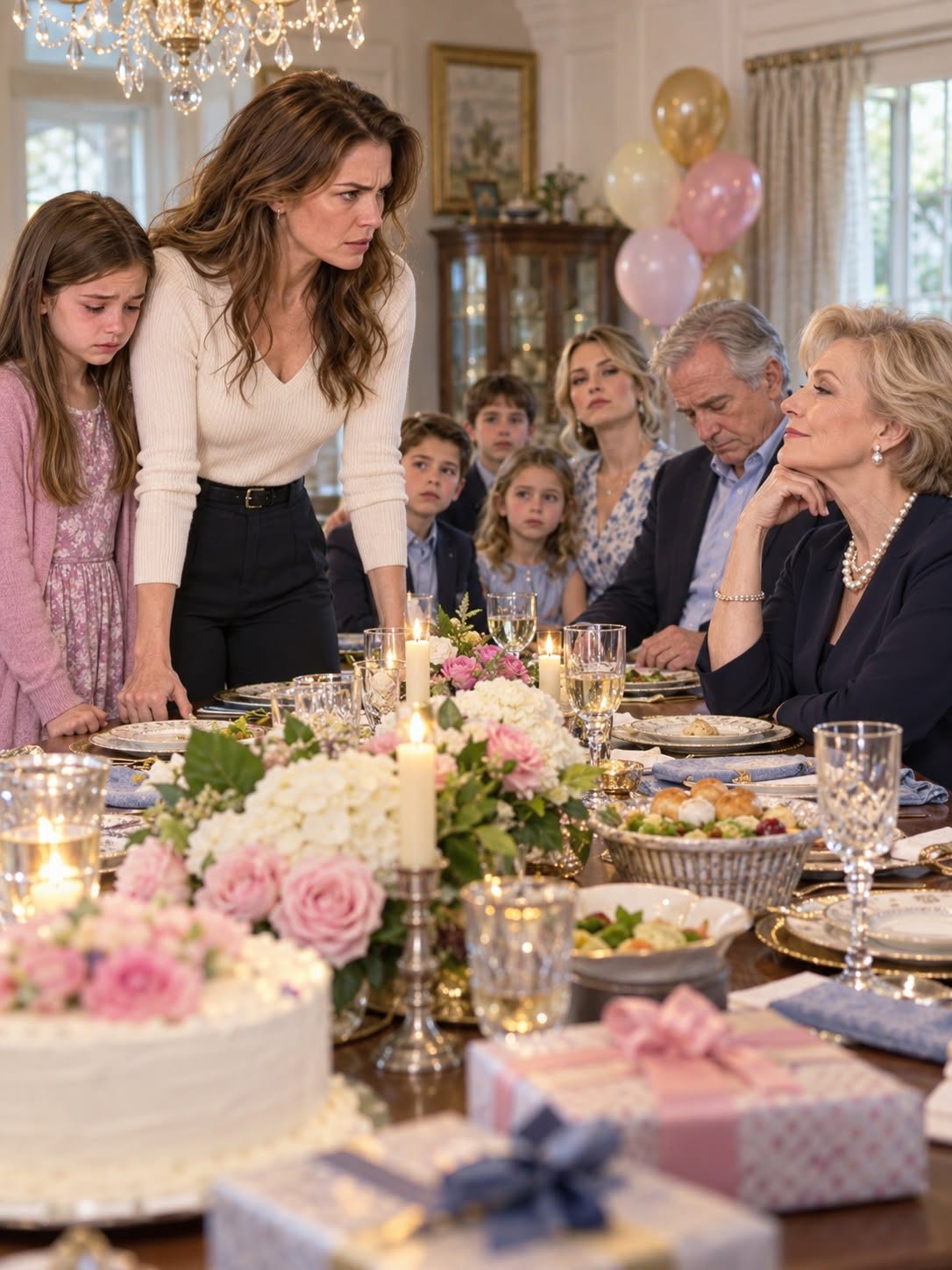
 The chandelier above my parents’ dining room table cast a warm, golden glow over a spread that had taken weeks to curate. It was Wednesday evening, exactly three days before my mother’s seventieth milestone birthday, and the atmosphere was thick with the self-satisfied humidity of a family that believed its own press.
My mother, Beatrice—or “Bea,” as she preferred to be called by anyone outside her immediate circle—sat at the head of the table like a monarch holding court. Her silver-streaked hair was coiffed into a meticulous French twist, and her silk blouse shimmered subtly under the light. Every detail of the evening had been meticulously planned, right down to the imported linen napkins folded into geometric swans.
For the past forty-five minutes, we had been subjected to a relentless monologue about the logistics of the upcoming gala.
“The catering company from the city is bringing in chilled asparagus soup with truffle oil,” Beatrice announced, waving her silver fork for emphasis. “And the floral arrangements are going to be overwhelmingly white hydrangeas and eucalyptus. I told the coordinator, ‘If there is a single rose anywhere near the entryway, you are pulling them down.'”
My sister, Katie, nodded eagerly from the opposite side of the table, her expression a masterclass in sycophantic devotion. “Oh, Mom, hydrangeas are so classic. They’ll look stunning in photographs. Won’t they, Elliot?”
Katie glanced down at her thirteen-year-old son, who was busy stabbing a roasted potato with his fork. Elliot grunted an affirmation, his attention entirely consumed by the smartphone hidden beneath the edge of the table. Next to him, nine-year-old Ruby was meticulously arranging her carrots into a smiley face, while five-year-old Nico kicked the table leg with a steady, rhythmic thud that made my mother’s crystal water glass vibrate.
None of them were paying attention to the quiet girl sitting near the foot of the table.
My daughter, Sienna, had been unusually subdued all evening. At twelve years old, she possessed an emotional intelligence that often felt too heavy for her years. She was observant, deeply empathetic, and fiercely loyal. She had spent the last two hours listening to my mother talk about the venue, the live jazz quartet, the custom tiered cake from the French patisserie, and the strict black-tie dress code.
Sienna had sat quietly, her hands folded neatly in her lap, her dark hair falling in soft waves over her shoulders. She had even worn her favorite cardigan—the pale blue one with the pearl buttons—because she thought it would make her look nice for Grandma’s big dinner.
As a lull settled over the table between my mother’s monologue about table runners and my father’s quiet chewing, Sienna shifted in her seat. I saw the slight hesitation in her posture, the way her small fingers gripped the edge of the placemat. She cleared her throat softly.
“Grandma?” Sienna’s voice was gentle, filled with the innocent optimism of a child who genuinely believed she belonged in the center of her family’s universe.
My mother didn’t turn her head. She didn’t pause her conversation with Katie about the valet parking logistics. She simply reached for her wine glass, took a slow sip, and waited for Sienna to continue.
“What should I wear?” Sienna asked, a tentative, hopeful smile touching the corners of her lips. “Is there a color scheme for the kids, or can I wear my silver dress?”
The words hung in the air, sweet and fragile.
And then, the world stopped.
It didn’t slow down; it utterly fractured.
My mother did not look at Sienna. She didn’t offer a gentle smile or a soft redirection. She simply turned her chin slightly toward the centerpiece of hydrangeas, her eyes fixed on the middle distance, and delivered the sentence with the casual indifference of someone checking the weather forecast.
“Oh, your daughter isn’t invited to my birthday.”
Everything stopped.
For me.
The blood rushed violently to my ears, a sudden, deafening roar that drowned out the ambient sounds of the house. My chest compressed as if an iron band had snapped shut around my ribs. I stared across the table at my mother, waiting for the punchline, waiting for the warm, theatrical laugh that usually accompanied one of her dry, sarcastic jokes.
It never came.
My mother’s face remained a mask of placid, undisturbed satisfaction.
I looked around the table.
For everyone else, life went on.



