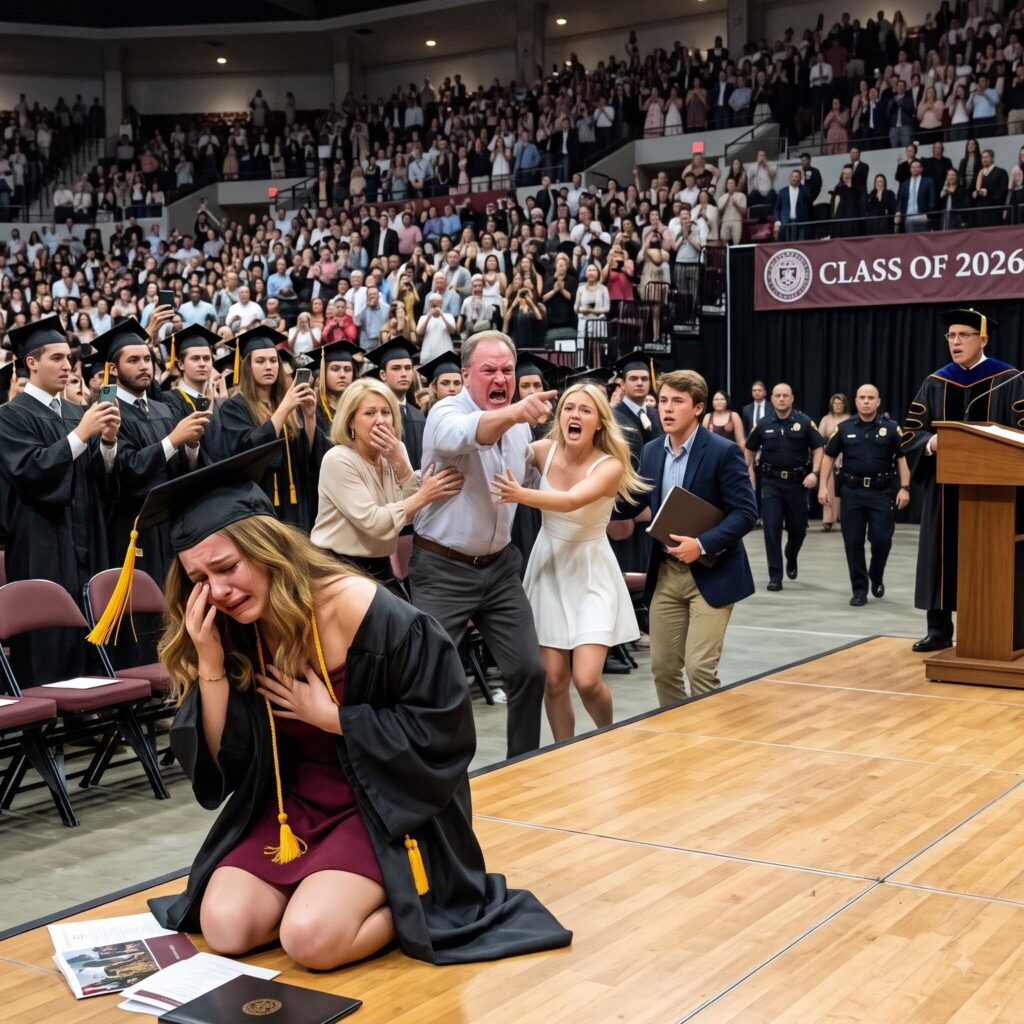
“I found the bank statements in Dad’s office three months ago,” she said. “And I couldn’t stop thinking about what he’d done to you. But what I found next was so much worse.”
“Three months ago, I was looking for my passport in Dad’s office,” Madison said, her voice shaking. “I found a folder labeled E.C. Inside were bank statements from an account I’d never heard of, and a stack of credit card applications. All in Emily’s name.”
My stomach twisted. Credit cards?
“Four of them,” Madison said, looking at me through tears. “Plus a thirty-eight thousand dollar personal loan. Dad took your Social Security number from your FAFSA forms, Emily. He’s been using it since you were eighteen.”
That explained why my credit score was a disaster, why two landlords had turned me down. I’d blamed myself.
“Why didn’t you come to me?” I asked.
“Because I was a coward,” Madison said. “He’s our dad. I kept telling myself there was an explanation. Then I told Tyler, and he said I had to take it to someone who could actually do something.”
Tyler cleared his throat. “I’m a graduate assistant in the financial aid office. When Madison showed me the Whitfield name on those statements, I recognized it right away. I walked her to Dean Hollis’s office that same afternoon.”
“And the seat?” I asked, my voice cracking. “You took my seat on purpose?”
“Your dad offered it,” Tyler said. “The dean asked us to keep your parents calm and in the building until the bank froze the last account this morning. I’m sorry, Emily. I hated every second of it.”
Dad finally found his voice. “This is a lie! She’s manipulating you all!” He spun toward the exit, but the two officers were already waiting. “Mr. Carter,” one of them said, “you need to come with us.”
Mom’s whole body sagged. “Greg, stop. It’s over.” Then she looked at me, and for the first time in years I saw regret in her eyes. “We were drowning, Emily. The dealership was failing. We thought you’d never find out, and you were so strong, you always managed—”
“That’s the problem, Mom,” Madison said. “You made her strong by making her do everything alone. You told her my future mattered more. It doesn’t, Mom. Not if it’s built on hers.”
The officers led my parents toward the exit. Dad didn’t look back. Mom did.
I stood frozen until a gentle hand touched my elbow. An elderly woman in a lavender suit leaned on a cane beside me.
“Emily, I’m Margaret Whitfield,” she said. “My late husband and I created your scholarship.”
Her eyes were glassy. “I wrote to you every December for four years. You never answered, and I assumed you didn’t care. This spring, our auditor traced the stipend straight into a car dealership’s operating account. I realized you’d never received a word from me.”
I pressed my hand to my mouth. Four years of letters from a stranger who believed in me, and my own father had made sure I never saw them.
“I asked Patricia to do this in front of everyone,” Margaret said. “Your father has talked his way out of trouble for years because nobody was watching. Today, everyone is.”
Dean Hollis returned to the microphone. “The Whitfield Foundation will make Emily whole, and our legal clinic will help her clear every fraudulent account.” She smiled through tears. “Now, let’s give Emily Carter the degree she earned. Summa cum laude, with a 3.98 GPA. While working three jobs.”
Eight thousand people rose to their feet. The sound was so loud I felt it in my ribs. I’d spent four years invisible. Now the whole arena was clapping for me, and in the third row, two people stood louder than anyone: my sister, sobbing, and her boyfriend, whistling through his fingers. Right beside them, two empty seats.
When they called my name, I crossed that stage, and Margaret Whitfield herself placed my diploma in my hands. “You earned every inch of this,” she whispered.
Afterward, in the hallway, Madison was waiting. She looked smaller than I’d ever seen her. “I’m not asking you to forgive me,” she said. “I’m returning everything. The car, my tuition, all of it. I already told the dean.”
I looked at my little sister, who’d also grown up in that house and learned to look away. “You didn’t look away this time,” I said. “That’s what matters.” And I hugged her tight.
The next months were brutal, but they were fair. My father pleaded guilty to identity theft, forgery, and wire fraud and was sentenced to seven years in federal prison. His dealership was seized and sold. My mother, who had known about the accounts and signed two of the forms, cooperated fully and received five years of probation and a restitution order. She wrote me four letters from her new apartment. I haven’t answered yet. I might someday.



