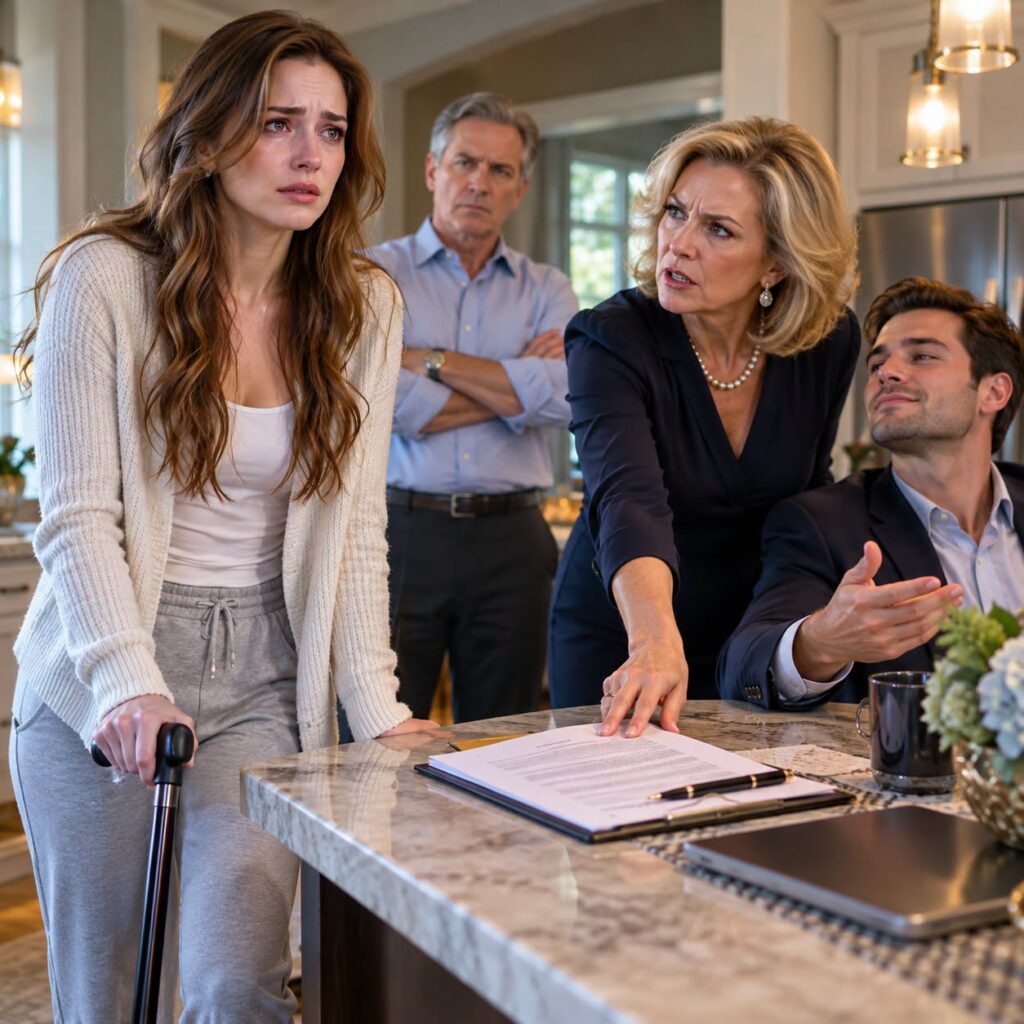
My health insurance had covered most of the hospital charges. I’d paid the remaining deductible from savings. My house had been mortgage-free for three years.
I kept scrolling. Strangers had written prayers. Old classmates had sent hundreds. A retired teacher had donated fifty dollars and apologized that it wasn’t more.
Then I saw a message from Dad to Tyler.
Use sixty thousand from the campaign to cover payroll. Once the house is in your name, the bridge loan fixes everything.
I felt something colder than anger.
They hadn’t merely abandoned me. They’d turned my near-death experience into collateral.
Megan showed me the proposed loan: two hundred eighty thousand dollars, secured against my home, with a closing scheduled for Friday morning. Tyler’s restaurant company would receive the money. My house would carry the risk.
“Does Tyler know?” I asked.
She looked away.
“He helped write the fundraiser updates. I found the drafts.”
My own brother had described my supposed final hours while I was learning to breathe again.
I called Julia, asked her to photograph my hospital discharge records, and then phoned a real estate litigation attorney whose number I’d saved after buying the house.
As I spoke, Megan’s phone vibrated.
A text from Tyler filled the screen.
Tell Claire to sign tomorrow. If she refuses, Dad says we’ll tell the lender she’s mentally unfit to challenge anything.
Below it was an attachment.
A letter on hospital stationery questioning my ability to make decisions.
And at the bottom was a doctor’s name I recognized.
The doctor’s name belonged to Dr. Elena Ruiz, the intensive care physician who had fought to keep me alive.
I called her hospital office first thing Thursday morning.
“No,” she told me after checking with hospital compliance. “I never wrote this. I would never issue that conclusion without an examination.”
By nine, I was sitting beside my attorney, Rebecca Shaw, with the forged deed, Megan’s screenshots, and permission to obtain my medical records.
We sued to invalidate the deed. We recorded a notice of pending litigation and sought an emergency order blocking any sale or new lien. Rebecca warned the lender’s attorney and contacted investigators.
The lender postponed Friday’s closing.
At 10:12 that morning, Mom called.
“What did you do?” she shrieked.
“Protected my home.”
“Tyler will lose everything!”
“He was willing to gamble everything I own.”
Dad grabbed the phone. “We raised you. You owe us.”
I glanced at the faded hospital wristband I’d kept on my desk.
“I was dying, Dad. You raised money using my face while Julia sat beside my bed.”
His silence answered more than a confession could.
The case took months. The hospital confirmed the supposed competency letter was not authentic. Certified ICU records proved I couldn’t have appeared before a notary on April 19. Megan testified about the deed and preserved messages. A handwriting examiner found differences in the signature.
Dennis, the notary, eventually admitted he’d acknowledged a signature without witnessing me sign. His cooperation exposed the rest.
The deed had been prepared while I was on a ventilator. The family wanted my later signature on an acknowledgment so I couldn’t easily challenge it. The fundraiser money had kept Tyler’s failing restaurant afloat and paid several of my parents’ personal expenses.
Months later, the court declared the deed void, clearing the cloud on my title. Prosecutors brought forgery and fraud charges. Tyler and Dad entered plea agreements that included restitution and supervised probation. Mom agreed to repay misused donations in a civil settlement; the platform reviewed donor claims. Dennis lost his notary commission.
None of it happened overnight. I attended hearings with a cane. I cried in parking lots. I slept with the porch light on.
But every morning, I woke up in my own house.
Megan separated from Tyler and found a small apartment for herself and their children. I helped her move a week after the ruling. Her youngest spotted the yellow toy tent folded in a box.
“Can we keep this?” he asked.
“Of course,” I said.
We set it up in their new living room. The kids crawled inside, laughing, and Megan looked at me with tears in her eyes.
For the first time in months, a little house represented something other than a threat.
My parents still send messages about forgiveness. I don’t answer. Forgiveness, if it ever comes, won’t include a key.
They wanted my roof because they thought surviving meant I owed them the rest of my life.
But I didn’t fight thirty-one days to live only to hand my life back to the people who never showed up.



