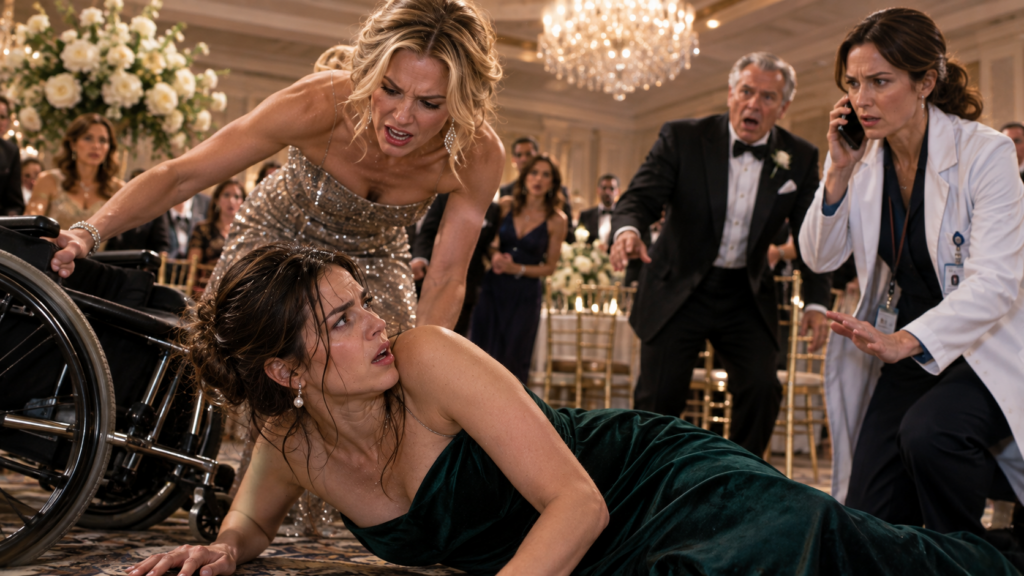
She had found the incapacity language months earlier while going through Dad’s files. She believed that if she could create enough doubt about my mental stability, she could position herself as the responsible family member. When that looked difficult, she switched strategies. She tried to show that my physical condition was exaggerated, hoping to undermine the settlement protections and pressure me into changing the trust.
The public humiliation at Dad’s dinner was supposed to be proof.
Instead, it became evidence.
Detective Reed recovered the folder after Vanessa’s attorney arranged its return. Charges followed for the assault and theft-related conduct. The financial attempts were investigated separately. She did not go to prison for decades. Real life was less cinematic than that. She accepted a plea agreement, was ordered to stay away from me, pay restitution for my medical costs, and comply with probation conditions.
The trust never moved.
Not one dollar.
Rebecca provided a formal statement confirming my diagnosis and treatment history. Nathan strengthened the trust protections and removed every family member except Dad from any backup financial role.
Dad changed too.
That mattered almost as much.
For years, he had confused keeping peace with protecting family. After the assault, he stopped.
He apologized without excuses.
“I should have believed your discomfort before it became an emergency.”
I squeezed his hand.
“You believed she would stop.”
“I wanted to.”
That was the most honest answer he could give.
Six months later, we returned to the same ballroom.
Not for another family event.
The hospital rehabilitation foundation held its annual fundraiser there, and Rebecca had asked whether I would speak for five minutes about returning to work after spinal cord injury. I almost said no. Then I remembered lying on that carpet while Vanessa told strangers my body was a performance.
So I went.
I rolled onto the stage myself.
No dramatic music. No perfect recovery. I still used my wheelchair. I still had pain. I still had days when my legs moved more and days when they barely responded.
I told the audience one thing.
“Disability does not become fake because it is complicated.”
Rebecca stood near the back.
Dad sat in the front row.
When I finished, he stood first.
The room followed.
I did not think about Vanessa.
Not once.
Because the most satisfying part was never that she had been exposed.
It was that after fourteen months of defending my body to people who wanted simple answers, I finally stopped explaining myself to anyone who had not earned the right to ask.



