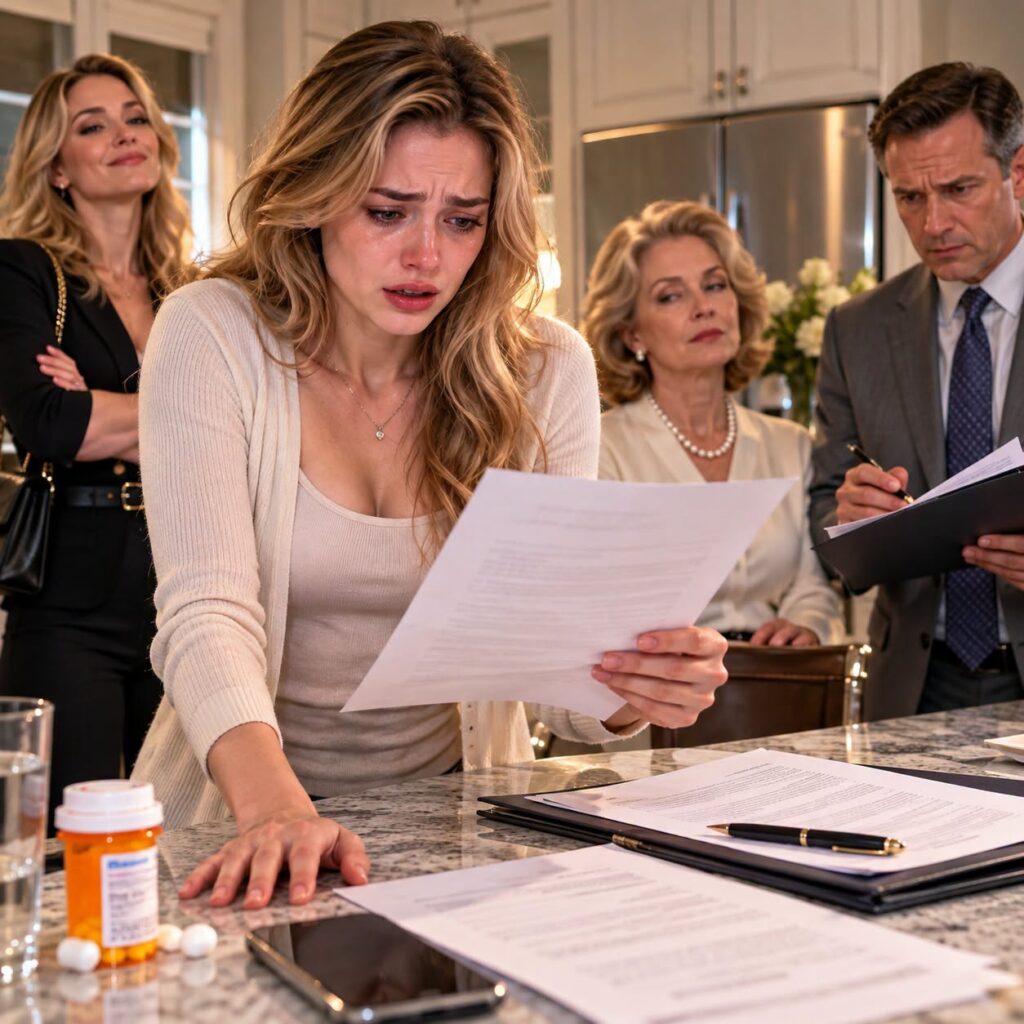
In June, I’d been home, celebrating the anniversary of my transplant with Nora. I had photographs, location-stamped receipts, and a clinic appointment record from that afternoon.
Rachel called the title company’s counsel directly. The scheduled closing was suspended pending identity verification.
I thought that was the end of it.
Then Rachel searched the county recorder’s database.
“Claire, there is already a mortgage against your house.”
I sank onto the study carpet.
My father had left the property free and clear.
“Two hundred eighty-six thousand dollars,” Rachel said. “Recorded six weeks ago. The lender’s file references the same power of attorney.”
I stared at Brooke through the study’s glass door. She wasn’t trying to steal my house someday.
She and Mom had already borrowed against it.
When the responding officer arrived, Brooke started crying. She said she only wanted to help with medical bills.
But my insurance statements showed no unpaid balance remotely close to that amount.
Rachel obtained the lender’s fraud department contact and requested preservation of the loan application, notarization records, and wire instructions. She warned me the debt wouldn’t disappear merely because I disputed it.
An hour later, the lender confirmed one detail that knocked the air from my chest.
The loan proceeds hadn’t gone to medical treatment.
They’d been wired to a business account controlled by Mom.
And that account had been emptied two days earlier.
“Emptied where?” I asked.
Rachel asked the lender to preserve the records and alerted the detective assigned to my report.
By afternoon, the transplant pharmacy had arranged a manufacturer emergency bridge supply while my insurer reviewed the loss. Nora drove me to collect it. I took my next scheduled dose sitting in her car, crying so hard I could barely swallow water.
For the first time in twenty-four hours, I knew I’d have medication tomorrow.
That evening, Mom sent a text.
You could have handled this privately. You’re destroying your sister’s future.
I replied with one sentence: You tried to sell mine.
Then I stopped answering.
Over the next month, the investigation exposed the entire scheme. Mom’s catering business was sinking under unpaid suppliers and a tax debt. Brooke had used my personal documents, which I’d trusted her to organize during recovery, to assemble the fake power of attorney.
A notary had certified a signature I never gave. When confronted with the appointment records and video from the building lobby, the notary admitted Brooke had brought the paperwork without me present.
Mom hadn’t merely witnessed a forged document. Emails recovered from her business account showed she’d helped plan the loan and the sale.
The $286,000 had paid overdue business debts, a deposit on Brooke’s wedding venue, and transfers to accounts the investigators eventually identified. They wanted the sale to happen before the loan payments exposed what they’d done.
The worst discovery came from Brooke’s messages to Mom.
If Claire goes back to the hospital, she can’t interfere with closing.
Mom had answered: Then make sure she stays busy.
That was why my medication went into the toilet.
Not because Brooke thought I was pretending to be sick.
Because she knew I wasn’t.
Rachel helped me file suit to challenge the loan documents and block any transfer of the house. The lender placed the disputed account in its fraud process, and the title company refused to proceed with the sale. I changed the locks, revoked every permission Brooke had to access my records, and named Nora as my emergency contact.
Months later, Brooke pleaded guilty to identity fraud and forgery. She went to prison. Mom pleaded guilty to helping arrange the scheme and received probation and a restitution order. The notary lost her commission and faced separate charges.
The civil case took longer, but the forged loan was ultimately removed from my property’s title. I kept the house. I didn’t owe the money they’d taken.
Brooke mailed an apology from prison. She wrote about stress, desperation, and how she’d never expected things to go that far.
She didn’t once mention the person whose lungs had been at risk.
I folded the letter and put it away unanswered.
A year later, I stood in Dad’s study with a fresh prescription in my hand. Sunlight crossed the windowsill where he used to leave me little notes: Eat something. Rest. Keep going.
I finally understood what he’d given me wasn’t just a house.
It was permission to protect my life, even from people who shared my blood.
My sister tried to flush away the medicine that kept me alive, but she couldn’t flush away the truth that gave me my life back.



