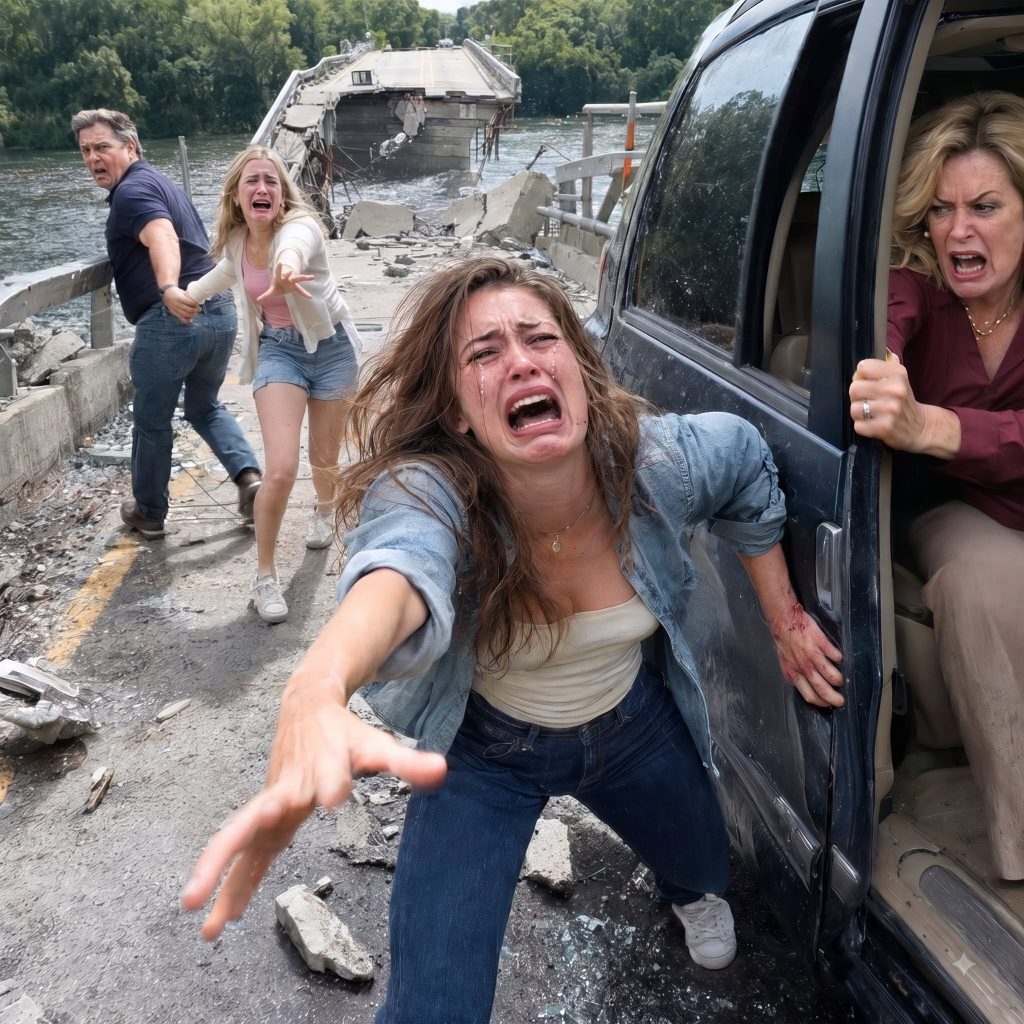
My attorney explained that any criminal liability would depend on state law and what prosecutors could prove.
I didn’t demand a particular sentence.
I demanded that the truth be recorded.
My mother repeatedly asked me to withdraw my statement.
“You’re destroying this family,” she said during one call.
“No,” I answered. “I’m telling people what happened.”
She began crying.
I ended the call.
Dad tried to make things right.
He paid for my physical therapy and helped replace everything I’d lost in the river.
He came to every appointment I allowed him to attend.
But apologies couldn’t erase the footage.
One afternoon, he told me, “I thought getting Brooke to safety was the right thing.”
“It was,” I said.
He looked relieved.
Then I continued.
“Leaving me wasn’t.”
His eyes filled.
“I know.”
“And trusting Mom when she said I’d fallen instead of telling rescuers what you actually saw wasn’t either.”
He nodded.
“I know that now.”
I wanted to forgive him immediately.
I couldn’t.
But unlike Mom, he stopped asking me to pretend that the past had changed.
That mattered.
Brooke struggled too.
For weeks, she barely slept.
She blamed herself for being rescued first.
I reminded her that she’d been twenty-two, injured, terrified, and dependent on Dad to get her out.
“You didn’t shut that door,” I told her.
“But I didn’t stop them.”
“You were fighting to survive.”
One evening, she brought me a framed photograph.
It showed us standing beside our grandmother’s old farmhouse, laughing in the sunshine.
On the back, Brooke had written:
You were my sister before the bridge. You’ll be my sister after it.
I cried harder over that photograph than I had during any hospital appointment.
Because I hadn’t lost everyone.
Nearly a year after the accident, I returned to the river.
The ruined bridge was gone.
Construction crews had started rebuilding the crossing.
I stood behind the safety fence with Brooke beside me.
My hand still ached when temperatures dropped.
Two fingers would never bend quite the same way again.
But I could write.
I could drive.
I could open my own doors.
Brooke asked whether I ever wanted to see Mom again.
I thought carefully.
“Maybe someday,” I said. “But not because she wants me to.”
We watched the river for a long time.
Then Brooke took my good hand.
“Ready to go?”
I looked once more toward the place where I’d nearly died.
For months, I’d imagined that moment differently.
I’d imagined confronting Mom.
Making her understand.
Hearing an apology that would somehow repair everything.
But standing there, I realized I didn’t need any of those things to leave.
“Yeah,” I said.
“I’m ready.”
We walked back to the car.
Brooke opened the passenger door.
I smiled.
Then I closed it myself.
Because the bridge wasn’t the only thing that broke that day. But I was the one who got to decide what happened after.



