Grant’s lawyer made it sound as if I’d bought the company, staged a scene, and enlisted a receptionist to help me get rid of its CEO. Then Caleb asked the technician to pull up the backup from the night before the acquisition. My name was already on the spreadsheet. The draft witness statement was there too, down to the claim that I’d forced my way through the west doors. “That’s a template,” Grant said from his seat. The judge looked over her glasses. “Does the template generally come with the visitor’s name filled in, Mr. Hollister?”
Luis testified that his signature came from a report he’d filed about a broken loading-dock lock. He also testified about my wrist. “Mr. Hollister told me to hold him,” he said. “I did. I had no reason to.” He looked at me when he said the last part. Then Nora took the stand. Grant’s lawyer asked why she’d kept a notebook for eight years. “Because people would call later and ask why they’d missed their appointments,” she said. “I got tired of telling them I couldn’t find their names.”
The lawyer pointed out that Nora had followed Grant’s directions. “I did,” she said. “I wish I’d stopped sooner.” When Caleb played the lobby audio, I heard Grant say I was getting aggressive. Then came a stretch of silence long enough for everyone to hear what I’d actually been doing. Breathing. Waiting for Luis to let go. Owen took the stand next and identified the bids he’d helped redirect. Some were for federally funded projects. He admitted he’d kept the spreadsheet because he wanted a record of the orders, and kept following them because the arrangement paid him well.
The judge dissolved the temporary order and found that Grant’s fraud claim had been brought in bad faith. She directed the clerk to forward the relevant records to federal prosecutors. Back at Allegheny Systems that afternoon, Vivian called the vote. Ten directors voted to terminate Grant for cause. The company put Owen on leave and turned the procurement records over for investigation. Grant was packing his office when two federal agents arrived and asked him to come downstairs for an interview. He came through the lobby between them, carrying a cardboard box with a framed photograph sticking out.
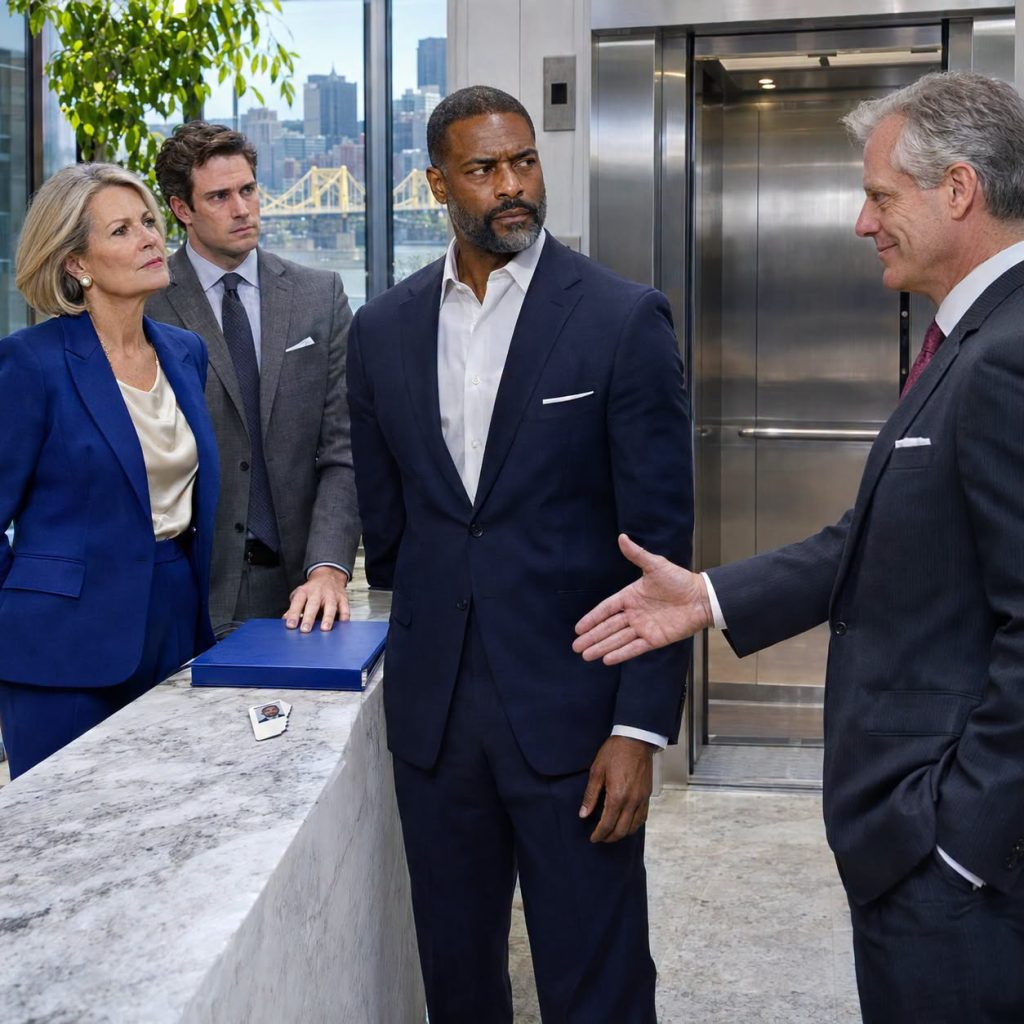
Nora had retrieved the other half of my badge from the trash on Tuesday. I’d kept both pieces in my jacket. “Grant,” I said. He stopped. I held them out, and he balanced the box on one knee to take them. He laid the pieces beside each other on top of his photograph. “Your mother could’ve bid again,” he said quietly. “She did,” I told him. “Three times.” He looked toward Nora as if she might correct me. She was already helping someone at the desk.
A month later, Nora started as director of visitor and employee relations. Her first morning, my mother came in to give the independent procurement reviewers her old bid files. I offered to go upstairs with her. “I know how to find an elevator, Marcus,” she said, handing me her coffee so she could dig out her driver’s license. Nora checked her in and handed her a new badge. Mom clipped it to her jacket, took back her coffee, and pressed the button herself. I waited until the doors closed before I let myself smile.
What do you think of this story? Please leave a like and share your thoughts in the comments. Your support means a lot to us and inspires us to keep writing more meaningful and powerful stories. Thank you! 👍❤️



