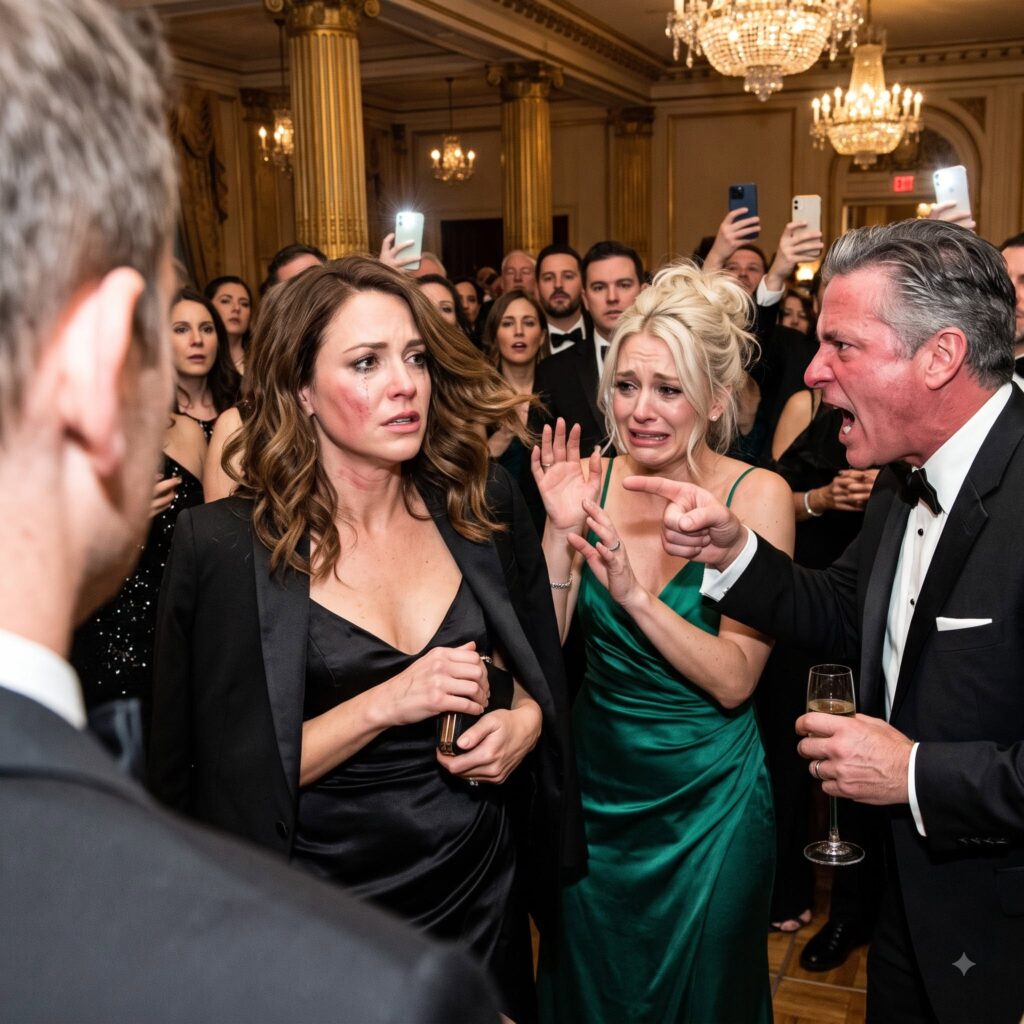
The banks never called the loan. With the forged transfers frozen, Richard and Harold gone, and an independent trustee watching the books, the $2.4 billion empire turned out to be sound. Only the men running it had been rotten.
Two weeks later, I drove to a quiet memory-care home in Evanston. Vanessa sat beside her father’s chair, a retired Navy captain in a faded cardigan. When she saw me, she stood up, and the tears came instantly.
“Maya, I’m so sorry,” she said. “I will never forgive myself for that slap.”
I touched my cheek and almost smiled. “The slap was Richard’s doing, Vanessa. The drive was yours.”
Her father squinted up at me. “Is this your friend, Nessie?”
Vanessa wiped her face and laughed through the tears. “Yes, Dad,” she said. “I think she is.”
The trials came in the spring. Richard Hale was sentenced to fourteen years in federal prison. Harold Whitfield got nine. Vanessa, as a cooperating witness, walked free, and the court-appointed trustee placed her father’s care in a protected fund that no one could ever threaten again.
The board asked me to stay on as Chief Financial Officer. I said yes, on one condition: every employee, from the loading docks to the boardroom, would have a direct, anonymous line to the audit committee that no executive could ever cut.
A year to the day later, I walked into the Grand Ballroom of the Drake Hotel for the company’s gala. Two hundred guests turned to look at me. Nobody laughed. Nobody looked away. Then, one by one, they stood up and applauded.
I climbed the stage, straightened my jacket, and this time the only thing in my pocket was my speech.
Richard Hale smiled that night, certain he had ended me. He never understood the truth. The most dangerous person in any company isn’t the one with the loudest voice or the biggest title. It’s the one who quietly keeps the receipts.



