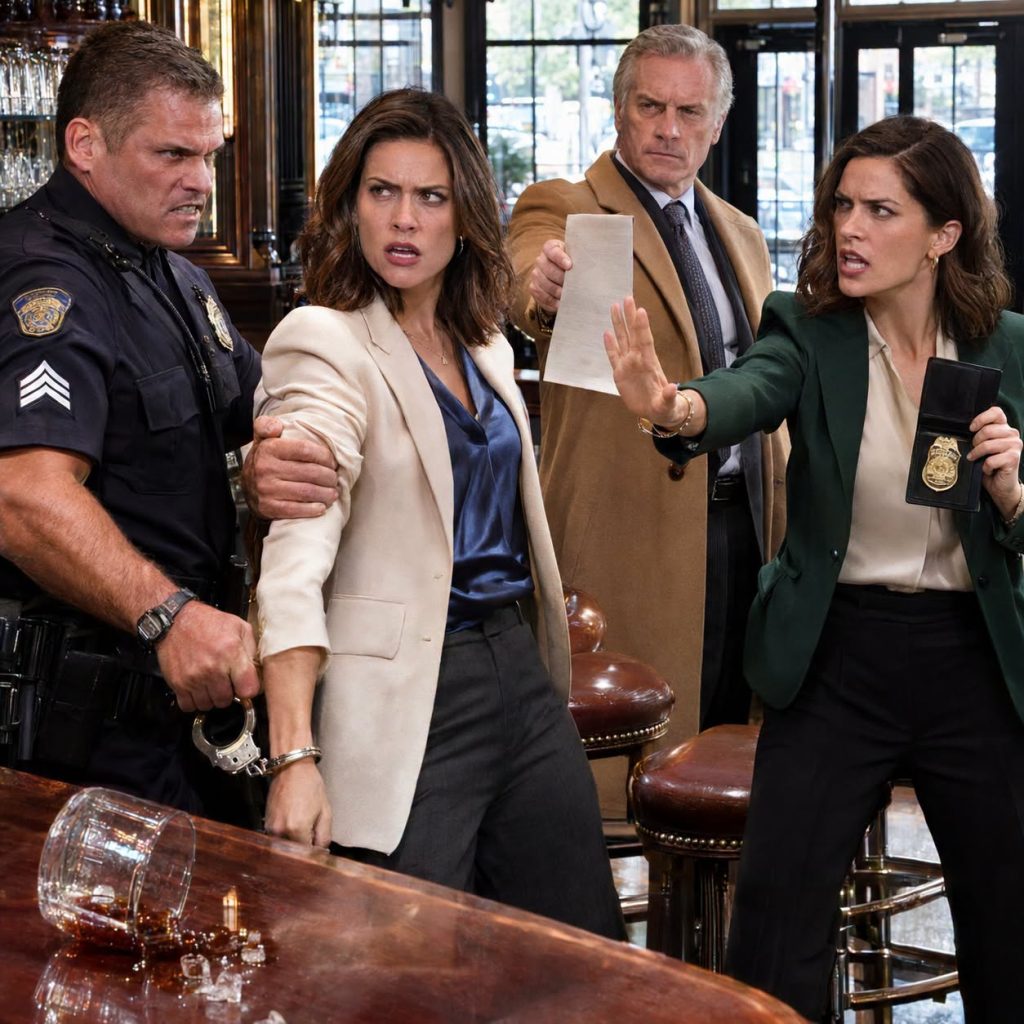
Mercer reached again. Cho seized his wrist before he could draw. I caught his other arm, and together we drove him against the stainless-steel counter. He fought until Paige moved Emma clear. The cuffs clicked shut. “You’re making a mistake,” Mercer gasped. I checked that the cuffs weren’t cutting into his wrists. “No,” I said. “You had plenty of chances to stop.”
Paramedics examined Frank while Emma clung to him. His voice was hoarse, but his first question was whether she was hurt. Across town, another federal team was entering Voss’s office under the newly signed search warrant. Voss tried to stop them at the door. “This is privileged material.” The supervising agent showed him the warrant and explained the procedures for separating potentially privileged records. Voss demanded to call a judge. He was allowed to call his attorney.
Inside the private safe, agents found the original black notebook, payment envelopes, and bundles of cash. Five hundred dollars sat inside an envelope bearing Frank’s initials. The serial numbers matched our controlled-payment records. That evening, I watched Voss’s recorded interview from the observation room. His attorney sat beside him. “My nephew collects debts,” Voss said. “That doesn’t make me responsible.”
The investigator placed a notebook photograph on the table. “Forty percent.” “An abbreviation proves nothing.” Then came the bank records. Then the messages recovered under the warrant. One instructed Mercer to obtain signatures from business owners before “they start getting ideas.” Voss stopped talking. He had built the system. Mercer collected the money, frightened witnesses, and carried out the threats. Voss supplied the legal machinery: false complaints, pressure on licensing officials, and promises that nobody would ever face a fair hearing.
The warrant against me had been prepared after Mercer photographed us meeting Frank earlier that week. They knew someone was asking questions. They hadn’t known we were federal agents. Our operation had been compromised by surveillance, not a mole. As for our delayed backup, the sheriff had blocked the tavern entrance and claimed an active local arrest was underway. Cho had called federal prosecutors while keeping agents at the rear exit. His restraint had bought time without putting customers in a crossfire.
Months passed before justice became more than an arrest. Emma’s original blank form was recovered from Voss’s files. Her statement, the training footage, and the recordings cleared me. Frank’s license was restored after an independent review. Other owners came forward once they saw witnesses receiving protection. Mercer and Voss eventually pleaded guilty to federal extortion and conspiracy charges. The court ordered restitution and forfeiture; recovered money began going back to the businesses they had drained. Webb testified about his own conduct, too. He didn’t ask us to leave out the moment he almost obeyed.
At Sullivan’s reopening, Frank put a plain white envelope on the bar. My stomach tightened. He opened it. Inside was a photograph of Emma holding the new tavern license. “Thought we should put something better in one,” he said. Paige laughed first. Then Emma. Then the room joined them. I looked at my sister, standing beside me with a faint scar at her wrist.
For eleven years, people here had lowered their voices when a uniform came through the door. That night, when Webb arrived to return Frank’s recovered keys, nobody went silent. Frank shook his hand. And kept the front door open.
What do you think of this story? Please leave a like and share your thoughts in the comments. Your support means a lot to us and inspires us to keep writing more meaningful and powerful stories. Thank you! 👍❤️



