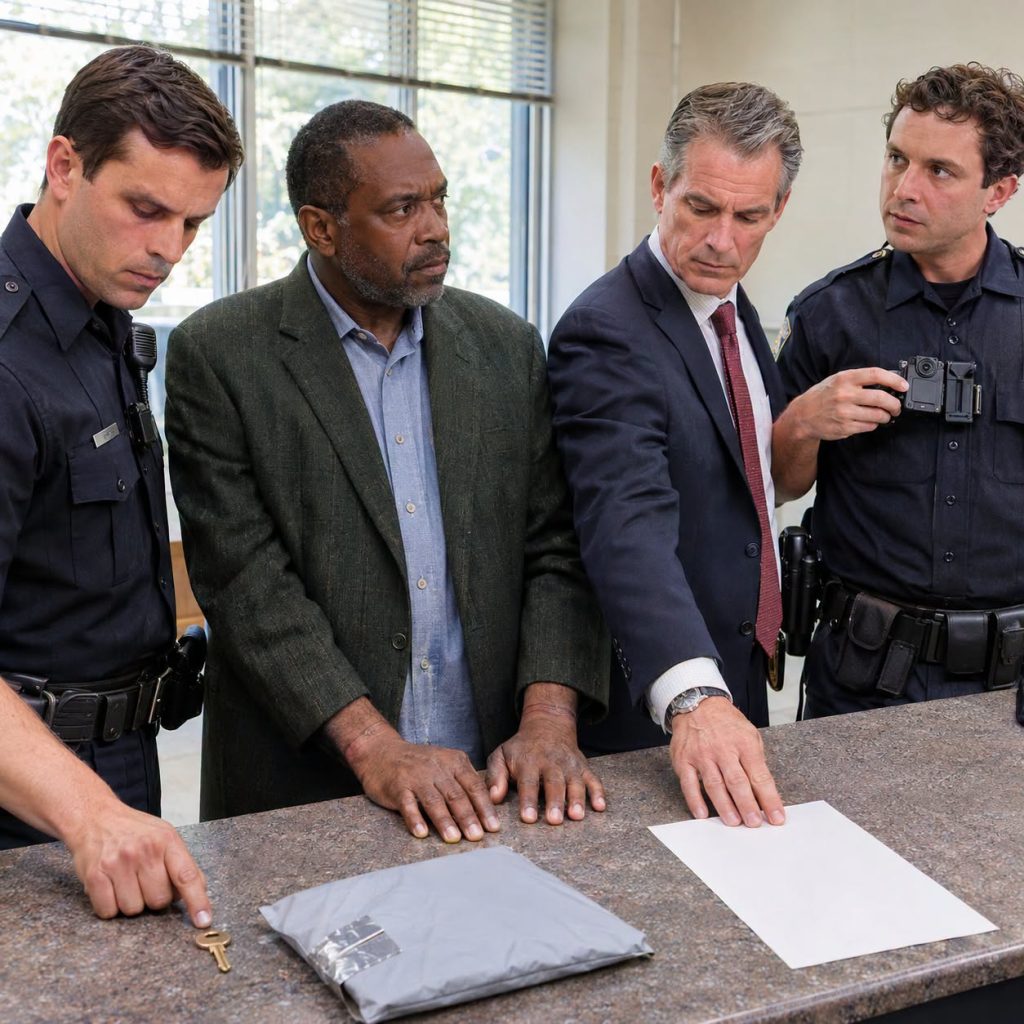
David handed Mercer the search warrant. One of the agents read the camera’s serial number aloud while another wrote it down. Gallagher unclipped it himself and placed it in her open hand. Then David set a second document on the counter. A judge had signed an arrest warrant for Jenkins in the Reed case that morning. The federal complaint alleged he had willfully violated Reed’s civil rights. “We’ll take your weapon first,” David said. Jenkins lifted his arms away from his sides. He watched an agent unclip his badge, then turned around and put his hands behind him.
“Ask him about the key,” I told David. Jenkins looked at me for the first time since the cuffs came off. An agent reached into his uniform pocket and laid my brass key beside the envelope. It still had the nick I’d filed into it so I could tell it from the back door key by touch. Gallagher looked at it for a long moment. “He was going to list that as a burglary tool,” he said. “He told me to bring a separate bag for it.”
What happened in September came out in pieces over the next year. Mercer had used an administrator account to delete Gallagher’s recording. The station’s vendor still had an audit log, and the garage camera had caught Jenkins returning the envelope to his trunk after Reed was taken inside. Mercer had approved closing all three complaints without speaking to the men who filed them. All three men later testified. Jenkins was convicted of violating Reed’s civil rights. Mercer resigned and pleaded guilty to destroying the recording after receiving a written request to preserve it.
That afternoon, I had one more thing to say to Gallagher. We stood where the squad car had pulled in, beside the drain in the garage floor. “Why didn’t you speak up when he put me in the car?” I asked. He rubbed the red mark on his palm with his thumb. “I figured if I said something, he’d tell everybody I froze. Then I froze anyway.” I told him I’d seen him look down. He nodded. “I know. I saw you waiting.”
“Next time, speak while you can still stop it,” I said. He asked if I wanted him to drive me home. I told him David would take me, and that the investigators needed to hear about the curb, the car, and September in his own words. Later I learned he’d gone back into the station and asked to add to his statement. He’d remembered that Reed had been wearing a work shirt with his name on it. Jenkins had called him “boy” through the whole stop.
The agents kept my key for evidence. My daughter, Naomi, met me at the front door with the spare. She reached for my cheek, then stopped an inch short. I leaned into her hand. “You could’ve told them what you do,” she said. I told her I’d started with whose house it was. She took that in, looking past me at the soaked lawn. “That should’ve been enough,” she said. I picked up the hose while she went to turn off the valve.
One hydrangea had tipped sideways where the water washed out the soil. I knelt, set it straight, and pushed the wet dirt back around the roots. Naomi came down the steps with the photograph I’d told Gallagher about. It was from the day I moved in, the two of us sitting on the front stoop eating pizza out of the box. She wiped a smudge off the glass with her sleeve. Then she carried it back inside and set it where we’d always kept it, right by the door.
What do you think of this story? Please leave a like and share your thoughts in the comments. Your support means a lot to us and inspires us to keep writing more meaningful and powerful stories. Thank you! 👍❤️



