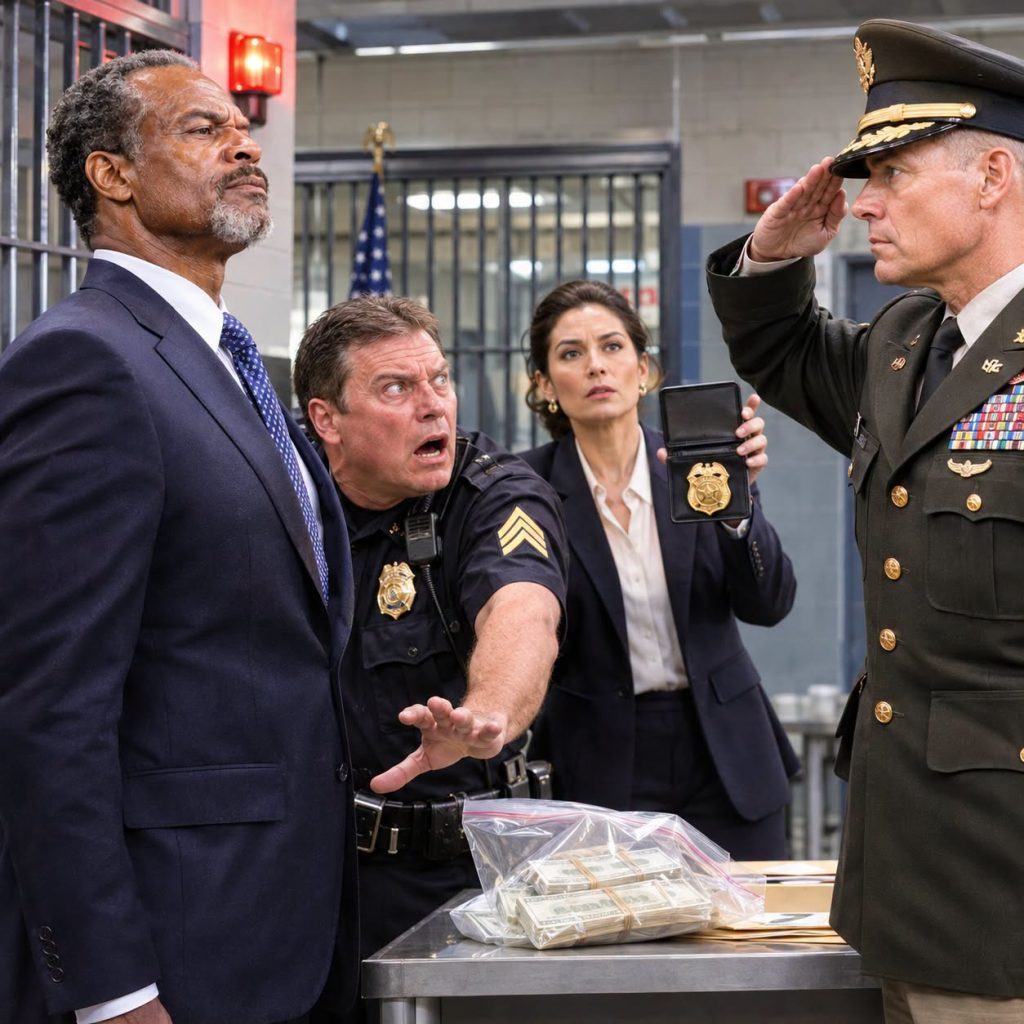
The four thousand dollars was still inside.
Each bill had been recorded before I left Washington.
That ended Lane’s argument about where the money came from.
But it did not explain the whole operation.
The answer was in Duncan’s office.
Behind a framed commendation, agents found a small wall safe. Inside were handwritten patrol lists, bundles of cash, and a second set of seizure records. The pattern was brutally simple. Officers watched the roads around Camp Ridgeway, stopped drivers most likely to carry cash, and threatened arrest, towing, or invasive searches until frightened people surrendered money. Some were soldiers returning from deployment. Others were spouses traveling alone. A few were civilians who had no connection to the base at all.
Duncan took a percentage. Lane ran the stops.
Mason had seen enough to suspect the truth but had been too afraid to challenge his sergeant. That did not excuse his silence, and he knew it.
“I should’ve stopped it sooner,” he told me.
“Yes,” I said. “You should have.”
He lowered his eyes.
Lane was placed in handcuffs first. The anger returned to his face when Reyes read the charges being investigated.
“You set me up,” he said to me.
I shook my head. “I drove on a public road. You made every choice after that.”
Duncan tried a different approach. He asked for a lawyer and said nothing more.
By sunrise, federal agents had sealed the evidence room and copied the department’s servers. The data Kelly preserved matched bank deposits, traffic logs, dispatch records, and complaints that had been dismissed for years. The supposed “missing paperwork” was not missing at all. It had been hidden, altered, or destroyed.
Months later, I sat in a federal courtroom when Patrick Duncan pleaded guilty to conspiracy and wire fraud. He received eleven years in prison. Darren Lane went to trial, was convicted on multiple federal counts involving deprivation of rights and false imprisonment, and received nine years.
Kelly testified. Investigators concluded that the first report she processed had been based on false information given to her. Her later records helped identify dozens of victims.
Mason cooperated too, but he lost his badge. Silence has consequences when the public trusts you to intervene.
Harlow Creek Police Department was placed under federal oversight. Invasive searches required documented legal justification and supervisory review. Evidence procedures were rebuilt. Independent audits became mandatory. Millions of dollars in restitution eventually went back to soldiers, spouses, and other drivers who had been pressured into surrendering money.
Colonel Wallace called me after the first restitution checks arrived.
“One of my sergeants got back the money he’d saved for his daughter’s surgery,” he said. “He thought nobody believed him.”
I sat quietly for a moment.
That was the part that stayed with me—not the salute, not Lane’s face when he learned my title, not even the courtroom sentences.
It was the fact that people had been telling the truth long before anyone powerful walked through that station door.
I had been able to survive Lane’s humiliation because I knew who I was and who would eventually come looking for me. Most of his victims had no such certainty.
Authority should never depend on whether the person in front of you has a powerful name.
And justice means the law protects the person nobody recognizes just as fiercely as it protects the person a colonel salutes.
What do you think of this story? Please leave a like and share your thoughts in the comments. Your support means a lot to us and inspires us to keep writing more meaningful and powerful stories. Thank you! 👍❤️



