My courtroom assignment had given them a target. Their contempt had determined how they hurt me. Cruz’s team obtained warrants. In Haskett’s storage unit, they found envelopes containing photographs, cut hair, and stolen identification cards. Investigators contacted the people whose names appeared on the envelopes. Several had complained before. Their complaints had disappeared inside the same department that employed Martin Vale. The physical evidence supported their accounts. So did Brenner’s testimony, recovered messages, and the recorder Haskett had never found. Archer’s version of the case collapsed.
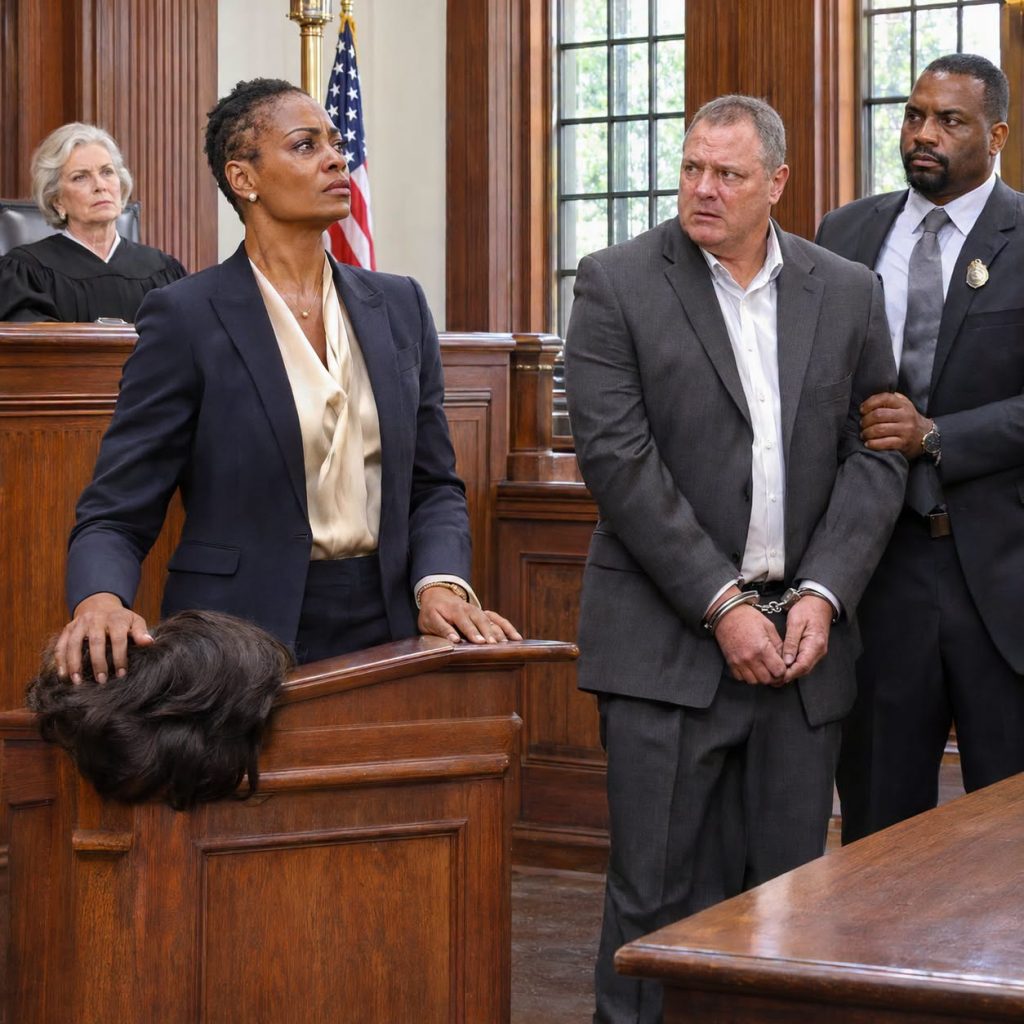
The two employees he had tried to blame received new counsel. One had spent eight months detained on evidence Haskett admitted planting. Nine months after Room Four, I walked into a federal courtroom. This time, I entered through the public door. Haskett sat beside his lawyer at the defense table. His plea had followed the recovery of messages arranging my stop and payments connecting him to Archer. Brenner had pleaded guilty separately and agreed to testify in the remaining prosecutions. Judge Caroline Walsh was presiding.
I wore a navy suit and a wig I had chosen myself. My scalp had healed unevenly. Some mornings, the sound of an electric toothbrush still made my hands shake. Haskett watched me approach the lectern. His expression changed when I spoke. “My name is Naomi Mercer.” He looked down. I had rehearsed a statement about fear, recovery, and public trust. For a moment, I could remember none of it.
Then I saw Renee in the second row. Beside her sat three women whose photographs had been found in that cabinet. I unfolded my paper. “He told me to practice saying I fell,” I began. “For months afterward, I practiced answering my door. Driving alone. Letting someone stand behind me.” Haskett shifted in his chair. “Look at me,” I said.
His lawyer put a hand on his sleeve. Haskett finally raised his eyes. “You wanted me to feel that no one would believe me. Other people in this room lived with that feeling long before I did.” My voice broke. I let it. “I had colleagues who answered my calls. I had resources. They should never have been necessary for my words to matter.” I removed my wig and set it on the table beside my statement. No one gasped. The courtroom stayed quiet.
That quiet gave me enough strength to finish. “I’m asking you to consider every person who went home believing silence was the safest thing they had left.” Judge Walsh imposed a twenty-year sentence. Brenner later received eight years, with his cooperation considered alongside his direct participation. Archer and Vale faced their own judgments. Outside, Renee caught my hand. “I almost deleted those files,” she said. “I almost turned that recorder off.”
We stood together without trying to make either confession smaller. Months later, I returned to the bench. Before my first hearing, my clerk asked whether I needed another minute. I touched the short curls growing above my ear. “No,” I said. “Let them in.” The doors opened.
I looked across the courtroom at the people waiting to be heard, and called the first case.
What do you think of this story? Please leave a like and share your thoughts in the comments. Your support means a lot to us and inspires us to keep writing more meaningful and powerful stories. Thank you! 👍❤️



