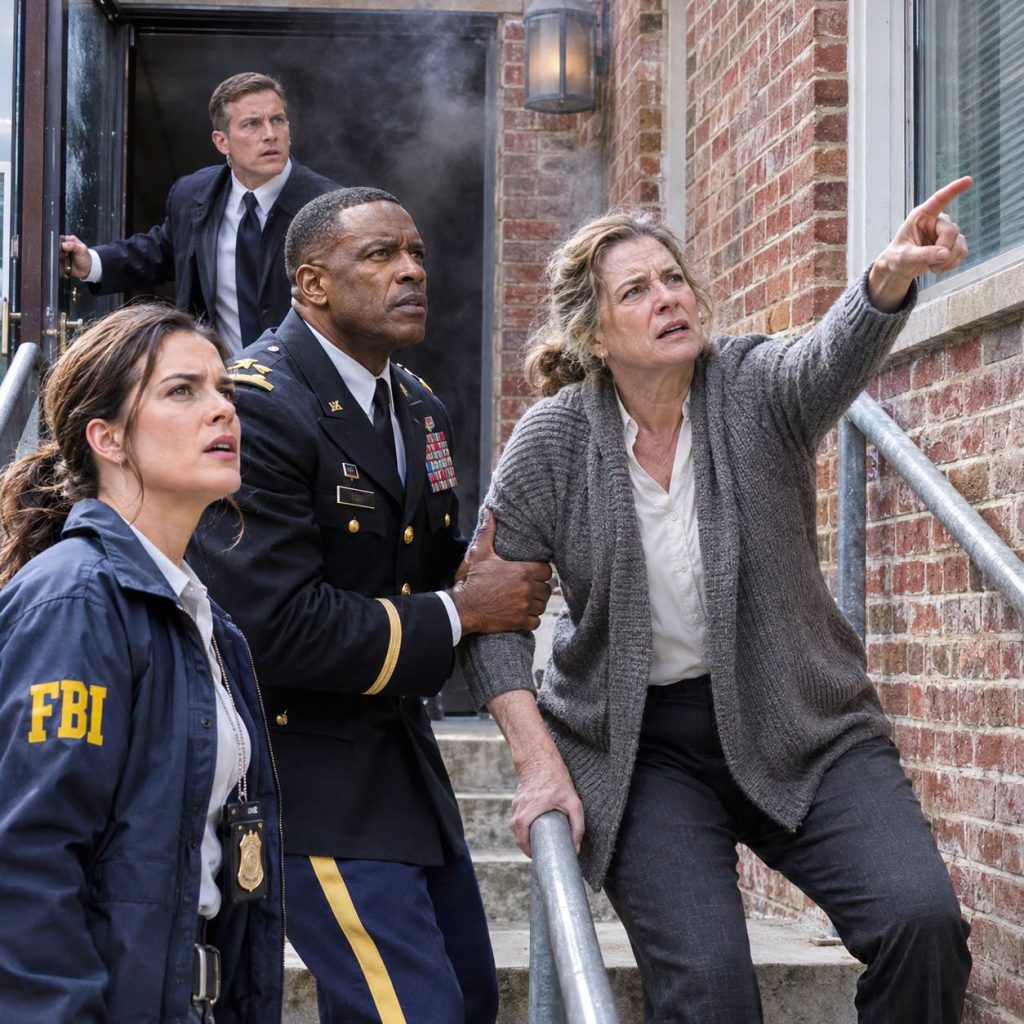
The agents took Nora first. She planted her feet on the top step long enough to point out Sullivan’s office window and tell Jenkins where he kept the safe. Firefighters found a pile of burning files beside his desk and had the fire out in minutes. Sullivan came through the front door with soot on one sleeve and told Jenkins that he’d gone back for his people. Behind him, through the glass, I could see the empty hallway he’d walked down alone.
The safe survived. Under a search warrant, agents recovered three ledgers, including the red one Nora had described. It listed the couriers by name, the amounts they carried, and the officers paid to keep roads clear for them. Higgins’s dispatch logs put patrol cars on those roads at the right times. Sometimes the officers kept drivers on the shoulder until a courier passed. Other times, the logs showed a driver booked and a car impounded for days. Pendleton signed orders that kept complaints and records out of reach.
My own stop had come from a handwritten note in Sullivan’s desk. It listed my plate number and said to hold me until noon, long enough for him to move the ledgers and find out what Nora had already told us. Pendleton had gotten my plate number from the county attorney’s copy of the records notice. He’d assumed he had enough warning to bury the investigation. By noon, Jenkins had the ledgers, Nora was giving a statement, and Miller’s cruiser was being towed into federal custody.
Miller had smashed the camera in my car. His own department’s recorder had kept running. At trial, we heard him say I’d come at him while both my palms were flat on the roof. I’d remembered his voice as loud. On the recording he sounded almost bored. I looked toward the jury and saw one woman close her eyes. Then the prosecutor let the recording play through the moment I asked for a supervisor. The whole courtroom heard the space between my question and the sound of his hand.
Fourteen months after the stop, Sullivan was sentenced to life in federal prison without parole. Pendleton got thirty-five years, and Miller got twenty-five. Higgins pleaded guilty for his part in the false reports and testified about the ones he’d signed. On his last day on the stand, a defense lawyer asked why he’d waited so long to speak up. Higgins looked out at the gallery, where his daughter was sitting. “Because every time I got away with it,” he said, “it got easier to do it again.”
After the last sentencing, Nora introduced me to a man named Leon Price in the courthouse lobby. He’d been on his way home from a night shift when a Ridgeway patrolman pulled him over and took his truck. It sat in the county lot for six weeks. By the time he got it back, he’d lost his job. I’d read his complaint. I remembered his name and the date of the stop. Until he told me, I hadn’t known what he’d done for a living.
I asked what he’d been doing since. “Driving a school bus,” he said. “They gave me my own route this year.” He pulled out his phone to show me a photo of the bus. There was a crooked paper sign taped inside the windshield. His daughter had made it for his first morning on the job. I asked what it said. Leon handed me the phone and let me zoom in. In purple marker, she’d written, Drive safe, Dad. See you when you get home.
What do you think of this story? Please leave a like and share your thoughts in the comments. Your support means a lot to us and inspires us to keep writing more meaningful and powerful stories. Thank you! 👍❤️



