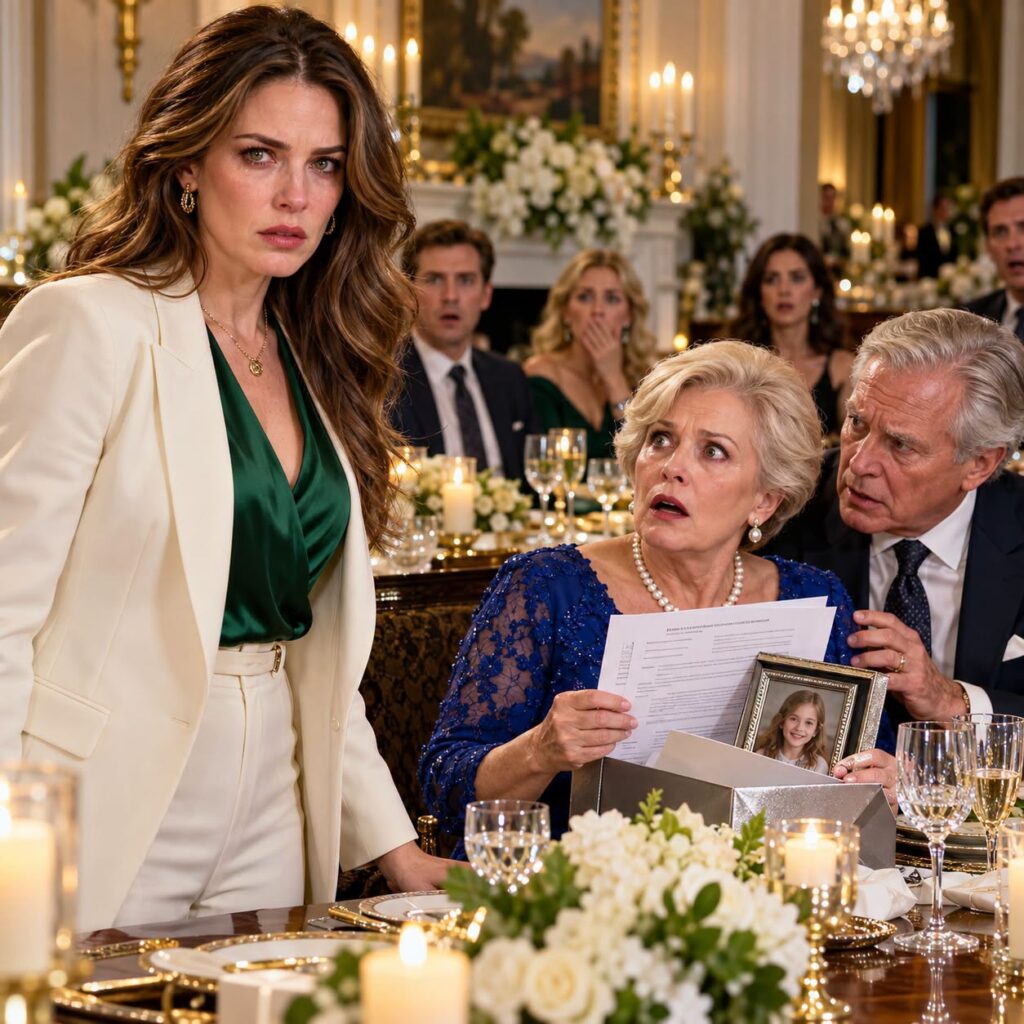
By morning, Mom had sent fourteen messages. She called me vindictive. Ungrateful. Mentally unstable. She told relatives I was trying to make my parents homeless over a paperwork mistake.
Then an unfamiliar woman called.
“My name is Joanna Reed. I handled your Aunt Ruth’s estate before I retired. Your attorney contacted me for the original trust documents.”
Joanna remembered Ruth changing her will after meeting Sophie at our adoption celebration. Ruth had removed a provision that would have divided the money among Caleb’s sons.
“She was very clear,” Joanna said. “She said Sophie was the child no one thought to choose.”
I gripped the counter.
Joanna continued, “There was also a requirement for annual written reports to you as Sophie’s parent. I never received confirmation those reports were delivered.”
They hadn’t been.
Three weeks later, the court ordered a preliminary accounting. Dana forwarded the records.
The payments were worse than the statements suggested. Fake tutoring invoices were only the beginning. There were reimbursements for medical appointments Sophie had never attended and receipts bearing my typed name.
That Tuesday, Dana emailed me one final document.
It was an acknowledgment stating that I had reviewed and approved $38,400 in payments from Sophie’s trust. Below it sat a practiced imitation of my signature.
I zoomed in on the date and handwritten time.
March 14. 2:15 p.m.
The afternoon we buried Matt.
While I held my crying daughter beside her father’s grave, my own mother had been signing my name to steal from her.
The funeral program was still in my glove compartment.
I laid it beside the forged acknowledgment and took one photograph. The date matched. So did the hour: 2:15 p.m., when I had been standing in the cemetery, not in my parents’ dining room approving expenses.
Dana told me not to confront anyone alone. We sent the document to the court with an amended request for emergency protection of the trust. We preserved my messages, the bank records, and the originals Dad agreed to turn over.
He arrived at my doorstep two days later carrying a battered file box.
“I thought I was protecting the family,” he said.
“You watched her hurt Sophie.”
His eyes filled. “I know.”
He had brought handwritten ledgers showing each transfer. Caleb’s company received $91,600. Another $29,000 went directly toward my parents’ overdue mortgage and the country-club deposit.
Dad had prepared the false bills; Mom authorized the payments; Caleb cashed them and kept most of the money.
“Why did she exclude Sophie?” I asked.
Dad rubbed his forehead. “Ruth left that money to Sophie instead of Caleb’s boys. Your mother never forgave her. She said if Sophie wasn’t treated like family, you might stop asking questions about the trust.”
“She’s a child,” I said. “Not a loophole.”
The judge ordered the remaining trust assets protected while the case proceeded and appointed an independent trustee after a hearing. Our attorney referred the apparent forgery and diverted funds to investigators. No dramatic arrest happened that night. Real consequences arrived through subpoenas, bank records, and sworn testimony.
Mom’s lawyer tried calling the withdrawals family loans. But there were no loan agreements,
no repayments, and no benefit to Sophie. Caleb’s invoices described sessions that had never existed.
At a settlement conference, Mom finally faced me.
“You would make your parents sell their home?” she hissed.
“You used my daughter’s inheritance to keep it.”
“She’s not even—”
“Finish that sentence,” I said.
She stopped. For the first time, the room belonged to someone other than her.
Fourteen months after the birthday dinner, the civil case ended with a judgment requiring repayment of the missing trust money, interest, and fees. My parents sold their lake house to satisfy a substantial portion. Caleb repaid the balance under an enforceable agreement. Mom and Dad entered guilty pleas over the fraudulent records, and Caleb accepted responsibility for the false invoices. The criminal court imposed probation and restitution conditions.
None of it brought Matt back. None of it made Sophie forget that awful dinner.
But the trust was restored under independent management. Sophie received the letters Ruth had written for her future birthdays. We read one together on her thirteenth.
“I chose you because you made room for love where other people saw limits,” Ruth had written.
Sophie leaned against me. “Do I have to forgive Grandma?”
“No,” I said. “You get to decide who earns a place in your life.”
On my mother’s seventy-first birthday, we didn’t send a gift. Sophie and I baked a crooked chocolate cake, lit thirteen candles, and invited people who never asked her to prove she belonged.
My mother had tried to erase my daughter from the family picture; instead, she taught us exactly who never deserved to be in it.



