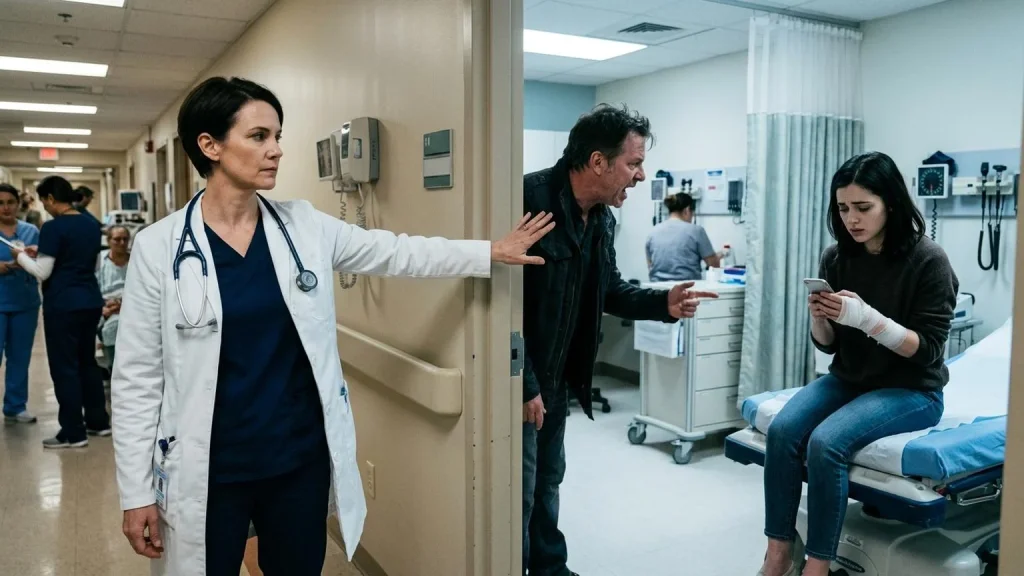
At Thanksgiving dinner, Dad insisted I’d tripped carrying the turkey, even as I held my swollen arm against my chest. Everyone accepted his story. Later, at the hospital, Dr. Rivera compared my new X-ray with an old one. Then she reached for the phone beside her desk…
“It was just an accident! She tripped while carrying the turkey.”
My father repeated those words for the third time as I sat in the emergency room, holding my swollen right arm against my chest. Dr. Elena Rivera stood beside the examination monitor, studying an X-ray while my mother quietly twisted a tissue between her fingers.
“Mr. Bennett,” she said, “I’d like to speak with your daughter alone.”
Dad frowned.
“Why? I’ve already explained what happened.”
Dr. Rivera didn’t move away from the monitor.
“Because there are signs of older healed fractures, and I need to understand her medical history.”
My father’s face changed.
I was twenty-three, three weeks away from graduating from Ohio State University, and I’d spent most of my life learning how to recognize that expression. His jaw tightened, his shoulders became rigid, and I knew what would happen if I said something he didn’t like.
Earlier that afternoon, we’d been having Thanksgiving dinner at our house outside Columbus.
I’d brought home a small chocolate cake from the grocery store because Dad liked chocolate better than pumpkin pie. I’d also brought news I’d been carrying around for nearly a week.
“I got the job,” I announced. “The hospital in Cincinnati offered me the position. I’m moving after graduation.”
Mom smiled uncertainly.
Dad put down his fork.
“You’re not moving anywhere until we’ve discussed it.”
“Dad, I’m twenty-three.”
“And you still live under my roof.”
I tried to explain that I’d found an apartment close to the hospital and saved enough from my campus job to cover the deposit. But Dad stood so suddenly that his chair scraped against the floor.
When I reached for the turkey platter, he caught my wrist.
“You don’t walk away while I’m talking to you.”
I pulled back instinctively.
He twisted my arm and shoved me against the kitchen counter.
The pain was immediate, sharp enough to make the room disappear for a second.
Mom cried, “Richard, stop!”
Dad released me.
Then he looked around the table and said I’d stumbled.
Nobody corrected him.
Now, sitting in the hospital, I watched Dr. Rivera point toward two irregular areas on the X-ray. She explained that old injuries couldn’t prove how they’d happened, but the findings concerned her when considered alongside the injury I had now.
“Anna,” she said gently, “I need to ask you something privately.”
Dad stepped toward me.
“She’s always been clumsy.”
Dr. Rivera looked directly at him.
“Sir, please wait outside.”
After he left, she pulled a chair beside my bed.
“Anna, did someone hurt you today?”
I tried to answer, but the words wouldn’t come.
Then my phone vibrated.
It was a message from my sixteen-year-old brother, Eli.
“Anna, Dad doesn’t know the kitchen tablet was recording. I saved everything. Please don’t let him make you come home.”
I stared at Eli’s message until the letters blurred together. That morning, I’d propped our kitchen tablet beside the flour tin so Mom could record her cornbread dressing recipe for Aunt June, who was recovering from surgery and couldn’t join us for Thanksgiving.
I’d completely forgotten about it when Dad started shouting.
Dr. Rivera noticed my expression.
“Anna, is there something you want to show me?”
I handed her the phone, and she read Eli’s message without changing her expression. Then she asked whether I felt safe returning home, and that simple question made tears spill down my face before I could stop them.
“No,” I whispered. “But my brother is still there.”
Dr. Rivera asked a nurse to contact the hospital’s social worker, then helped me understand my options. Because I was an adult, she explained that I could decide whether to speak with police, while the hospital would document my injuries and follow any reporting requirements that applied.
I agreed to make a report.
For years, I’d believed involving anyone outside our family would make everything worse. Dad always said police broke families apart and that people who called them over household arguments were ungrateful.
I’d never considered that the person breaking our family apart might be him.
When the social worker asked about my previous injuries, I told her about being seventeen and falling down the basement stairs after Dad grabbed my shoulder during an argument. I also described the time, at twenty-one, when he’d slammed the garage door while my hand was still against its frame.
Each time, he’d taken me to a different urgent care clinic.
Each time, he’d explained what happened before I could speak.



