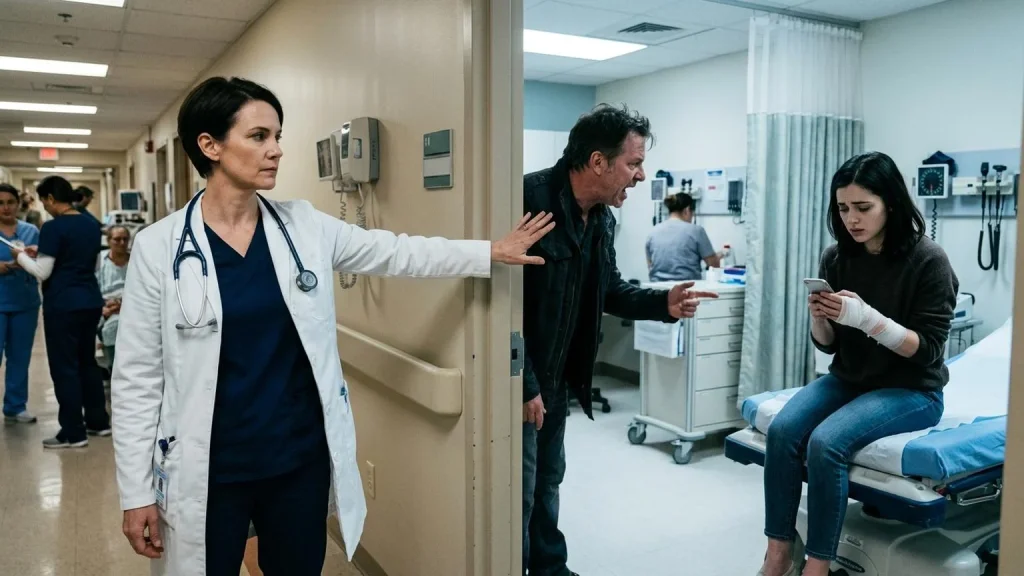
I started crying before I reached the stairs.
For the first time, I wasn’t afraid of what Dad might say about an accomplishment I was proud of. I didn’t have to pretend my success belonged to him or apologize because it meant building a life somewhere else.
My new employer confirmed that my position in Cincinnati would remain available while I completed treatment and recovered enough to perform the job safely. With help from Grace, I arranged my apartment, transferred my savings, and collected my belongings from my parents’ house through a scheduled, supervised visit.
The house looked smaller than I remembered.
My old bedroom still contained the stuffed rabbit I’d kept since childhood, along with a shoebox of photographs and the university acceptance letter Dad had once complained was too expensive to frame. I packed them carefully, then closed the door without looking back.
Six months later, Dad entered a guilty plea to a domestic-violence charge under an agreement with prosecutors. The court imposed supervised community-control conditions, required him to complete an intervention program, and ordered restitution for documented expenses.
At sentencing, I read a victim-impact statement.
I told the judge about the broken arm, the older injuries, and the years I’d spent measuring every sentence before speaking. I described how Dad’s anger had followed me into classrooms, job interviews, and friendships until I barely recognized the person I’d become.
Then I looked directly at him.
“I used to believe that if I worked hard enough and never disappointed you, you’d stop hurting me.”
His eyes dropped.
“But I can’t earn safety from someone who chooses to frighten me.”
I folded the paper.
“I’m not asking you to love me anymore, Dad. I’m asking to be allowed to live without being afraid of you.”
When I finished, the courtroom was silent.
Mom eventually moved into a separate apartment with Eli while she worked through the decisions she’d avoided for years. He continued school and counseling, and I called him every Sunday, sometimes just to hear him complain about homework or tell me what he’d eaten for dinner.
My arm healed, although physical therapy took longer than I’d expected. Sometimes it ached when the weather turned cold, and I still startled at raised voices, but those reactions gradually became less overwhelming.
One evening, almost a year after Thanksgiving, I was cooking dinner in my Cincinnati apartment when Eli called.
“What are you making?”
“Roast chicken. Why?”
He laughed.
“Just checking you aren’t carrying any turkeys.”
I laughed too, then stood quietly for a moment with the wooden spoon in my hand.
Outside my window, the streetlights were coming on, and somewhere downstairs a neighbor was playing music. My apartment was small, my furniture didn’t match, and there were still boxes I’d never gotten around to unpacking.
But I could move freely through every room.
Nobody was waiting to tell me what I’d done wrong.
I looked at the graduation photograph on my refrigerator, remembering Dr. Rivera pointing to the healed fractures on that hospital screen.
My father had called every injury an accident because he believed nobody would ever question him. He was wrong. The day someone finally listened to me wasn’t the day my family fell apart. It was the day my life began to belong to me.
THE END



