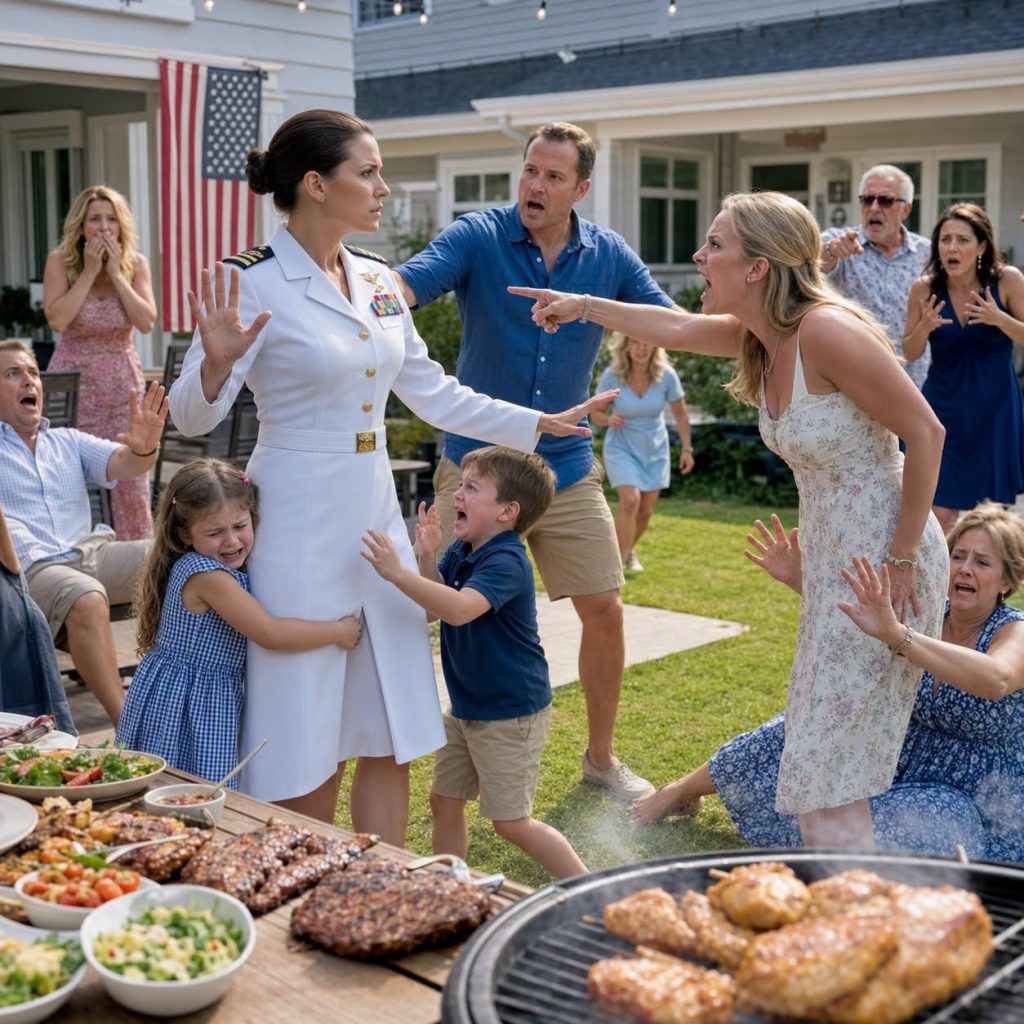
The morning after the Fourth of July barbecue, our house was quiet. The sun bled through the blinds of our kitchen in long, warm bars of light. Michael was sitting at the island, pouring orange juice for Maya and Lily, who were unusually quiet over their pancakes.
I walked down the stairs dressed in my summer whites—crisp, stiff, and adorned with the silver oak leaves of my rank. I had an operational briefing at the naval base in Norfolk at 0900, but my mind was operating on two parallel tracks.
“Mom?” Lily asked softly, her small fingers clutching her fork. “Are we going to have to see Aunt Vanessa again?”
I walked over, knelt beside her chair, and took her small hand in mine. “No, baby. You will never have to see her again. I promise you that.”
“Are we… are we really your children?” Maya asked, looking up from her plate. The question was raw, bleeding, and had clearly kept her awake all night. “She said you bought us because you couldn’t have your own.”
Michael’s hand tightened around his coffee mug until his knuckles turned white.
I took Maya’s face in both of my hands, looking directly into her brown eyes. “Maya, listen to me very carefully. Biology makes a person a relative. Love, sacrifice, and choice make a person a parent. I didn’t ‘pick you up.’ I searched the entire world for you, and when I found you and Lily, my life finally made sense. You are my daughters in every way that matters in this universe. Do you understand me?”
Maya held my gaze for three seconds before tears spilled over her lashes. She leaned forward and wrapped her arms around my neck. Lily joined in, burying her face into my crisp white uniform shoulder. I didn’t care about the wrinkles or the damp spots on the fabric. Some things were sacred.
At 0830, after dropping the girls off at a summer science camp with strict instructions to the directors that no one outside of Michael and myself was permitted within fifty feet of them, I called my attorney, David Vance—Marcus’s elder brother and one of the sharpest corporate and family law attorneys in the state.
“Lauren,” David answered on the second ring. “Marcus called me last night. He gave me the rundown. How are you holding up?”
“I’m clear-headed,” I replied, pulling into the officer parking lot at the base. “I need three things from you immediately, David.”
“Name them.”
“First, I want a restraining order against Vanessa and Grant Bennett on behalf of myself, Michael, Maya, and Lily. Second, I want you to prepare a civil suit for intentional infliction of emotional distress, defamation, and battery.”
David chuckled softly on the line. “Consider it done. What’s the third thing?”
“Three years ago, Grant set up a non-profit foundation called the ‘Bennett Educational Trust.’ He asked me to sign a board member waiver because I was active-duty military, claiming it helped with tax-exempt status. I signed it because he was my brother.” I paused, stepping out of the car and looking up at the gray hull of the destroyer docked in the bay. “I want a full forensic audit of that trust. Today.”
“Lauren,” David’s voice lowered, instantly shifting into high-stakes legal mode. “If he abused tax-exempt military affidavits, that’s not just a civil issue. That’s federal fraud. It could implicate your father’s firm if he signed off on the filings.”
“I know,” I said coldly. “Run the audit, David. Don’t pull a single pull of the thread. Pull the whole rope.”
Chapter 5 – The Campaign of Whispers
By Wednesday afternoon, the Bennett family counter-offensive began.
It didn’t come in the form of an apology or a plea for reconciliation. It came in the way cowardly people always attack: through whispers, manipulated narratives, and public shaming.
My mother, Eleanor, launched a blitzkrieg across our extended family’s group chats, church circles, and social media platforms. By noon, my inbox was flooded with messages from aunts, cousins, and long-lost family friends.
“Lauren, how could you put your brother’s wife in jail?” “Family handles things privately! You’re ruining Connor’s life!” “We know you’re stressed from your job, but this is cruel!”
Eleanor had posted a lengthy, tearful video on her Facebook page—which had over three thousand local followers—depicting herself as a heartbroken matriarch whose cold-hearted, military-hardened daughter had called the police over a “minor disagreement at a family picnic.” She conveniently left out the physical assault, the bloody lip, and the verbal abuse directed at two young girls.
At 1400 hours, while I was reviewing fleet readiness reports in my office, my desk phone rang. It was the base public affairs officer, Commander Henderson.
“Lauren, step into my office for a second,” Henderson said, his voice measured.



