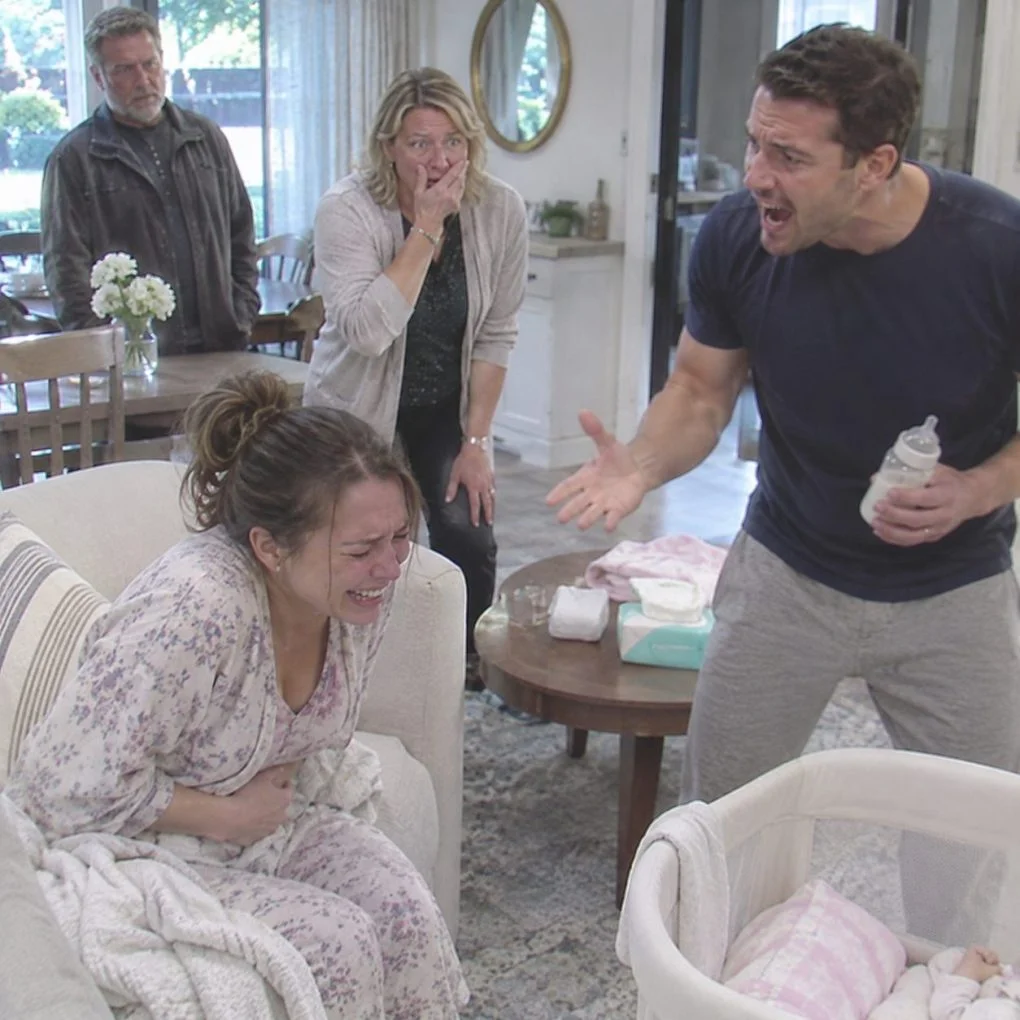
“YOU HAD A BABY, NOT A DISABILITY!” my husband shouted as I gripped the kitchen counter, crying from the pain. For seven days, he’d dismissed every warning. That night, he opened the bathroom door and found me collapsed beside blood-soaked towels. When the paramedics arrived, one look at me changed everything…
“WOMEN GIVE BIRTH EVERY DAY! STOP BEING SO DRAMATIC!” my husband shouted when I asked him to hold our week-old daughter.
I was gripping the nursery doorframe, trying to stay upright while pain twisted through my lower stomach. Behind me, Lucy stirred in her bassinet, making that small, searching sound she made before crying; I wanted to lift her, but my hands had begun to shake.
“Jack, something isn’t right,” I whispered. “I’m bleeding more than yesterday.”
He glanced at the laundry piled beside the changing table. “You said that yesterday too. My mother had three kids and never made this much fuss.”
I was thirty-one, living outside Rochester, New York, and a week earlier I’d brought home the baby we’d waited four years to meet. I still remembered Jack crying when Lucy wrapped her fingers around his thumb in the delivery room, and the way he’d tucked my socks around my cold feet before we left the hospital.
Now he barely looked at me unless he needed a clean bottle.
Two days earlier I’d called the obstetric nurse about worsening cramps and heavier bleeding. She’d told me to come in for an urgent assessment, especially if I was soaking pads quickly or feeling faint. Jack had promised to drive me after finishing a work call, then said the clinic would only tell me to rest.
I should have found another way there. Instead, exhausted and afraid of leaving Lucy, I let one afternoon become another night.
At 10:40 p.m., Jack went downstairs to watch a game. I sat beside the crib with a folded towel under me, counting breaths through the pain and listening to Lucy’s sleepy hiccups. My mother had knitted the little yellow blanket over her feet before she died last spring; I smoothed its corner because I couldn’t bear the thought of staining it.
When Lucy cried, I stood too quickly. The room tilted, a terrible rushing sound filled my ears, and I reached for the crib rail before the floor came up beneath me.
Jack found me minutes later, unresponsive beside the crib, and called 911. I remember only fragments afterward: a paramedic asking my name, cold air against my face, and someone saying my blood pressure was dangerously low.
At the hospital, doctors ordered blood transfusions and an urgent procedure to stop the bleeding. My sister Hannah, who arrived while they prepared me for surgery, later told me what happened when Jack tried to explain that I’d been “overdoing it” with the baby.
The doctor looked at him over my chart.
“When did your wife first tell you she was bleeding this heavily?”
Jack opened his mouth, but no answer came.
Then the doctor added, “Because the nurse’s note says she asked for help two days ago.”…Want to know what happens next? Read on here.
I woke in a hospital room at dawn with an IV in my arm and a hollow ache beneath the bandages. Before I could ask about Lucy, Hannah leaned close and told me the baby was safe at her house with her husband, fed and sleeping beneath Mom’s yellow blanket.
The obstetrician explained that tissue left behind after delivery had caused severe delayed postpartum bleeding. I’d needed blood transfusions and an urgent procedure to remove it and control the hemorrhage; she said it was treatable, but losing that much blood had put my life in danger.
“Would you have come sooner if someone had brought you in?” she asked.
I stared at my hands. “I thought I was making too much of it.”
Hannah’s face crumpled. She had offered to stay with us after the birth, but Jack insisted we needed privacy, and I’d told her we were doing fine because I didn’t want her to worry.
Jack entered carrying my phone charger, still wearing the sweatshirt he’d worn the night before. He set it beside my water and said, “I had no idea it was that serious.”
I wanted to remember the man who had sobbed when Lucy was born. Instead, I remembered him standing in the nursery doorway while I begged him to take our daughter, looking over my shoulder at a basket of laundry.
“You knew I asked the nurse for help,” I said.
He stared at the floor. “I thought she’d tell you to rest. I was tired too.”
I didn’t have the strength to argue. Hannah unfolded the discharge sheet we’d brought home from the maternity ward, its warning signs circled in blue ink: heavy bleeding, faintness, increasing pain. Jack had initialed the page beside me on the day we left.



