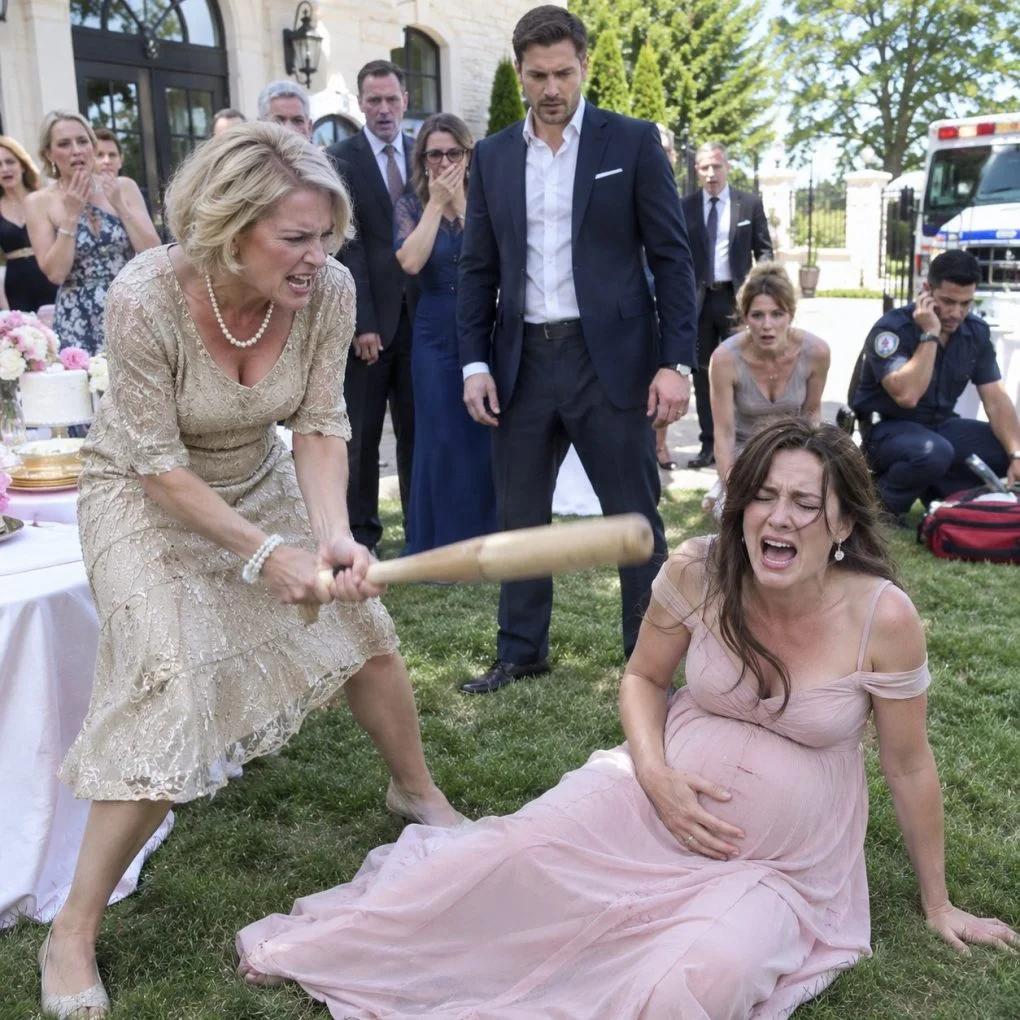
The laughter was still coming from the patio when my mother-in-law drove a baseball bat into my pregnant belly.
One second I was standing beside the rose garden at my baby shower; the next I was on the grass, both hands pressed against my stomach, trying to draw enough air to call for help. Someone’s champagne glass shattered, but no one moved quickly enough to catch me.
“That’s what happens when you bring disgrace into my family,” Vivian Halstead said, dropping the bat beside her cream-colored heels.
I was twenty-nine weeks pregnant, and the gathering at her estate outside Columbus was supposed to celebrate a little girl we’d already named June. Five minutes earlier, Vivian had been entertaining her guests with jokes about the mother I hadn’t seen since I was nine—the woman who’d gone to prison after killing my father.
“She thinks that woman deserves to meet my granddaughter,” Vivian announced, smiling at her friends. “Imagine bringing a killer into a nursery.”
A few people laughed, the uncertain kind that follows a cruel joke when nobody wants to be the first to object. I’d quietly told her that I intended to meet my mother that afternoon, and Vivian had demanded I promise the reunion would end there.
“You don’t get to decide who my daughter knows,” I said.
Vivian reached for the wooden bat leaning against a table after the family’s earlier softball game. I saw my husband, Daniel, turn toward her, his drink halfway to his lips; then the bat struck, and all the light seemed to drain from the afternoon.
Blood seeped through the fabric near my knee where I’d landed against the rosebed’s stone border. I couldn’t tell whether the tightness in my stomach was a contraction or fear, but when I called Daniel’s name, he stood frozen beside his mother.
My friend Nora knelt next to me, calling 911 and holding my shoulder so I wouldn’t try to stand. “Help is coming,” she whispered, though her fingers were shaking harder than mine.
“Call my mom,” I managed. I’d given Nora her number that morning because, after twenty years of silence, I was finally supposed to meet her at four o’clock at a diner less than a mile away.
Vivian looked down at us. “Your killer mother wouldn’t dare come through my gates.”
Then a black SUV struck the iron entrance, ripping one gate from its hinge before stopping on the gravel drive. A dark-haired woman stepped out, took one look at the blood on my dress, and ran toward me.
I recognized her from a photograph I’d kept hidden for twenty years.
My mother had come back.
The woman running across the driveway looked older than the photograph in my childhood dresser, with silver threaded through her dark hair and work boots beneath her black trousers. But when she knelt beside me, she touched my cheek with the same careful hand I remembered from the morning my father died.
“Ellie, don’t move,” she said. “The ambulance is coming, and I’m right here.”
Vivian shouted about her broken gate and threatened to have my mother arrested. My mother never looked up; she simply told Nora to keep speaking to the dispatcher, then held my hand until the paramedics reached us.
At the hospital, doctors confirmed that the blow had caused a placental abruption, and my baby’s heart rate was becoming dangerously unstable. They took me for an emergency cesarean delivery, and I remember signing a consent form with a pen that kept slipping from my fingers.
June arrived eleven weeks early, weighing just over three pounds, and nurses carried her to the neonatal intensive care unit. I didn’t hear her cry before they took her away; instead, I woke hours later asking the same question until someone finally told me she was alive.
My mother sat beside my bed in a faded navy jacket, holding a paper cup she’d forgotten to drink from. Daniel was in the hallway speaking to his family’s attorney, and for the first time in years I didn’t ask anyone to bring him back.
“Why did you come?” I whispered.
“Your friend called,” she said. “I was already waiting at the diner, hoping you’d still want to see me.”
When I was nine, my father had attacked us in our kitchen, and my mother had killed him while trying to stop him. She accepted a manslaughter plea and served eight years; afterward, my aunt, who raised me, convinced me that my mother had chosen to disappear.
Only after my aunt died that spring did I find a shoebox full of unopened letters addressed to me, each one written in the same slanted handwriting. They described birthdays she’d missed, the apartment she’d found after prison, and her hope that one day I might allow her to explain.



