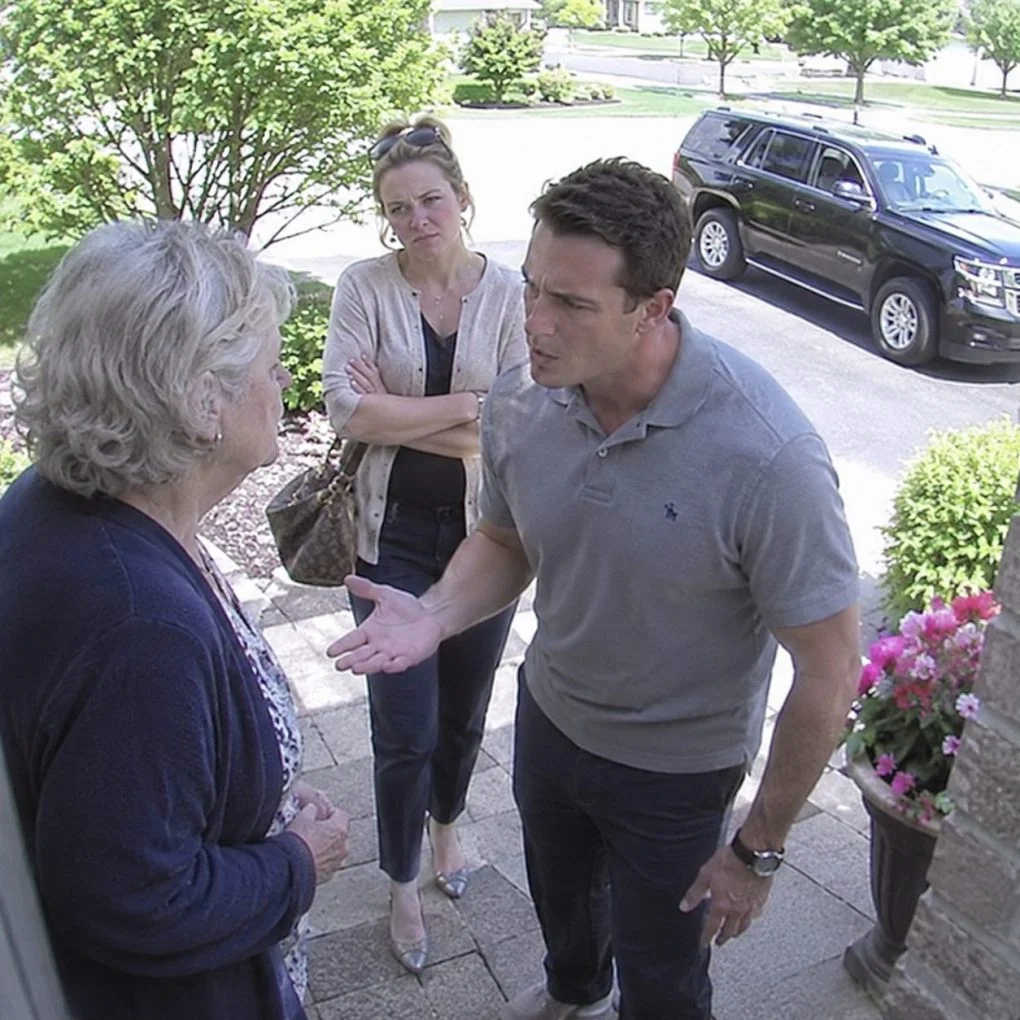
My son called me a useless old woman after I asked him to help with groceries. “At least leave me the house when you’re gone!” he snapped. Two days later, he flew to Europe with his wife. He thought my $875,000 home was already his. By the time he returned, someone else had the keys…
“YOU’RE A USELESS OLD WOMAN!” my son snapped, shoving a grocery bag across my kitchen counter. “If carrying milk is too much for you, maybe you shouldn’t be living alone.”
I had asked Andrew to bring two bags in from my car because my wrist was still stiff after surgery. At seventy-one, I managed my appointments, my groceries, and every bill on the house, but I had been looking forward to fifteen minutes with my son. I’d even made his favorite beef stew.
“At least leave me the house when you’re gone,” he added. “Then all this helping you won’t have been for nothing.”
His wife, Melissa, examined her manicure. “Andrew’s exhausted, Margaret. You know how much he has on his plate.”
I looked at the grocery bag. A carton of eggs had cracked, and a thin line of yellow was spreading across the counter. I remembered Andrew at twelve, sitting beside me at that same kitchen table while I helped him build a model bridge from Popsicle sticks, after working late at the insurance office. I had always believed loving him meant making sure he never noticed how tired I was.
The house in suburban Raleigh was worth approximately $875,000 now. My late husband, Thomas, and I had spent twenty-eight years paying off the mortgage, often sacrificing vacations and new cars to keep it. The oak shelves in the pantry were his last woodworking project, and he’d marked Andrew’s height on the doorframe every birthday until our boy stopped growing.
Andrew and Melissa lived in a rented townhouse across town. They had keys for emergencies, not ownership, but lately Melissa referred to my kitchen as “the one we’ll redo” and spoke about turning my sewing room into a home gym. I usually changed the subject because I hated hearing them discuss my death as a decorating opportunity.
Two days after that dinner, they flew to Europe for a six-week vacation. Andrew sent one photograph from an airport lounge, captioned, “Finally some peace,” but never asked about my wrist.
That afternoon, a renovation estimate arrived at my address, directed to Andrew. I almost put it aside until I saw the drawing through its transparent cover: my kitchen without Thomas’s shelves, my sewing room knocked through, and an added note from the contractor.
“Current occupant—mother—will relocate before work begins. Son expects full control of property upon return.”
I read that sentence three times, remembering Andrew’s casual smile when he said I should leave him the house.
He wasn’t waiting to inherit my home. He was already planning how to get me out of it.…Want to know what happens next? Read on here.
The renovation estimate sat on my kitchen table for two days while I tried to convince myself Andrew had been misunderstood. Perhaps he was imagining a distant future, or perhaps he’d forgotten how to say things gently. I wanted so badly to believe there was still a version of my son who would be ashamed to hear those words read aloud.
Then Melissa posted a photograph from Rome with the caption, “Six weeks of freedom before the big move.” Underneath, a friend wrote, “Can’t wait to see your new place!” and Melissa replied with three little house emojis.
I had been thinking about downsizing long before Andrew insulted me. The stairs bothered my knees, the roof needed attention, and there were evenings when I set two places at the dining table before remembering Thomas had been gone for twelve years. I’d already spoken with a real estate agent, Elaine Porter, and looked at a sunny two-bedroom condominium close to the library and hospital.
When Elaine called, I told her I was ready. She arranged photographs and showings, explained the selling costs, and brought me an offer from buyers who already had their financing arranged. We accepted their $875,000 offer, with a thirty-day closing period subject to the usual inspections and contingencies.
Andrew was still abroad, posting pictures of fountains and expensive dinners.
The buyers were a young couple with a little boy named Oliver. During their second visit, Oliver ran his hand along the height marks on the pantry doorframe and asked who Andrew was. I told him he was my son, and the boy’s mother offered to leave the marks exactly as they were.
That kindness undid me. I had spent so much time expecting everyone to want something that I barely recognized what it felt like when someone offered to preserve a memory simply because it mattered.



