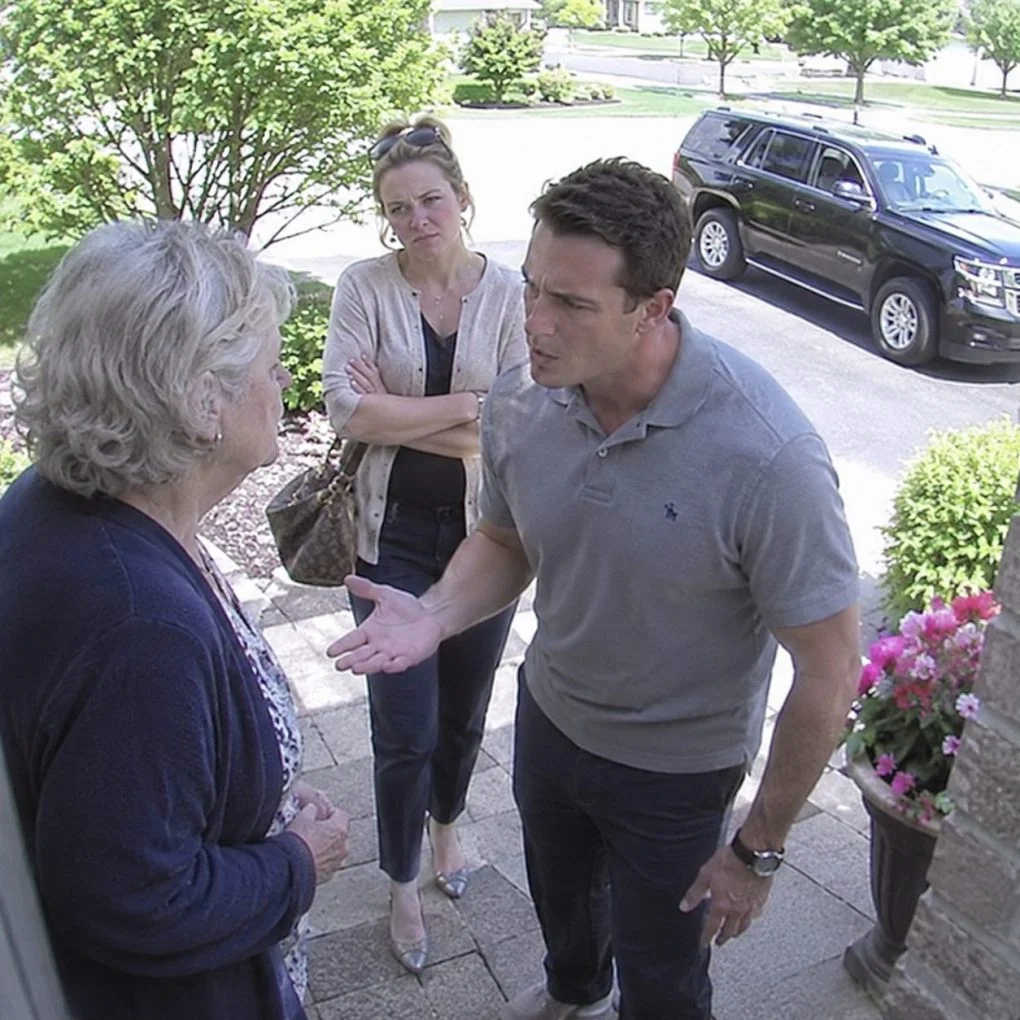
I hired a moving company, sorted the belongings I wanted, and asked my attorney, Paul Mercer, to review the title and estate documents. Andrew had no ownership interest, no lease, and no right to approve the sale; he and Melissa lived elsewhere, and nothing they owned was stored in my house.
Paul also helped me update my will and name a trusted niece as executor. I no longer wanted Andrew handling decisions he seemed to believe were already his.
I packed Thomas’s fishing photographs, the chipped Christmas ornaments, and a tin of recipes in his handwriting. Before leaving, I photographed the marks on the pantry doorframe, though the buyers had promised not to paint over them.
The sale closed on schedule. I moved into my condominium before Andrew’s return, transferred my utilities, updated my mailing address, and handed the keys to the buyers through the closing process.
On the final afternoon, I stood in the empty kitchen and touched the counter where Andrew had shoved that grocery bag toward me. The little crack in the tile was still there, exactly where Thomas had dropped a cast-iron skillet years ago.
I kissed my fingertips and pressed them against the doorway.
Then I left.
Andrew called at 4:12 p.m. on the day he returned. Behind his voice I could hear suitcase wheels and Melissa telling someone to move the car.
“Mom, why is there another family in our house? My key doesn’t work.”
“It isn’t your house, Andrew. I sold it.”
His breathing changed. “You can’t do that. We gave notice on our rental before we left.”
I closed my eyes. He had planned everything except asking whether I wanted to give up my own home.
Then he said the words that told me exactly what he expected.
“Melissa and I have nowhere to go. You owe us the money from that sale.”
I met Andrew and Melissa four days later in Paul’s office, because I would no longer let them turn my kitchen into a place where I was expected to apologize. Andrew arrived carrying the renovation estimate and wearing the watch Thomas had given him at graduation, the one I used to wind for him when he was little.
He opened with, “Mom is getting confused. She sold the family home without telling us.”
Paul placed the closing statement and recorded deed on the table. “Margaret owned the property and completed a valid sale,” he said. “You had no ownership interest, and there was no requirement for her to obtain your permission.”
Melissa leaned forward. “But we were moving in! We’ve already canceled our lease, and I paid a designer to draw up the kitchen.”
“That was a decision you made about a house that wasn’t yours,” I replied.
Andrew accused me of humiliating him and wasting the money he expected to inherit. I slid his renovation estimate across the table, open to the page that described me as the “current occupant,” and waited until he read the line about relocating me.
“Where were you planning to send me?” I asked.
He stared at the paper. “A retirement community. Somewhere smaller. You’ve complained about the stairs for years.”
“I wanted a smaller home,” I said. “I didn’t ask you to choose it for me, or to throw away your father’s shelves while I was still alive.”
For a moment nobody spoke. Melissa turned toward Andrew and asked why he’d told her I’d already agreed to the move, and his silence answered her more clearly than anything I could have said.
I told them I had bought my condo from the proceeds, set aside money for my healthcare and retirement, and arranged my estate as I chose. There was no guaranteed inheritance waiting for Andrew, and no check I would write to rescue them from the notice they’d given their landlord.
“You’re choosing money over your own son,” he said.
“No, Andrew. I’m choosing not to be treated as though I’m already dead.”
His face changed. I remembered watching that same face crumple when he’d broken his first bicycle and thought I would be angry. I had knelt beside him, lifted the bent wheel, and told him we’d find a way to fix it.
But this was not a bicycle. And he was no longer a frightened little boy.
Paul explained that threatening litigation wouldn’t undo a lawful sale and that Andrew needed to arrange housing rather than demand access to someone else’s property. Melissa finally stood, gathered the renovation estimate, and walked out without waiting for him.
Andrew and Melissa found another rental after paying for several weeks in a furnished apartment. The designer kept the portion of the fee she’d earned, and their European holiday became a memory they could no longer afford to brag about; they had to rebuild their plans using their own income.



