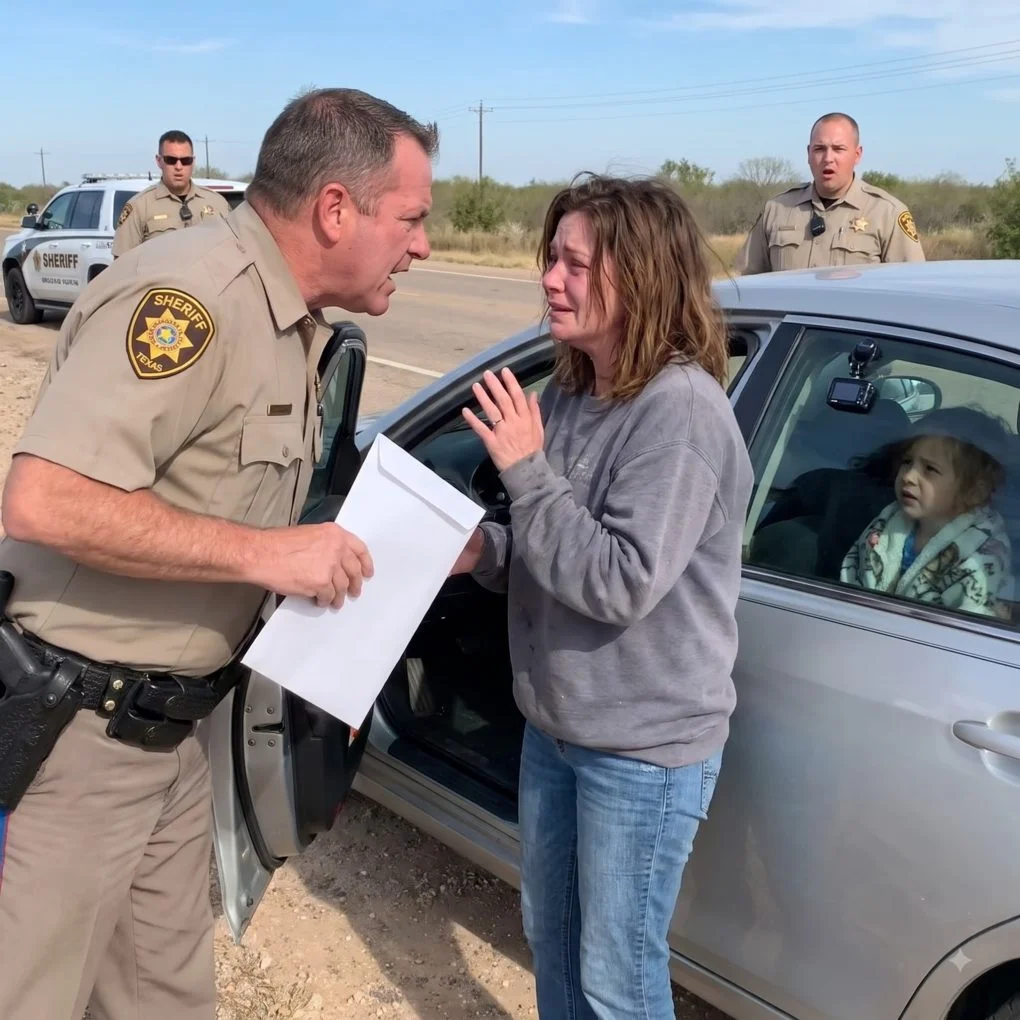
“Hand over the money, or I’ll find a reason to arrest you,” the Texas officer whispered through my car window. His partner looked away. I quietly gave him the envelope containing $6,000. He thought he’d gotten away with another theft. But the serial numbers inside that envelope had already been recorded…
“Ma’am, I can take the cash, or I can take you to jail. Which is it?” the deputy asked, holding the envelope that contained my daughter’s next chance at keeping a home.
It was 11:43 on a Thursday night outside Waco, Texas. My seven-year-old, Lucy, was curled in her booster seat beneath a hospital blanket, still wearing the paper wristband from an emergency visit for pneumonia. Every few breaths she made a whistling sound, and I kept checking the mirror to be certain her chest was moving.
My name is Hannah Collins. I work a shift at an assisted-living facility, and after two months of missed hours while Lucy was sick, I had scraped together $2,400 in overdue rent. I’d withdrawn it from the credit union to buy money orders the next morning; my landlord had agreed to give us until Friday before pursuing eviction.
The deputy had stopped me for a taillight he said wasn’t working. When I opened my glove compartment for the registration, he spotted the white envelope tucked beside my insurance papers and asked what was inside.
“Rent,” I said, showing him the withdrawal receipt. “Please, sir, she’s been in the hospital all day.”
Deputy Wade Kessler looked at the cash, then at my twelve-year-old sedan. “People don’t carry that much unless they’re hiding something,” he said, and told me he could seize it as suspected drug money.
I had never been arrested. I had never even had a speeding ticket, but I knew how frightened Lucy became when adults raised their voices, so I kept mine low and asked for a receipt.
Kessler laughed. “You want paperwork? I can arrest you while we sort it out. Then someone can come collect your kid.”
Lucy stirred at the word arrest. “Mommy,” she whispered, reaching between the seats with the hand that still had adhesive from an IV on it, “are we going home?”
I put my fingers around hers and told her yes, though my throat had tightened until I could hardly swallow. Kessler counted the bills under his flashlight, slid the envelope into his jacket, and stepped away without giving me a citation or any seizure paperwork.
Then he spotted the camera tucked beside my rearview mirror. I’d installed it after a hit-and-run the previous winter, and its second lens recorded the inside of the car as well as the road.
His smile disappeared. He reached through the open window, pulled the camera’s power cable free, and bent close enough that I could smell mint gum on his breath.
“If you show that recording to anyone,” he whispered, “I’ll make sure you lose more than your rent money.”
For several seconds after the cruiser disappeared, I sat with both hands on the wheel, waiting for my heartbeat to slow. Lucy had fallen asleep again, her fingers wrapped around the sleeve of my sweatshirt, and I was afraid to move because she looked peaceful for the first time that day.
At home, I found the tiny memory card still inside the dashcam. Unplugging its power had stopped the recording, but the earlier video files were saved; on my laptop I could see Kessler’s face as he leaned toward my window, his hand taking the envelope, and hear every word about jail and my child.
I watched it twice, then shut the laptop when Lucy called from her room. She wanted water and asked whether police officers were supposed to take people’s houses, and I told her no, wishing I believed that answer as completely as she needed me to.
I called my landlord before sunrise. Mrs. Patel had rented to us for six years and knew I’d been taking extra shifts, but she also had a mortgage to pay; she agreed to delay filing while I contacted emergency rental assistance, not to erase what I owed.
By nine, Lucy’s hospital social worker had helped me apply for aid, and a legal-aid attorney named Caroline Reed was listening to the traffic-stop recording across her desk. When Kessler’s voice said someone could come collect my daughter, Caroline took off her glasses and folded them carefully beside the keyboard.
“You did what you had to do to keep her safe,” she said. “Now we need to keep the original footage safe, too.”
We made copies, retained the unedited memory card, and filed a complaint with the sheriff’s professional-standards unit. I brought the credit-union receipt showing the $2,400 withdrawal and the discharge papers placing Lucy and me at the hospital shortly before the stop.



