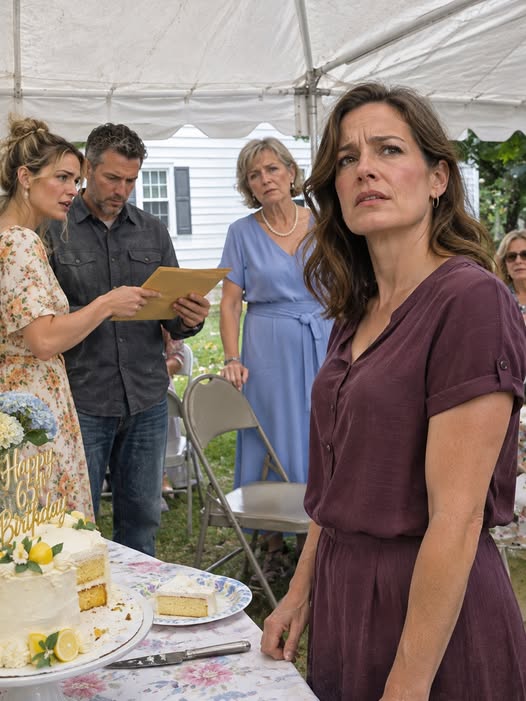
I went to find Jake and Owen.
When Kayla came outside, she’d been crying.
She looked at me.
“Will you come to the hospital with us?”
I took my bag.
“Of course.”
That night, Owen’s first electrocardiogram showed changes the emergency physician wanted investigated.
They kept him overnight on a heart monitor.
When the doctor stepped out, Owen looked at me from the bed.
“Aunt Pay, am I going to die like that man almost did?”
I held his hand.
I couldn’t promise him nothing bad would happen.
I told him we were finally getting the answers he needed and that the doctors were taking his symptoms seriously.
The following morning, September 13, pediatric cardiologist Dr. Hannah Whitcomb performed an echocardiogram.
She showed us an area of Owen’s heart muscle that was thicker than expected for a boy his age.
It was an early finding, not an immediate emergency.
But Owen would stop competitive soccer while the medical team completed its evaluation.
He’d wear a monitor at home and return to the cardiology clinic.
I handed Dr. Whitcomb the genetic report Dennis had authorized me to share.
She told us knowing the exact family variant would make targeted testing possible.
After she left, Owen reached into his wallet.
He pulled out a folded piece of paper.
It was the genetic counselor’s family letter.
The one Kayla had torn up and thrown away.
He’d retrieved the pieces from the kitchen trash and taped them back together.
“I read it,” he told us.
Kayla looked at the carefully repaired sheet.
Then she looked at me.
“You tried to tell me. Twice.”
Later that afternoon, she asked for Dennis’s telephone number.
I gave it to her.
I also handed her the sealed envelope he’d written with her name on the front.
She took it without asking me to explain its contents.
On Monday, Dad packed two duffel bags and went to his fishing camp on Sebago Lake.
He wasn’t ready to return to the life he’d lived with Mom.
She sent me a message saying I’d destroyed the family.
Then another complaining that Dad wouldn’t answer his phone.
I waited a day before replying.
I’ll talk to you when you can tell the truth without making me the reason for it.
She didn’t answer.
She still hasn’t apologized.
I no longer expect her to.
But Dad called that Wednesday and asked whether we could meet.
He suggested Harbor Light.
When I arrived the following afternoon, he was sitting at the back table beside the window.
He’d ordered two coffees.
He took a photograph from his jacket.
It showed a young man with dark hair holding a newborn baby.
On the back he’d written:
Paige, March 1986.
It was Dad holding me after I was born.
I’d never seen the picture.
He told me he’d kept it separate from the family albums all those years.
I looked at the baby in his arms and then at his face.
“You’ve got my chin,” he said.
His eyes filled.
“You always did.”
He apologized again for allowing me to believe I was responsible for the distance between him and Mom.
I put my hand over his.
He let me hold it.
That evening, Kayla called.
Dennis had agreed to meet her the following Thursday.
She asked whether I’d drive her.
On September 24, I picked her up in Gorham.
She was quiet during the drive into Portland.
The sealed envelope rested in her lap.
I didn’t ask whether she’d read it.
I parked across the street from Harbor Light.
Kayla looked toward the windows.
“Will you wait for me?”
I thought of the garage on Larch Street and the promise Dennis had asked me to make before she was born.
“Of course.”
She got out and crossed the street.
Through the cafe window, I watched Dennis stand when she approached.
For a moment, neither of them moved.
Then Kayla sat down.
Dennis reached into his coat pocket.
He put a small brass bell on the table.
I recognized it immediately.
It was identical to the one he’d attached to my red bicycle when I was five.
He’d bought two bells that summer.
Years later, he told me he’d intended to give the second one to the baby Mom was carrying.
He never had the chance.
Kayla picked it up.
She turned it in her fingers.
Then she rang it once.
I couldn’t hear the sound through the glass.
But I knew exactly what it sounded like.
I stayed in the car and gave them time.
The following afternoon, Dr. Whitcomb called with Owen’s genetic test results.
He carried the same disease-associated variant as Dennis.
That was frightening news.
It also meant the medical team had identified the risk before Owen suffered another collapse on the soccer field.



