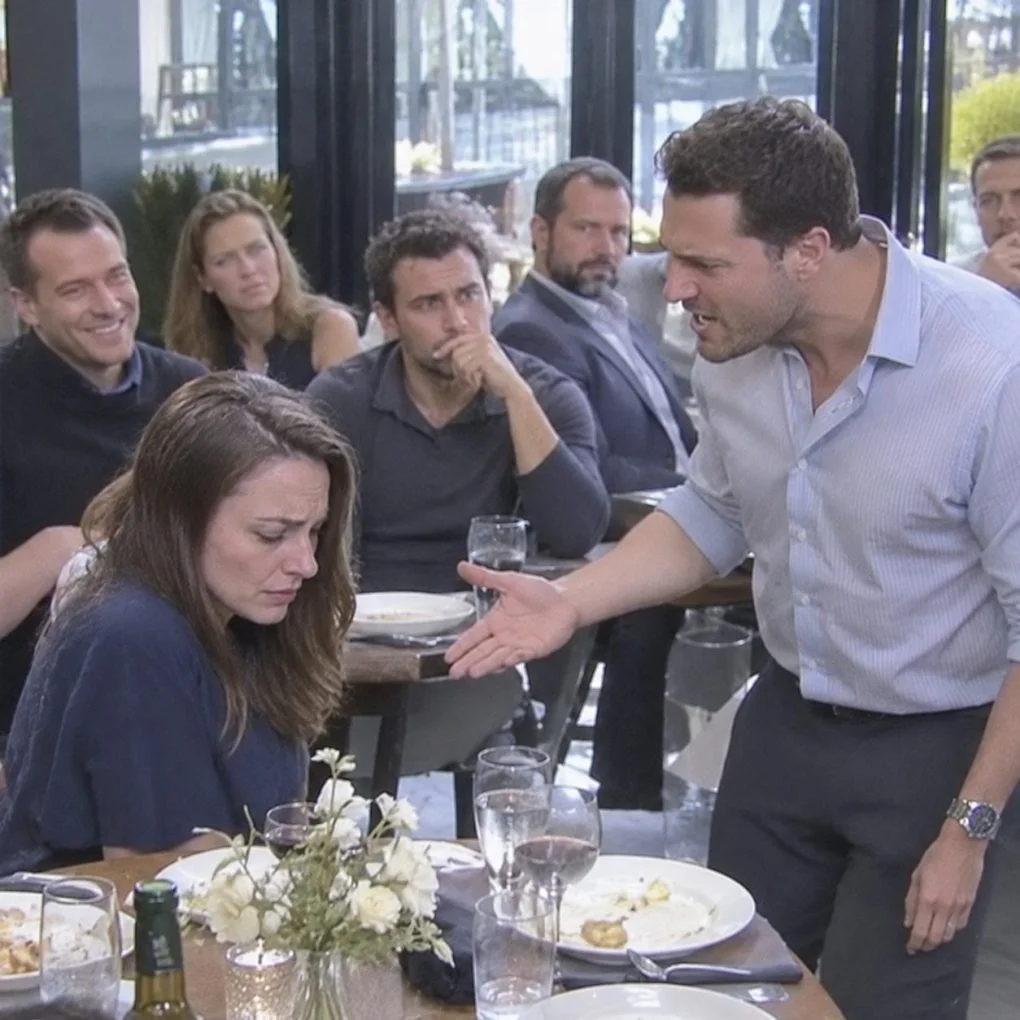
“She’s lucky I haven’t replaced her. She can’t even afford me!”
Adrian raised his glass at his thirty-sixth birthday dinner in Portland, and the six friends around him laughed. I watched a drop slide down my water glass, too humiliated to look at the man I had loved for two years.
“Come on, Sophie, it’s a joke,” he said, nudging my knee beneath the table. Trevor laughed harder, but Adrian’s closest friend, Marcus, stared at his plate, and I noticed that small kindness because it was the only one anyone offered.
My name is Sophie Bennett, I’m thirty-four, and I coordinate scheduling and payroll for a medical clinic. When Adrian lost his marketing job twenty months earlier, I had told him he could move into my apartment while he started a small event-production business, and promised to help him get started.
At first, he cooked pasta when I worked late and left notes on the refrigerator telling me not to forget lunch. Then every contract was “almost signed” and every invoice “due next week,” while my car savings slowly became our grocery money.
I paid the $2,150 rent, most utilities, and fourteen payments on the car he leased in his own name. I also lent him $26,000 for equipment under a signed eighteen-month repayment agreement. He promised the business would be profitable by spring, and I remembered how he used to warm my hands after winter shifts.
“She’s good at stretching a dollar,” Adrian told the table. “That’s about all she’s good at.”
I had spent my afternoon picking up the cake he’d forgotten to order and pressing the shirt he was wearing. The small leather portfolio I’d bought him was under my chair, still wrapped in blue paper, and the words I’m proud of you inside its card suddenly embarrassed me.
I asked the server for a separate check, paid for my dinner, and took my coat and gift bag from the chair. Adrian leaned toward me with a smile meant for his audience and said, “Don’t be dramatic; you know you’ll come back.”
At home, I put the unopened gift in my closet and took out the folder containing our loan agreement. Then Marcus sent me a photograph of a document Adrian had shown his friends.
“Sophie, did you really agree to guarantee another forty thousand dollars for his business?” he asked. “Because he’s been telling us you signed this.”
I enlarged the page until I could see my name beneath the word GUARANTOR.
The signature was mine—but the document wasn’t.
I sat on the edge of my bed with the photograph enlarged on my phone. The signature came from the loan agreement I’d signed at our kitchen table, where Adrian had kissed my temple and promised I would never regret believing in him.
Marcus called before I could answer his message. He explained that Adrian had shown the men a plan to expand his event business, claiming a bank would lend him $40,000 because I had agreed to guarantee it, and he’d asked his friends to contribute money as well.
“Didn’t any of you ask me?” I said. Marcus was quiet for a moment before answering, “He told us you wanted the business to be your gift to him, and that you’ve been living off his income.”
I had to sit down again. I’d worked Saturday shifts and brought home leftover clinic sandwiches while Adrian wore shirts I ironed to meetings he called triumphs.
When he returned after midnight, he found the printed document on the kitchen counter. “You showed people a guarantee with my signature,” I said, and he dropped his keys into the bowl as casually as if I’d asked him to take out the trash.
“It’s a draft, Sophie. I needed them to know I had backing.” When I said he had copied my signature without permission, he shrugged and replied, “I thought you’d help me once you calmed down.”
He didn’t apologize; he asked whether I’d brought his birthday gift home. That small expectation hurt more than his speech at dinner.
I told him the relationship was over and that he would need to arrange his own car payments and find somewhere else to live. Because the apartment lease was in my name, I called a housing attorney about the correct notice process rather than changing the locks, and I removed my card from the voluntary payments I had been making on his car.
That weekend, I filed an identity-theft report, froze my credit, and warned the lender’s fraud department. On Monday morning, three days after dinner, Marcus asked if he could come by with two of the other men. I agreed, not because I wanted an audience, but because Adrian had attached my name to financial promises that could hurt people who believed him.



