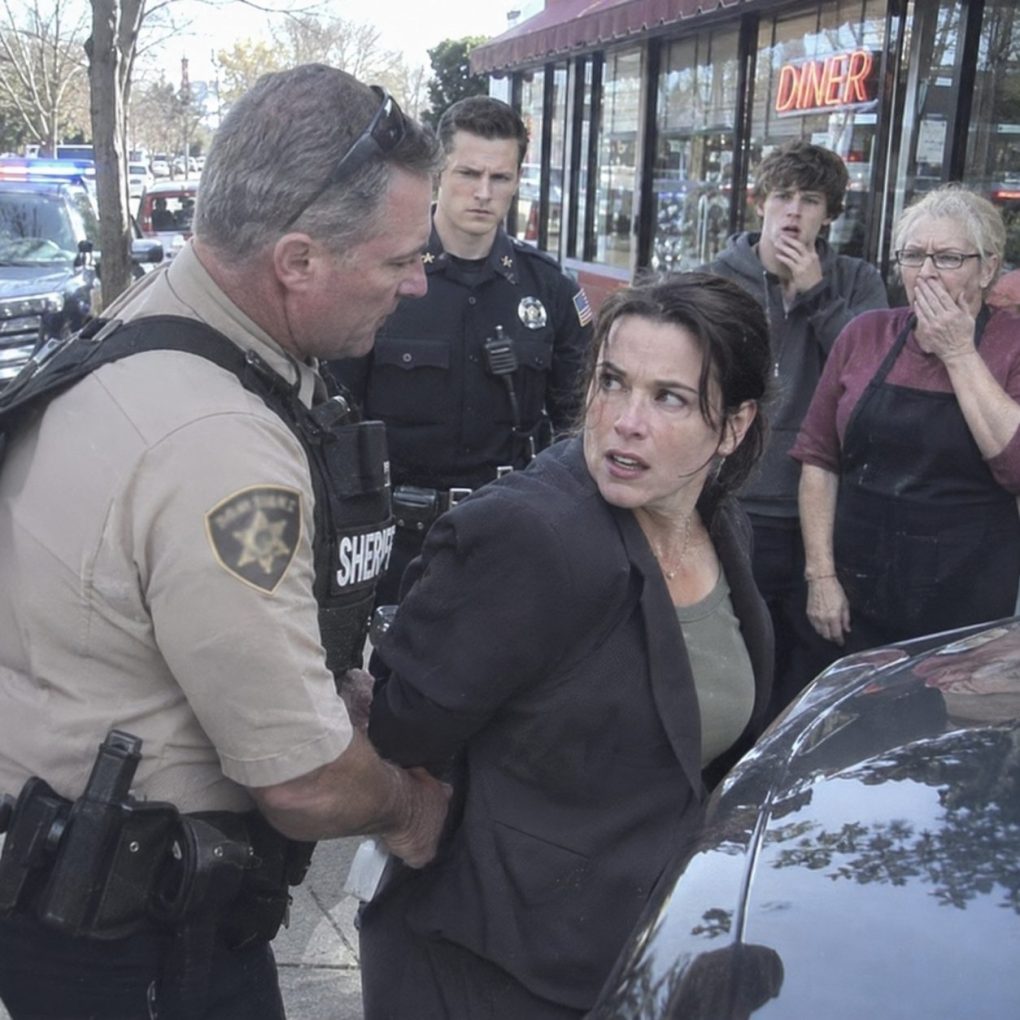
June called Laura that afternoon. She had seen everything through the diner’s front window, and she had kept the receipt for Eli’s sister’s car, where a towing company had billed hundreds of dollars in fees nobody could explain. June was more frightened about Eli being targeted again than about making herself a witness.
A supervising officer eventually reviewed the conflicting accounts with the on-call prosecutor. I was released without criminal charges that evening, but that did not erase the booking record, the pain in my wrists, or the way people at the diner had watched me disappear into a patrol car. I drove back to my mother’s empty house and sat on her bed with my shoes still on.
In the following days, Laura requested the footage, the dispatch records, and the original versions of the arrest report. The county prosecutor referred the misconduct allegations to outside investigators because his office worked with Rourke’s department, and Mason gave his own statement rather than signing the sheriff’s account.
Two weeks later, Laura called while I was washing Mom’s old coffee cups. The investigators had obtained the diner recording and Mason’s camera file, including a conversation I hadn’t heard because the patrol-car door was already closed.
Rourke’s voice was perfectly clear: “If she won’t learn from the cuffs, make the report say she swung at me.”
Then another voice answered, “Sir, that didn’t happen.”
It was Mason. And the sheriff had ordered him to lie while the camera was still recording.
When Laura played the recording for me, I listened twice. The first time I heard Rourke ordering a young deputy to turn an arrest into a fabricated assault; the second time I heard Mason refuse, with the same frightened steadiness I’d heard through the office door. He hadn’t known who I was when he recorded it.
I told Laura I wanted independent investigators to preserve and review the evidence. I did not call another judge, summon federal agents, or try to order the sheriff arrested; I was a complainant and a witness now, and I would not become the kind of person who confused a position of trust with permission to punish.
The investigation took seven months. State investigators compared the untouched body-camera file with the sheriff’s signed report, interviewed the diner customers, and obtained the dispatch logs; their review also led the county to examine other complaints about Rourke’s arrests and the towing contractor’s billing. Eli’s sister disputed her charges separately and eventually received a refund of the unsupported fees.
Rourke called the recording a misunderstanding until an independent prosecutor charged him with tampering with an official record and dereliction of duty. He resigned before the case was resolved, and a few former supporters accused me of ruining a good man’s career. I stopped reading their letters.
That winter, I attended his sentencing in an ordinary dark suit, sitting beside June and Eli in a state courtroom far from the one where I worked. Mason was there too, standing near the back wall, still wearing his deputy’s uniform, his shoulders so stiff that I wondered whether he had slept.
Rourke had pleaded guilty under an agreement that required him to admit he knowingly submitted a false account. The prosecutor played the short recording in open court, and I watched Rourke lower his head as his own voice filled the room: “Make the report say she swung at me.” For a few seconds, nobody even shifted in their seat.
When the judge invited me to speak, I held the edge of my prepared statement because my hands were shaking again. “You treated me differently when you learned my profession,” I said. “But you should not have needed to learn it. Eli’s grandmother, the diner staff, and anyone else on that sidewalk deserved the same care you were supposed to give me.”
The state judge imposed a suspended jail sentence, supervised probation, and community service. My separate civil-rights case ended in a county settlement that covered documented harm and attorney fees; I used part of the proceeds to support a local legal-aid group, but the settlement did not buy an apology from everyone who’d believed him.
After the hearing, Mason approached me near the courthouse steps. “I was scared I’d lose my job,” he admitted, and I told him I had been scared too, even though I’d known exactly what an arrest report could do. He still worked for the department under new leadership, and I thanked him for writing down what he saw instead of what he was told to see.
Before I left town, I stopped at the Red Oak Diner. June put coffee in front of me, then reached across the counter and straightened my sleeve the way my mother used to when I was young.



