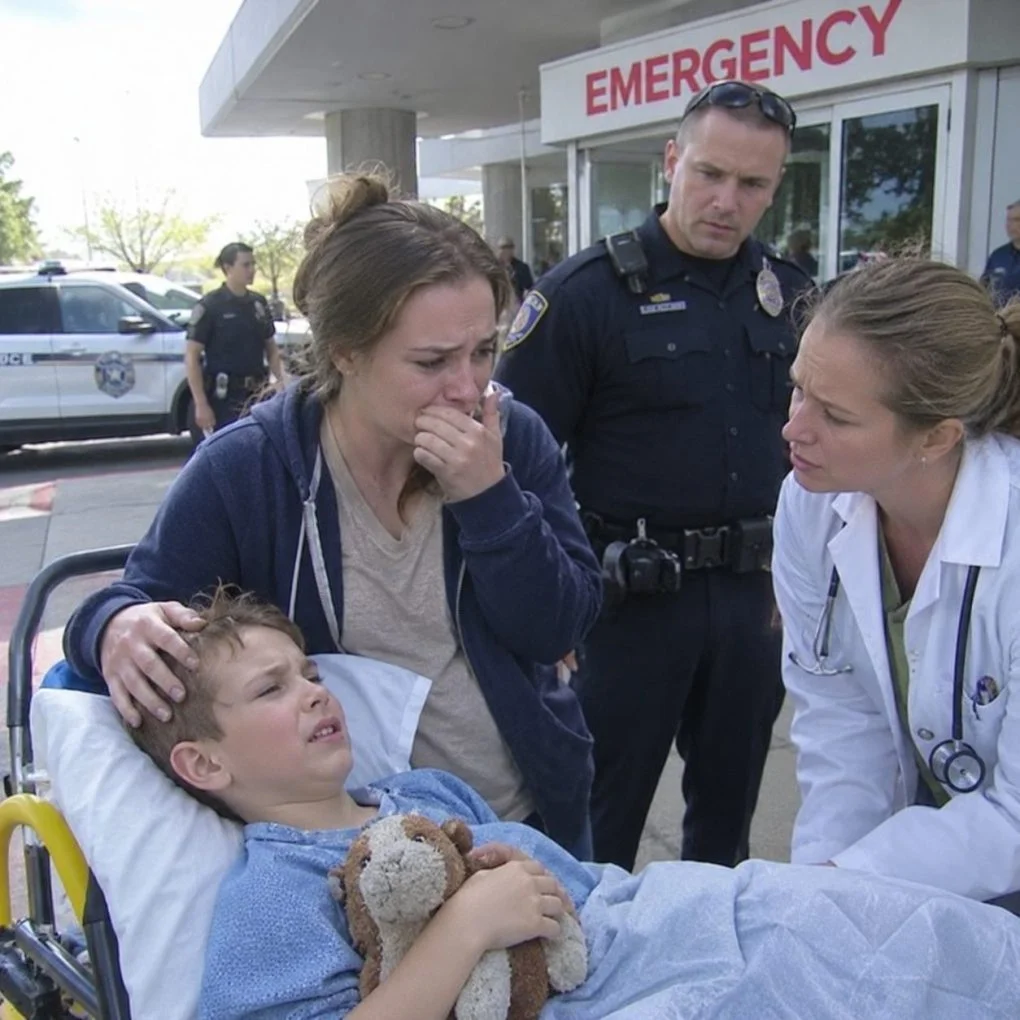
“Mommy, something keeps moving inside my stomach.”
At 2:13 a.m., my seven-year-old son, Oliver, stood beside our bed in his dinosaur pajamas, both arms wrapped around his belly. His cheeks were wet, but what frightened me most was how carefully he was trying not to cry.
My husband, Ryan, opened one eye. “He’s faking it. Go back to bed,” he muttered, turning toward the wall as though our son’s pain were an interruption he could simply sleep through.
Oliver had complained twice since Saturday, when Ryan took him to his auto-repair workshop. Each time I asked what he’d eaten or whether he’d fallen, Ryan answered for him, and Oliver grew strangely quiet.
I worked as a school secretary in Columbus, Ohio, and had learned to recognize the difference between my boy’s theatrical protests over broccoli and the frightened stillness of a child who genuinely hurt. That night I wanted to take him to the emergency room, but Ryan blocked the bedroom doorway and insisted he’d be fine by morning; Oliver begged me not to make his father angry.
I sat with Oliver until dawn, rubbing small circles between his shoulder blades while he tried to sleep against my chest. When Ryan finally left for work, I wrapped my son in his blue blanket, carried him to the car, and drove straight to the children’s hospital.
A nurse asked Oliver to point to where it hurt. He pressed a finger below his ribs, then whispered, “Daddy said the little balls would come out by themselves.”
The nurse glanced at me. I’d never heard about any little balls.
Within minutes, the doctor ordered an abdominal X-ray. She returned with two nurses, shut the examination-room door, and asked me to sit down before turning the monitor toward us.
Across the image were several tiny, bright circles. “These appear to be swallowed magnets,” she said carefully. “When more than one magnet is swallowed, they can pull together through different parts of the intestine and cause serious injuries. We need a pediatric surgeon immediately.”
I felt the paper blanket slipping from my knees. The doctor lowered her voice: “Oliver told our nurse his father knew he’d swallowed them. We’re making a protective report, and we’ve contacted police. Please don’t call your husband until we discuss everyone’s safety.”
Oliver reached for my sleeve. His hand was so small that my wedding ring caught against his knuckle.
“Mommy,” he whispered, “Daddy knew on Saturday. He said if I told you, you’d take me away from him.”
I wanted to ask Oliver a hundred questions, but the surgeon was already explaining why we couldn’t wait. Four powerful magnetic beads had moved into different parts of his digestive tract, and two appeared to be pulling sections of intestine together; the team needed to remove them before the damage worsened.
While we waited, Oliver told the hospital social worker what had happened in the workshop. Ryan kept a set of tiny magnetic balls on his desk, and Oliver had put several into his mouth while pretending they were a magic trick; when he coughed and swallowed them, he immediately told his father.
“He said they’d come out when I went potty,” Oliver whispered. “Then he said you would be mad at him, and maybe we wouldn’t live together anymore.”
I remembered Saturday’s dinner, when Oliver had barely touched his spaghetti and Ryan said he’d eaten too many snacks at the shop. On Sunday, Oliver had curled up on the couch instead of riding his bicycle, while his father complained that our son was learning to get attention by acting sick.
The social worker asked whether I had somewhere safe to stay. I called my sister, Megan, who came to the hospital carrying Oliver’s stuffed fox and a clean sweater for me; when she hugged me, I found myself apologizing for not having brought him in earlier.
“You brought him when you knew something was wrong,” she said. I wanted to believe that was enough, but all I could see was Oliver watching the bathroom door at home, trying to hide how much he hurt.
Ryan called six times during the surgical consultation. When I finally answered with a police officer present, he asked why Oliver’s school had marked him absent, then grew angry when I told him Oliver was having emergency treatment.
“Those things pass,” he said. “Don’t let them cut him open because you’re panicking.”
I asked how he knew what the doctors had found before I’d mentioned magnets. His silence lasted just long enough to make me feel cold, and then he said, “I already told you he’s fine.”
The surgery lasted almost three hours. The doctors removed the magnets and repaired an area of damaged bowel, and afterward Oliver lay in recovery with tubes taped to his small hands; he was stable, but the surgeon said another delay could have caused a much worse outcome.



